
Catalogue Search | MBRL


Are you sure you want to remove the book from the shelf?

{{itemTitle}}
34
result(s) for
"Sahara Civilization."
Sort by:

Trans-Saharan Africa in world history
\"During the heyday of camel caravan traffic--from the eighth century CE arrival of Islam in North Africa to the early twentieth-century building of European colonial railroads that linked the Sudan with the Atlantic--the Sahara was one of the world's great commercial highways, bringing gold, slaves, and other commodities northward and sending both manufactured goods and Mediterranean culture southward into the Sudan. Historian Ralph A. Austen here tells the remarkable story of an African world that grew out of more than one thousand years of trans-Saharan trading. Perhaps the most enduring impact of this trade and the common cultural reference point of trans-Saharan Africa was Islam. Austen traces this faith in its various forms--as a legal system for regulating trade, an inspiration for reformist movements, and a vehicle of literacy and cosmopolitan knowledge. He also analyzes the impact of European overseas expansion, which marginalized trans-Saharan commerce in global terms but stimulated its local growth. Indeed, trans-Saharan culture not only adapted to colonial changes, but often thrived upon them, remaining a potent force into the twenty-first century\"--Provided by publisher.
Book
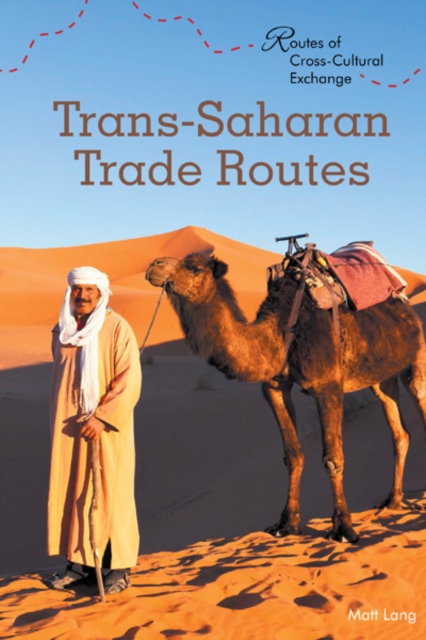
Trans-Saharan Trade Routes
Between the sixth and sixteenth centuries, trade flourished between sub-Saharan Africa and Arab cultures. Traders exchanged gold, slaves, cloth, and salt along the trans-Saharan routes. This trade was directly responsible for seismic shifts in African economies and the foundation of new empires. This book explores how this complex trade network shaped the history of Africa, the Middle East, and Europe.
eBook

Facing the sea of sand : the Sahara and the peoples of Northern Africa
\"Northern Africa is dominated by the Sahara Desert, stretching across the continent from the Atlantic Ocean to the Red Sea. This book is about the people who lived around the edges of the Desert and the different ways in which they responded to its challenges, establishing networks of communication across its expanse. But the Sahara has not always been a desert. From about 9000 BC the region began to enjoy a warm, humid period allowing vegetation to flourish and wild animals to move in. Humans soon followed practising pastoral economies but with the onset of harsher conditions once more around 3000 BC the desert reclaimed its own. Since then fluctuations in climate have continued to affect the lives of people living around the desert fringes. The communities occupying the North African Coast and in the Nile Valley have come under the influence of the states dominating the Near East and the Mediterranean but those living in in the Sahel to the south of the desert have developed their own distinctive cultures. The book tells the story of the growing links between the two worlds, showing that Africa played a crucial part in the development of the Old World before it was drawn into the story of the New World.\" -- Provided by publisher.
Book
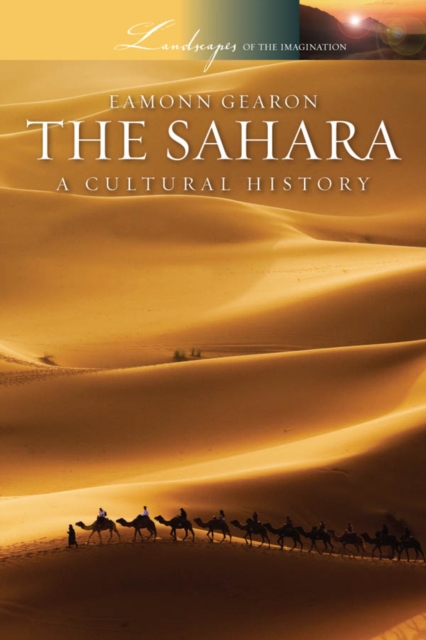
Sahara
The Sahara is the quintessence of isolation, epitomizing both remoteness and severity of environment unlike any other place on the face of the earth. Replete with myths and fictions, it is a wild land, dotted with oases and camel trains trudging through sand dunes that roll like the waves on a sea, as far as the distant horizon. But this is just part of the picture. The largest desert in the world, the Sahara ranges from the river Nile running through Egypt and Sudan in the east, to the Atlantic coast from Morocco to Mauritania in the west; stretching from the Atlas Mountains and the shores of the Mediterranean in the north, to the fluid Sahelian fringe that delineates the desert in the south. Invaders and traders have come and gone for millennia, but the Sahara is also the place that some people call home. While larger than the United States, this vast area contains only three million people: Africans and Arabs, Berber and Bedu, Tuareg and Tebu. Eamonn Gearon explores the history, culture, and terrain of a place whose name is familiar to all, but known to few. Conquered and Cursed: from the 50,000-strong army of Cambyses, swallowed in a sandstorm in the sixth century BC, to the US Marines' first foreign engagement, in 1805; Hannibal and his elephants, Caesar against Anthony and Cleopatra, Alexander the Great, the armies of Islam, Napoleon, and Rommel versus Monty. Myths and Mysteries: from whales in the White Desert to the arrival of camels in the Great Sand Sea; chariots of the gods and colonialists' motor-cars; from the Land of the Dead to Timbuktu; salt and gold mines, fields of oil and gas and a man-made river. Artists, Writers, and Filmmakers: from the ancient rock art of the Tassili frescoes to the modernism of Matisse and Klee; from Ibn Battuta to Paul Bowles; from Beau Geste's French Foreign Legion to Star Wars.
eBook
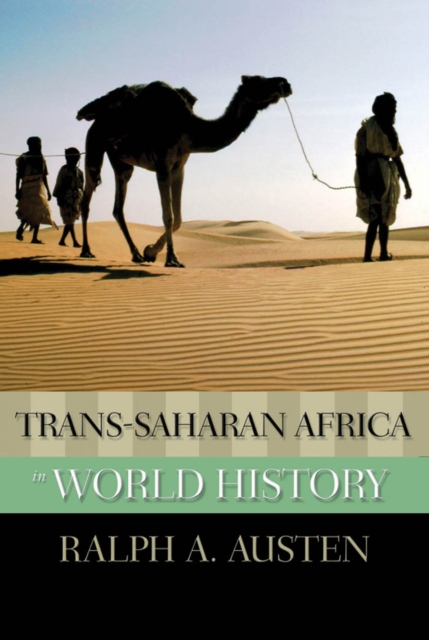
Trans-Saharan Africa in World History
During the heyday of camel caravan traffic--from the eighth century CE arrival of Islam in North Africa to the early twentieth-century building of European colonial railroads that linked the Sudan with the Atlantic--the Sahara was one of the world's great commercial highways, bringing gold, slaves, and other commodities northward and sending both manufactured goods and Mediterranean culture southward into the Sudan. Historian Ralph A. Austen here tells the remarkable story of an African world that grew out of more than one thousand years of trans-Saharan trading.
eBook

Digital Literacy Key Performance Indicators for Sustainable Development
The concept of digital literacy has been defined in numerous ways over the last two decades to incorporate rapid technological changes, its versatility, and to bridge the global digital divide. Most approaches have been technology-centric with an inherent assumption of cultural and political neutrality of new media technologies. There are multiple hurdles in every stage of digital literacy implementation. The lack of solutions such as local language digital interfaces, locally relevant content, digital literacy training, the use of icons and audio excludes a large fraction of illiterate people. In this article, we analyse case studies targeted at under-connected people in sub-Saharan Africa and India that use digital literacy programmes to build knowledge and health literacy, solve societal problems and foster development. In India, we focus on notable initiatives undertaken in the domain of digital literacy for rural populations. In Sub-Saharan Africa, we draw from an original project in Kenya aiming at developing digital literacy for youth from low-income backgrounds. We further focus on Senegal, Mali, Burkina Faso and Tanzania, where field studies have been conducted on the use of digital technologies by low-literacy people and on how audio and icon-based interfaces and Internet lite standard could help them overcome their limitations. The main objective of this article is to identify key performance indicators (KPIs) in the context of digital literacy skills as one of the pillars for digital inclusion. We will learn how digital literacy programmes can be used to build digital literacy and how KPIs for sustainable development can be established. In the final discussion, we offer lessons learned from the case studies and further recommendation for stakeholders and decision-makers in the field of digital health literacy.
Journal Article

Ancient Egyptian mummy genomes suggest an increase of Sub-Saharan African ancestry in post-Roman periods
Egypt, located on the isthmus of Africa, is an ideal region to study historical population dynamics due to its geographic location and documented interactions with ancient civilizations in Africa, Asia and Europe. Particularly, in the first millennium BCE Egypt endured foreign domination leading to growing numbers of foreigners living within its borders possibly contributing genetically to the local population. Here we present 90 mitochondrial genomes as well as genome-wide data sets from three individuals obtained from Egyptian mummies. The samples recovered from Middle Egypt span around 1,300 years of ancient Egyptian history from the New Kingdom to the Roman Period. Our analyses reveal that ancient Egyptians shared more ancestry with Near Easterners than present-day Egyptians, who received additional sub-Saharan admixture in more recent times. This analysis establishes ancient Egyptian mummies as a genetic source to study ancient human history and offers the perspective of deciphering Egypt’s past at a genome-wide level.
Archaeological and historical records had shown ancient Egypt before and after Ptolemaic and Roman periods to be a hub of human migration and exchange. Here, Schuenemann and colleagues analyse ancient mitochondrial and nuclear DNA to investigate the genetic history of Egypt.
Journal Article

The changing epidemiology of malaria elimination: new strategies for new challenges
Malaria-eliminating countries achieved remarkable success in reducing their malaria burdens between 2000 and 2010. As a result, the epidemiology of malaria in these settings has become more complex. Malaria is increasingly imported, caused by Plasmodium vivax in settings outside sub-Saharan Africa, and clustered in small geographical areas or clustered demographically into subpopulations, which are often predominantly adult men, with shared social, behavioural, and geographical risk characteristics. The shift in the populations most at risk of malaria raises important questions for malaria-eliminating countries, since traditional control interventions are likely to be less effective. Approaches to elimination need to be aligned with these changes through the development and adoption of novel strategies and methods. Knowledge of the changing epidemiological trends of malaria in the eliminating countries will ensure improved targeting of interventions to continue to shrink the malaria map.
Journal Article

Reviving the Urban Heritage of the Algerian Sahara: Restoration and Sustainability of Earthen Architecture in Ksar Khanguet Sidi Nadji as a Case Study
Earthen architecture, an enduring legacy of human ingenuity, has historically served as a source of durable and sustainable shelter across civilizations. Despite this significance, several of the world’s earthen architectural sites are now facing abandonment and obsolescence, as is the case of Ksar Khanguet Sidi Nadji in the Algerian Sahara. To address this critical situation, we propose a sustainable, eco-friendly, and cost-effective solution for the restoration of the urban fabric of the Ksar that takes into account the needs of its residents and its heritage value. Our approach utilizes the anastylosis method which implies that we reuse original on-site components as building materials whenever possible. We introduce new materials only when necessary, after subjecting them to rigorous testing and control. Additionally, we take into account the complex challenges of human, natural, and technical factors involved in the restoration process, offering a practical solution to restore and preserve the earthen heritage of the Ksar while benefiting its residents.
Journal Article

Cultural convergence in the Neolithic of the Nile Valley: a prehistoric perspective on Egypt's place in Africa
The African origins of Egyptian civilisation lie in an important cultural horizon, the ‘primary pastoral community’, which emerged in both the Egyptian and Sudanese parts of the Nile Valley in the fifth millennium BC. A re-examination of the chronology, assisted by new AMS determinations from Neolithic sites in Middle Egypt, has charted the detailed development of these new kinds of society. The resulting picture challenges recent studies that emphasise climate change and environmental stress as drivers of cultural adaptation in north-east Africa. It also emphasises the crucial role of funerary practices and body decoration.
Journal Article