
Catalogue Search | MBRL


Are you sure you want to remove the book from the shelf?

{{itemTitle}}
9,681
result(s) for
"Sahara."
Sort by:

Trans-Saharan Africa in world history
\"During the heyday of camel caravan traffic--from the eighth century CE arrival of Islam in North Africa to the early twentieth-century building of European colonial railroads that linked the Sudan with the Atlantic--the Sahara was one of the world's great commercial highways, bringing gold, slaves, and other commodities northward and sending both manufactured goods and Mediterranean culture southward into the Sudan. Historian Ralph A. Austen here tells the remarkable story of an African world that grew out of more than one thousand years of trans-Saharan trading. Perhaps the most enduring impact of this trade and the common cultural reference point of trans-Saharan Africa was Islam. Austen traces this faith in its various forms--as a legal system for regulating trade, an inspiration for reformist movements, and a vehicle of literacy and cosmopolitan knowledge. He also analyzes the impact of European overseas expansion, which marginalized trans-Saharan commerce in global terms but stimulated its local growth. Indeed, trans-Saharan culture not only adapted to colonial changes, but often thrived upon them, remaining a potent force into the twenty-first century\"--Provided by publisher.
Book

Saharan Frontiers
The Sahara has long been portrayed as a barrier that divides the Mediterranean world from Africa proper and isolates the countries of the Maghrib from their southern and eastern neighbors. Rather than viewing the desert as an isolating barrier, this volume takes up historian Fernand Braudel's description of the Sahara as \"the second face of the Mediterranean.\" The essays recast the history of the region with the Sahara at its center, uncovering a story of densely interdependent networks that span the desert's vast expanse. They explore the relationship between the desert's \"islands\" and \"shores\" and the connections and commonalities that unite the region. Contributors draw on extensive ethnographic and historical research to address topics such as trade and migration; local notions of place, territoriality, and movement; Saharan cities; and the links among ecological, regional, and world-historical approaches to understanding the Sahara.
eBook

The ideal refugees
Refugee camps are typically perceived as militarized and patriarchal spaces, and yet the Sahrawi refugee camps and their inhabitants have consistently been represented as ideal in nature: uniquely secular and democratic spaces and characterized by gender equality. Drawing on extensive research with and about Sahrawi refugees in Algeria, Cuba, Spain, South Africa, and Syria, Fiddian-Qasmiyeh explores how, why, and to what effect such idealized depictions have been projected onto the international arena.
eBook
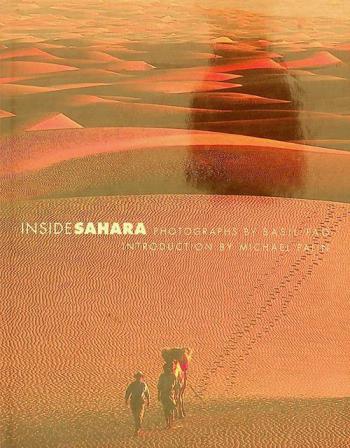

Saharan Winds
Winner, ASLE-UKI Critical Book Prize, 2025 Finalist, Ecocritical Book Award, 2025, Association for the Study of Literature and Environment (ASLE) Longlisted, Bread and Roses Award for Radical Publishing, 2025 As climate crisis ensues, a transition away from fossil fuels becomes urgent. However, some renewable energy developments are propagating injustices such as landgrabs, colonial dispossession, and environmentally destructive practices. Changing the way we imagine and understand wind will help us ensure a globally just wind energy future. Saharan Winds contributes to a fairer energy horizon by illuminating the role of imaginaries--how we understand energy sources such as wind and the meanings we attach to wind--in determining the wider politics, whether oppressive or just, associated with energy systems. This book turns to various cultures and communities across different time periods in one space, Western Sahara, to explore how wind imaginaries affect the development, management, and promotion of windfarms; the distribution of energy that windfarms produce; and, vitally, the type of politics mediated by all these elements combined. Highlighting the wind-fueled oppression of colonial energy systems, the book shows the potential offered by nomadic, Indigenous wind imaginaries for contributing to a fairer energy future.
eBook

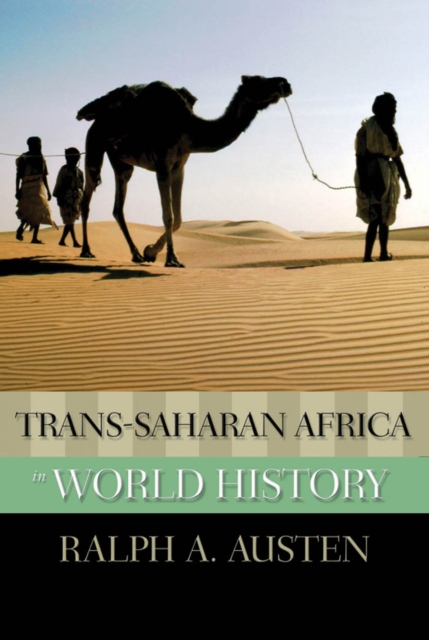
Trans-Saharan Africa in World History
During the heyday of camel caravan traffic--from the eighth century CE arrival of Islam in North Africa to the early twentieth-century building of European colonial railroads that linked the Sudan with the Atlantic--the Sahara was one of the world's great commercial highways, bringing gold, slaves, and other commodities northward and sending both manufactured goods and Mediterranean culture southward into the Sudan. Historian Ralph A. Austen here tells the remarkable story of an African world that grew out of more than one thousand years of trans-Saharan trading.
eBook

Dry in the desert : can science save your life?
\"Will Joe be able to survive in the hot, scorching desert? In this exciting survival story, readers journey along with Joe as he searches for water and runs into a desert tribe.\"-- Provided by publisher.
Book

Efficacy and safety of RTS,S/AS01 malaria vaccine with or without a booster dose in infants and children in Africa: final results of a phase 3, individually randomised, controlled trial
The efficacy and safety of the RTS,S/AS01 candidate malaria vaccine during 18 months of follow-up have been published previously. Herein, we report the final results from the same trial, including the efficacy of a booster dose.
From March 27, 2009, until Jan 31, 2011, children (age 5–17 months) and young infants (age 6–12 weeks) were enrolled at 11 centres in seven countries in sub-Saharan Africa. Participants were randomly assigned (1:1:1) at first vaccination by block randomisation with minimisation by centre to receive three doses of RTS,S/AS01 at months 0, 1, and 2 and a booster dose at month 20 (R3R group); three doses of RTS,S/AS01 and a dose of comparator vaccine at month 20 (R3C group); or a comparator vaccine at months 0, 1, 2, and 20 (C3C [control group]). Participants were followed up until Jan 31, 2014. Cases of clinical and severe malaria were captured through passive case detection. Serious adverse events (SAEs) were recorded. Analyses were by modified intention to treat and per protocol. The coprimary endpoints were the occurrence of malaria over 12 months after dose 3 in each age category. In this final analysis, we present data for the efficacy of the booster on the occurrence of malaria. Vaccine efficacy (VE) against clinical malaria was analysed by negative binomial regression and against severe malaria by relative risk reduction. This trial is registered with ClinicalTrials.gov, number NCT00866619.
8922 children and 6537 young infants were included in the modified intention-to-treat analyses. Children were followed up for a median of 48 months (IQR 39–50) and young infants for 38 months (34–41) after dose 1. From month 0 until study end, compared with 9585 episodes of clinical malaria that met the primary case definition in children in the C3C group, 6616 episodes occurred in the R3R group (VE 36·3%, 95% CI 31·8–40·5) and 7396 occurred in the R3C group (28·3%, 23·3–32·9); compared with 171 children who experienced at least one episode of severe malaria in the C3C group, 116 children experienced at least one episode of severe malaria in the R3R group (32·2%, 13·7 to 46·9) and 169 in the R3C group (1·1%, −23·0 to 20·5). In young infants, compared with 6170 episodes of clinical malaria that met the primary case definition in the C3C group, 4993 episodes occurred in the R3R group (VE 25·9%, 95% CI 19·9–31·5) and 5444 occurred in the R3C group (18·3%, 11·7–24·4); and compared with 116 infants who experienced at least one episode of severe malaria in the C3C group, 96 infants experienced at least one episode of severe malaria in the R3R group (17·3%, 95% CI −9·4 to 37·5) and 104 in the R3C group (10·3%, −17·9 to 31·8). In children, 1774 cases of clinical malaria were averted per 1000 children (95% CI 1387–2186) in the R3R group and 1363 per 1000 children (995–1797) in the R3C group. The numbers of cases averted per 1000 young infants were 983 (95% CI 592–1337) in the R3R group and 558 (158–926) in the R3C group. The frequency of SAEs overall was balanced between groups. However, meningitis was reported as a SAE in 22 children: 11 in the R3R group, ten in the R3C group, and one in the C3C group. The incidence of generalised convulsive seizures within 7 days of RTS,S/AS01 booster was 2·2 per 1000 doses in young infants and 2·5 per 1000 doses in children.
RTS,S/AS01 prevented a substantial number of cases of clinical malaria over a 3–4 year period in young infants and children when administered with or without a booster dose. Efficacy was enhanced by the administration of a booster dose in both age categories. Thus, the vaccine has the potential to make a substantial contribution to malaria control when used in combination with other effective control measures, especially in areas of high transmission.
GlaxoSmithKline Biologicals SA and the PATH Malaria Vaccine Initiative.
Journal Article