
Catalogue Search | MBRL


Are you sure you want to remove the book from the shelf?

{{itemTitle}}
541
result(s) for
"Said, Edward W"
Sort by:

The Cambridge introduction to Edward Said
\"One of the most famous literary critics of the twentieth century, Edward Said's work has been hugely influential far beyond academia. As a prominent advocate for the Palestinian cause and a noted music critic, Said redefined the role of the public intellectual. In his books, as scholarly as they are readable, he challenged conventional critical demarcations between disciplines. His major opus, Orientalism, is a key text in postcolonial studies that continues to influence as well as challenge scholars in the field. Conor McCarthy introduces the reader to Said's major works and examines how his work and life were intertwined. He explains recurring themes in Said's writings on literature and empire, on intellectuals and literary theory, on music and on the Israel/Palestine conflict. This concise, informative and clearly written introduction for students beginning to study Said is ideally set up to explain the complexities of his work to new audiences\"-- Provided by publisher.
Book

Edward Said and the Religious Effects of Culture
This book provides a distinctive account of Edward Said's critique of modern culture by highlighting the religion-secularism distinction on which it is predicated. This distinction is both literal and figurative. It refers, on the one hand, to religious traditions and to secular traditions and, on the other hand, to tropes that extend the meaning and reference of religion and secularism in indeterminate ways. The author takes these tropes as the best way of organizing Said's heterogeneous corpus - from Joseph Conrad and the Fiction of Autobiography, his first book, to Orientalism, his most influential book, to his recent writings on the Palestinian question. The religion-secularism distinction, as an act of imagination and narrative continuity, lies behind Said's cultural criticism, his notion of intellectual responsibility, and his public controversy with Michael Walzer about the meaning and the uses of the Exodus story and about the question of Palestine.
eBook
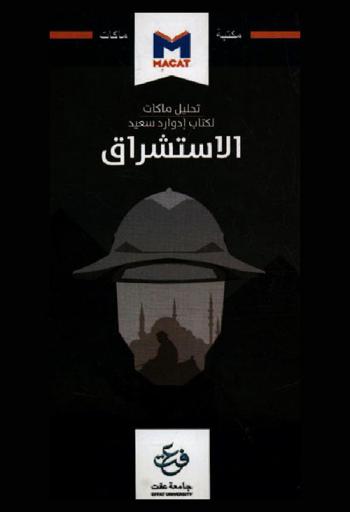

Reading Orientalism
The late Edward Said remains one of the most influential critics and public intellectuals of our time, with lasting contributions to many disciplines. Much of his reputation derives from the phenomenal multidisciplinary influence of his 1978 book Orientalism. Said's seminal polemic analyzes novels, travelogues, and academic texts to argue that a dominant discourse of West over East has warped virtually all past European and American representation of the Near East. But despite the book's wide acclaim, no systematic critical survey of the rhetoric in Said's representation of Orientalism and the resulting impact on intellectual culture has appeared until today.
Drawing on the extensive discussion of Said's work in more than 600 bibliographic entries, Daniel Martin Varisco has written an ambitious intellectual history of the debates that Said's work has sparked in several disciplines, highlighting in particular its reception among Arab and European scholars. While pointing out Said's tendency to essentialize and privilege certain texts at the expense of those that do not comfortably it his theoretical framework, Varisco analyzes the extensive commentary the book has engendered in Oriental studies, literary and cultural studies, feminist scholarship, history, political science, and anthropology. He employs \"critical satire\" to parody the exaggerated and pedantic aspects of post-colonial discourse, including Said's profound underappreciation of the role of irony and reform in many of the texts he cites. The end result is a companion volume to Orientalism and the vast research it inspired. Rather than contribute to dueling essentialisms, Varisco provides a path to move beyond the binary of East versus West and the polemics of blame.
Reading Orientalism is the most comprehensive survey of Said's writing and thinking to date. It will be of strong interest to scholars of Middle East studies, anthropology, history, cultural studies, post-colonial studies, and literary studies.
eBook


Edward Said and the Literary, Social, and Political World
Edward Said is widely recognized for his work as a critic and theorist of Orientalism and the Palestine crisis, but far less attention has been devoted to his considerable body of literary and cultural criticism. In this edited collection, the contributors - many among the foremost Said scholars in the world - examine Said as the literary critic; his relationship to other major contemporary thinkers (including Derrida, Ricoeur, Barthes and Bloom); and his involvement with major movements and concerns of his time (such as music, Feminism, New Humanism, and Marxism). Featuring freshly carved out essays on new areas of intervention, the volume is an indispensable addition for those interested in Edward Said and the many areas in which his legacy looms.
Foreword Benita Parry. Acknowledgments. Introduction. Section A 1. \"A Roomy Place Full of Possibility\": Said’s Orientalism and the Literary Nicholas Harrison 2. Edward Said and Roland Barthes: Criticism versus Essayism. Or: Roads and Meetings Missed Andy Stafford 3. Derrida and Said: Ships that Pass in the Night Caroline Rooney 4. Said .. Bloom …. Vico Graham Allen 5. The Materiality and Ideality of Text: Said and Ricoeur Karl Simms . Section B 6. \"The Southern Question\" and Said’s Geographical Critical Consciousness. Shaobo Xie 7. Fellow Travellers and Homeless Souls: Said’s Critical Marxism Ross Abbinnett 8. Edward Said and the Interplay of Music, History, and Ideology Derek B. Scott 9. Edward Said and (the Postcolonial Occlusion of) Gender Elleke Boehmer 10. Reading Orientalism in Istanbul: Edward Said and Orhan Pamuk Kate Teltscher 11. On Late Style: Edward Said’s Humanism Pal Ahluwalia . Section C 12. Autobiography and Exile: Edward Said’s Out of Place Linda Anderson 13. Edward Said, American International Policy and War on Terror Taieb Belghazi 14. Representations of the Intellectual: the Historian as ‘Outsider’ Ranjan Ghosh . Contributors. Index.
Ranjan Ghosh teaches in the Department of English at the University of North Bengal. He was an Alexander von Humboldt Fellow in Germany and European Research Fellow in London. He is published in journals such as the Oxford Literary Review , History and Theory , Nineteenth Century Prose , Rethinking History , Storia della Storiographia , Angelaki and others. Among his many books include (In)fusion Approach: Theory, Contestation, Limits (2006) and Globalizing Dissent (Routledge, 2009).
eBook

Restating Orientalism : a critique of modern knowledge
\"Edward Said's Orientalism not only inaugurated a new and highly controversial arena of discourse but also set the terms of debate around knowledge, power, and imperialism since 1978, when the book first appeared. The substance of discussions remains extensively political, limited to the so-called problem of knowledge and power and the complicity of Orientalism in the larger project of colonialism. One of the many critiques was that Said was too sweeping in his condemnation of Orientalists, leaving no analytical space for distinguishing degrees of difference between one scholar and another. Thus any scholar who depicts Islam negatively or too positively is an Orientalist, the former a bigot of some sort and the latter an exoticizer. Restating Orientalism offers an alternative account that accepts and transcends political thought and positioning while avoiding the totalization of authorial condemnation in Said's narrative. Hallaq reopens the problem of power and knowledge to an ethical critique, asking such questions as: What makes certain forms of knowledge useful to power, and what kind of cultural configurations exist in the world in which knowledge and power have virtually no relationship with each other? Refusing to isolate or scapegoat Orientalism, the book extends the critique to other academic fields, tracing their involvement in colonialism and genocide to a seventeenth- and eighteenth- century structure of thought whose most salient characteristic was a type of domination anchored in sovereignty over life and death. Orientalism, Hallaq argues, is no more an exception to liberal and modern forms of knowledge than genocide in general was an exception in modernity, but rather is the truest representation of modern sovereign capabilities\"-- Provided by publisher.
BOOK

The Legacy of Edward W. Said
With the untimely death of Edward W. Said in 2003, various academic and public intellectuals worldwide have begun to reassess the writings of this powerful oppositional intellectual. Figures on the neoconservative right, who have become influential in the policy-making of George W. Bushs administration, have already begun to discredit Saids work as that of a subversive intent on slandering Americas benign global image and undermining its global authority. On the left, a significant number of oppositional intellectuals are eager to counter this neoconservative vilification, proffering a Said who, in marked opposition to the anti-humanism? of the great poststructuralist thinkers who were his contemporaries--Jacques Derrida, Jean-Francois Lyotard, Jacques Lacan, Louis Althusser, and Michel Foucault--reaffirms humanism and thus rejects poststructuralist theory._x000B__x000B_In this provocative assessment of Edward Saids lifework, William V. Spanos argues that Saids lifelong anti-imperialist project is actually a fulfillment of the revolutionary possibilities of poststructuralist theory. Spanos examines Said, his legacy, and the various texts he wrote--including Orientalism, Culture and Imperialism, and Humanism and Democratic Criticism--that are now being considered for their lasting political impact.
eBook


Reading orientalism : said and the unsaid
Drawing on the extensive discussion of the late Edward Said's work, this new study addresses the ambitious intellectual history of the debates that Orientalism has sparked in several disciplines, including its reception among Arab and European scholars.
eBook