
Catalogue Search | MBRL


Are you sure you want to remove the book from the shelf?

{{itemTitle}}
1,034
result(s) for
"Sailing History."
Sort by:

Land and water transportation
\"Describes the progression of technology that makes land and water travel possible, from the earliest vehicles powered by animals and humans to today's high-speed trains and sophisticated sea vessels\"--Provided by publisher.
Book
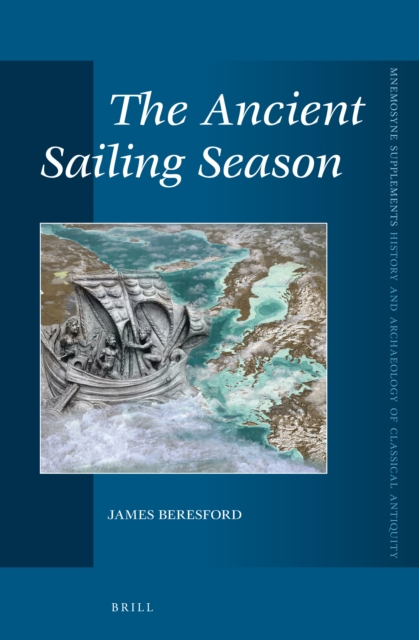
The Ancient Sailing Season
A comprehensive examination of the effects of the shifting seasons on maritime trade, warfare and piracy during antiquity, this book overturns many long-held assumptions concerning the capabilities of Graeco-Roman ships and sailors.
eBook

The Cape Horners' club : tales of triumph & disaster at the world's most feared cape
Cape Horn's fearsome reputation and the price it has extracted from those who venture there derives from a lethal contrivance of geography that unleashes the most powerful natural dynamic forces on the earth's surface. Reaching deep into the Southern Ocean, the Cape intrudes into the flow of the water and weather patterns at the bottom of the world and funnels them into a maritime superhighway a mere 500 miles wide, building massive seas and accelerating wind speeds to hurricane strength. Currents rip at rates that defeat powerful engines. These legendarily treacherous conditions were enough to secure Cape Horn's reputation as the ultimate in ocean violence; the supreme test of sailors and ships. It is the oceanic equivalent of the climbers' Everest, and the challenge to some became irresistible. The roll call of sailors who have managed to round the Horn east-about (and more rarely, head to wind and west-about) glitters with the names of sailing legends: Vito Dumas, Marcel Bardiaux, Francis Chichester, Robin Knox-Johnston, Bernard Moitessier and Chay Blyth. This book recounts the history of the Cape through the stories of the people who've taken it on and made it round--the Cape Horners' Club. From the very first recorded single-hander in 1934 (Al Hansen, who was lost shortly afterwards and his body never found), we follow these very different protagonists as they pursue the ultimate goal whilst battling almost overwhelming odds. Woven through their stories is a history of the Cape, from its discovery to its use as a trading corridor until the opening of the Panama Canal, to its more recent role as a pure challenge for the very best yachtsmen and yachtswomen in the world. Changes in weather prediction and navigation have had a huge impact, but the pressure for ever-faster times has never been greater.
Book
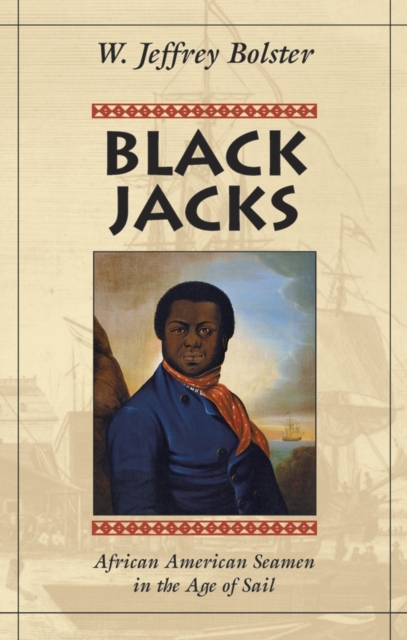
Black Jacks: African American Seamen in the Age of Sail
This text examines not only how common experiences drew black and white sailors together - even as deeply internalized prejudices drove them apart - but also how the meaning of race aboard ship changed with time.
eBook


Resonant histories : Pacific artefacts and the voyages of HMS Royalist 1890-1893
This book explores a complex relational assemblage, a collection of 1481 Pacific artefacts brought together by Captain Edward Henry Meggs Davis, during the three voyages of HMS Royalist between 1890-1893. The collection is indicative not just of a period of colonial collecting in the Pacific, but also the development of ethnographic collections in the UK and Europe. This period of history remains present in the social and cultural lives of many Pacific Islanders today.Using the collections as a starting point the book is divided into two parts. The first provides the historical background to the three voyages of HMS Royalist, discussing each voyage, its aims and outcomes, and the role that Davis played within this. Davis' motivations to collect and the various means of collecting that he employed are then explored within this historical context. Finally the first part considers what happened to the collection once it was sent from the Pacific to England, where and how it was sold, and how the collection was a part of and subject to the networks of museums, and private collectors in the UK and Europe during the end of the 19th century beginning of the 20th century. It offers a detailed view of the contents and development of the collection, and what the collection can tell us about British ethnographic collecting at the end of the nineteenth century.The second part of the book explores the traces left by the ship amongst the Pacific Islands communities it visited. Focusing on three Pacific Islands- Vanuatu, Solomon Islands and Kiribati- the chapters in this section interrogate the contemporary relevance of this period of colonial history for Islanders today, exploring current social, political and environmental issues.
eBook

Off the deep end : a history of madness at sea
\"In the 18th century, the Royal Navy's own physician found that sailors were seven times more likely to suffer from severe mental illness than members of the general population. On the no man's land of the high seas, beyond the rule of law, and away from any sight of land for weeks at a time, often living in overcrowded and confined spaces, where anything that goes wrong could likely be fatal, the incredible pressures on sailors were immense. The ever-present fear drove some men to faith in God and superstition, and drove others mad. But that didn't stop as boat technology improved and seamanship evolved in the modern era. Off the Deep End is the first detailed study of the effect on sanity that the vastness, loneliness and inestimable power of the sea has always had on sailors' sanity, confusing the senses and making rational thought difficult. Eminently readable, it explores accounts that span the centuries, from desperate stories of shipwreck and cannibalism in the Age of Sail, to inexplicable multiple murders, to Donald Crowhurst's suicide in the middle of the 1968 solo Golden Globe Race, leaving behind two rambling notebooks of mounting neurosis and paranoia. Of interest to readers of maritime history, psychology, sociology and behavioural science, as well, of course, as to sailors of all types and experience, this unique and fascinating book offers insight and analysis - a thoroughly absorbing read about the effects of the cruel sea on the human mind.\"--Publisher's description.
Book
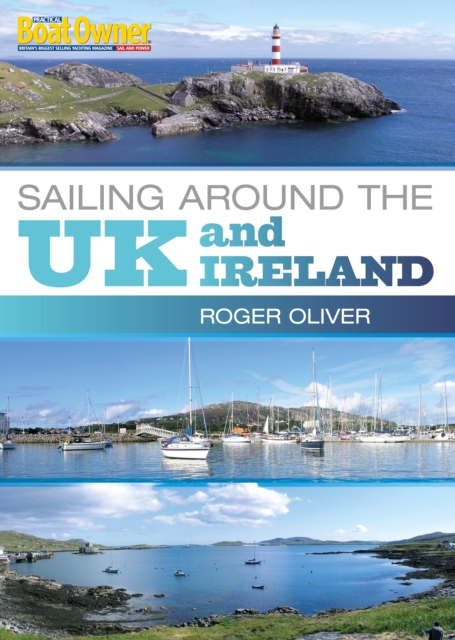
Practical Boat Owner's Sailing Around the UK and Ireland
This book, based on a highly successful series of articles in Practical Boat Owner magazine, is a detailed practical guide to sailing around the UK - all by means of day sails.Roger Oliver, a passionate sailor, explains his in-depth passage planning, boat preparations, weather checks and log-keeping, as well as his choice of routes, the detailed.
eBook


Kirkcudbright's Prince of Denmark
This is the story of the unusually long and interesting career of a small Scottish schooner spent primarily in the southern hemisphere.From the quest to trace her history and construction to the careers of those who owned and sailed in her during her 74-year life, the story is full of vividly-portrayed rogues and heroes - the famous and infamous.
eBook