
Catalogue Search | MBRL


Are you sure you want to remove the book from the shelf?

{{itemTitle}}
41,541
result(s) for
"Sailor"
Sort by:

رحلة السندباد
هذا الكتاب \"رحلة السندباد\" لمؤلف (تيم سفرن) ويحتوي على أربعة عشر موضوعات، يتناول الكتاب \"عودة إلى الف ليلة وليلة\" و\"ساحل مالابار\" و\"أصحاب القمصان الخضراء\" و\"بحارة عمان\" و\"بحر العرب\" و\"جزر جبال جوز الهند\" و\"عيد الميلاد في كلكتا\" و\"مملكة سرنديب و\"منطقة الأوقيانوس الهادئة\" و\"السارية المحطمة\" و\"مضيق ملقا\" و\"بحر الصين الجنوبي\" و\"الصين\" و\"رحلة العودة\".
Book

Conceptual Framework and Designing for a Seafarers' Health Observatory Data Repository
Background. Health observatory (HO) models are helpful in gathering, analyzing, interpreting, and circulating reliable and quality information on population health and health service delivery. In this study, we proposed an HO conceptual model to enhance seafarer's health, which subjects to disease trends. Methods. Three methods were followed during the study: a systematic collection of seafarer's health data from the Centro Internazionale Radio Medico (C.I.R.M.) repository, an integrative review of existing seafarer's policy, and both open and closed questionnaires were distributed to stakeholders to develop clinical knowledge. C.I.R.M. is the Italian Telemedical Maritime Assistance Service (TMAS). Results and Discussion. A three-layer HO framework was developed, and each layer had its components and functionalities. The proposed HO model integrated with the outcomes of the mentioned methods was working as the origin of the framework. In this way, we can design a standard infrastructure in ships and risk assessment conduction.
Journal Article
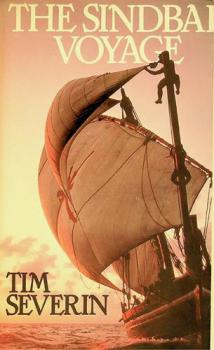
The Sindbad voyage
Tim Severin's account of his 1980 quest to recreate the Seven Voyages of Sindbad, from Oman to China, and thereby to test the truth of the tales of the \"Arabian Nights\". Severin's ship was made from Malabar timbers held together with coconut rope, and his crew included eight Omani seamen.
Book


Sindbad : from the tales of The thousand and one nights
The legend of the beautiful Shahrazad who saved her life by telling the evil king a thousand and one captivating stories, one of which is the story of Sindbad the sailor.
BOOK

Liberty on the Waterfront
Through careful research and colorful accounts, historian Paul A. Gilje discovers what liberty meant to an important group of common men in American society, those who lived and worked on the waterfront and aboard ships. In the process he reveals that the idealized vision of liberty associated with the Founding Fathers had a much more immediate and complex meaning than previously thought.InLiberty on the Waterfront: American Maritime Culture in the Age of Revolution, life aboard warships, merchantmen, and whalers, as well as the interactions of mariners and others on shore, is recreated in absorbing detail. Describing the important contributions of sailors to the resistance movement against Great Britain and their experiences during the Revolutionary War, Gilje demonstrates that, while sailors recognized the ideals of the Revolution, their idea of liberty was far more individual in nature-often expressed through hard drinking and womanizing or joining a ship of their choice.Gilje continues the story into the post-Revolutionary world highlighted by the Quasi War with France, the confrontation with the Barbary Pirates, and the War of 1812.
eBook

0216 The relationship between work and sleep in the naval operational environment
Introduction Several studies conducted by the Naval Postgraduate School Crew Endurance Team have shown that a sailor’s life at sea is characterized by limited opportunities to sleep and long work hours. In this environment, which is saturated with work duties, time is a rare commodity. This study assesses how work hours affect sleep duration. The information presented herein is a subset of the measures taken from multiple field assessments on sailors aboard nine different USN ships. Methods Longitudinal (average = 11 days; range = 7 to 18 days), prospective, naturalistic observations were made of sailors (N=675; 18-59 years of age, 79.3% males, 85.3% enlisted) while performing their normal underway duties on nine US Navy surface ships. Activity logs were used to assess work hours, messing (meals), and personal time. Sleep was objectively assessed by actigraphs. Results The average sailor’s workday was 11.6 hours (s.d.=2.48). Sailors slept on average 6.53 hours/day (s.d.=0.97), a median 1.34 hours/day (IQR=0.88) were spent messing/eating and a median 3.25 hours/day (IQR=2.50) were reported for personal time. Work hours were associated with daily sleep duration (F(1,602)=105, p < 0.001; R2=0.148), personal time (F(1,673)=1539, p < 0.001; R2=0.696), and messing time (F(1,673)=32.0, p< 0.001; R2=0.044). Within the range of our data, every extra hour of work was associated with an average of ~9 minutes less sleep, ~41 minutes less personal time, and ~3 minutes less time at meals. The association between work hours and sleep duration was evident (all p< 0.001) even after adjusting for confounding factors, i.e., watchstanding status (watchstander, non-watchstander), type of watch schedule (fixed, rotating), rank group (officer, enlisted), and detailed rank group (E1-E3, E4-E6, E7-E9, O1-O3, O4-O6). Conclusion The naval operational environment is dominated by long work hours that, in turn, lead to sleep deprivation. The competing relation between work and sleep, however, is ameliorated by the existence of personal time (i.e., spare time in which sailors do not work). More research should be focused on spare time and its importance for sailor wellbeing while underway. Support (if any)
Journal Article