
Catalogue Search | MBRL


Are you sure you want to remove the book from the shelf?

{{itemTitle}}
15,515
result(s) for
"Salina"
Sort by:

Constructing Community
In central New Mexico, tourists admire the majestic ruins of old Spanish churches and historic pueblos at Abo, Quarai, and Gran Quivira in Salinas Pueblo Missions National Monument. The less-imposing remains of the earliest Indian farming settlements, however, have not attracted nearly as much notice from visitors or from professional archaeologists. InConstructing Community, Alison E. Rautman synthesizes over twenty years of research about this little-known period of early sedentary villages in the Salinas region.Rautman tackles a very broad topic: how archaeologists use material evidence to infer and imagine how people lived in the past, how they coped with everyday decisions and tensions, and how they created a sense of themselves and their place in the world. Using several different lines of evidence, she reconstructs what life was like for the ancestral Pueblo Indian people of Salinas, and identifies some of the specific strategies that they used to develop and sustain their villages over time.Examining evidence of each site's construction and developing spatial layout, Rautman traces changes in community organization across the architectural transitions from pithouses to jacal structures to unit pueblos, and finally to plaza-oriented pueblos. She finds that, in contrast to some other areas of the American Southwest, early villagers in Salinas repeatedly managed their built environment to emphasize the coherence and unity of the village as a whole. In this way, she argues, people in early farming villages across the Salinas region actively constructed and sustained a sense of social community.
eBook

The high school : sports, spirit, and citizens, 1903-2024
High school yearbooks provide both a vivid snapshot of student life and a reflection of what the adults in the community valued the most.For instance, athletics are often covered more than academics, and boys' sports routinely receive more attention than girls' sports.But how have those values changed over time?.
eBook
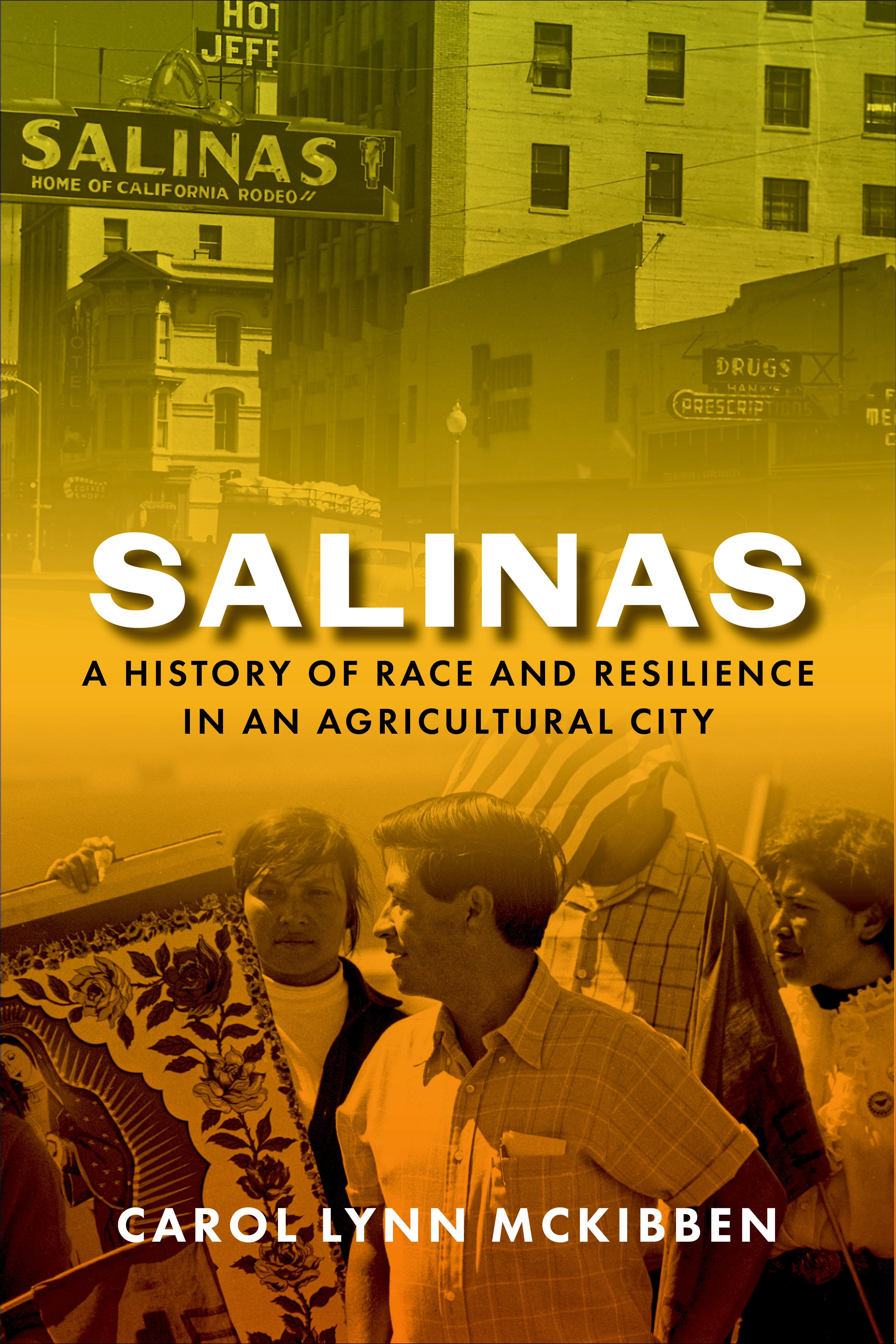
Salinas : a history of race and resilience in an agricultural city
An ambitious history of a California city that epitomizes the history of race relations in modern America. Although much has been written about the urban–rural divide in America, the city of Salinas, California, like so many other places in the state and nation whose economies are based on agriculture, is at once rural and urban. For generations, Salinas has been associated with migrant farmworkers from different racial and ethnic groups. This broad-ranging history of \"the Salad Bowl of the World\" tells a complex story of community-building in a multiracial, multiethnic city where diversity has been both a cornerstone of civic identity and, from the perspective of primarily white landowners and pragmatic agricultural industrialists, essential for maintaining the local workforce. Carol Lynn McKibben draws on extensive original research, including oral histories and never-before-seen archives of local business groups, tracing Salinas's ever-changing demographics and the challenges and triumphs of Chinese, Japanese, Filipino, and Mexican immigrants, as well as Depression-era Dust Bowl migrants and white ethnic Europeans. McKibben takes us from Salinas's nineteenth-century beginnings as the economic engine of California's Central Coast up through the disproportionate impact of Covid-19 on communities of color today, especially farmworkers who already live on the margins. Throughout the century-plus of Salinas history that McKibben explores, she shows how the political and economic stability of Salinas rested on the ability of nonwhite minorities to achieve a measure of middle-class success and inclusion in the cultural life of the city, without overturning a system based in white supremacy. This timely book deepens our understanding of race relations, economic development, and the impact of changing demographics on regional politics in urban California and in the United States as a whole.
eBook

Comparative study on toxicity of ZnO and TiO sub(2) nanoparticles on Artemia salina: effect of pre-UV-A and visible light irradiation
This study evaluated the toxicity potential of ZnO and TiO sub(2) nanoparticles under pre-UV-A irradiation and visible light condition on Artemia salina. The nanoparticle suspension was prepared in seawater medium and exposed under pre-UV-A (0.23 mW/cm super(2)) and visible light (0.18 mW/cm super(2)) conditions. The aggregation profiles of both nanoparticles (NPs) and dissolution of ZnO NPs under both irradiation conditions at various kinetic intervals (1, 24, 48 h) were studied. The 48-h LC sub(50) values were found to be 27.62 and 71.63 mg/L for ZnO NPs and 117 and 120.9 mg/L for TiO sub(2) NPs under pre-UV-A and visible light conditions. ZnO NPs were found to be more toxic to A. salina as compared to TiO sub(2) NPs. The enhanced toxicity was observed under pre-UV-A-irradiated ZnO NPs, signifying its phototoxicity. Accumulation of ZnO and TiO sub(2) NPs into A. salina depends on the concentration of particles and type irradiations. Elimination of accumulated nanoparticles was also evident under both irradiation conditions. Other than ZnO NPs, the dissolved Zn super(2+) also had a significant effect on toxicity and accumulation in A. salina. Increased catalase (CAT) activity in A. salina indicates the generation of oxidative stress due to NP interaction. Thus, this study provides an understanding of the toxicity of photoreactive ZnO and TiO sub(2) NPs as related to the effects of pre-UV-A and visible light irradiation.
Journal Article
Treatment of an industrial stream containing vinylcyclohexene by the H sub(2)O sub(2)/UV process
Petrochemical industries generate wastewaters containing pollutants that can severely impact the biological treatment systems. Some streams from specific production units may contain nonbiodegradable or toxic compounds that impair the performance of the wastewater treatment plant and should be segregated and treated by specific techniques. In this work, the utilization of chemical oxidation (H sub(2)O sub(2)/UV) was investigated for removing 4-vinylcyclohexene (VCH) from a liquid stream coming from the production of hydroxylated liquid polybutadiene (HLPB). Besides VCH, this stream also contains ethanol, hydrogen peroxide, and many other organic compounds. Experiments were carried out in a small-scale photochemical reactor (0.7 L) using a 25-W low-pressure mercury vapor lamp. The photochemical reactor was operated in batch, and the reaction times were comprised between 10 and 60 min. Assays were also performed with a synthetic medium containing VCH, H sub(2)O sub(2), and ethanol to investigate the removal of these substances in a less complex aqueous matrix. By-products formed in the reaction were identified by gas chromatography and mass spectroscopy (GC-MS). VCH was significantly removed by the oxidation process, in most assays to undetectable levels. Ethanol removal varied from 16 to 23 % depending on the reaction conditions. Acetic acid, acetaldehyde, and diols were detected as by-products of the industrial wastewater stream oxidation. A drop on the toxicity of the industrial stream was also observed in assays using the organism Artemia salina.
Journal Article

Periodic CO sub(2) Dosing Strategy for Dunaliella salina Batch Culture
A periodic CO sub(2) dosing strategy for D. salina 19/30 batch culture is proposed. A model of periodic CO sub(2) dosing including dosing time calculation, dosing interval estimation and final chlorophyll yield prediction was established. In experiments, 5% CO sub(2)/95% N sub(2) gas was periodically dosed into D. salina culture. Two different gas dosing flow rates were tested. The corresponding dosing time for each flow rate was estimated via the model (10 min times d super(-1) for 0.7 L times min super(-1) and 36 min times d super(-1) for 0.3 L times min super(-1)). Daily pH measurements showed that the pH of these cultures dosed periodically was always kept between 7.5 and 9.5, which highlights that periodic gas supply can maintain a suitable range of pH for microalgal growth without expensive buffers. Notably the culture dosed for set daily intervals was seen to have similar growth to the culture supplied constantly, but with much higher CO sub(2) capture efficiency (11%-18%) compared to continuous dosing (0.25%). It shows great potential for using periodic gas supply to reduce cost, wasted gas and energy use.
Journal Article

Strategies of adaptation of microorganisms of the three domains of life to high salt concentrations
Hypersaline environments with salt concentrations up to NaCl saturation are inhabited by a great diversity of microorganisms belonging to the three domains of life. They all must cope with the low water activity of their environment, but different strategies exist to provide osmotic balance of the cells' cytoplasm with the salinity of the medium. One option used by many halophilic Archaea and a few representatives of the Bacteria is to accumulate salts, mainly KCl and to adapt the entire intracellular machinery to function in the presence of molar concentrations of salts. A more widespread option is the synthesis or accumulation of organic osmotic, so-called compatible solutes. Here, we review the mechanisms of osmotic adaptation in a number of model organisms, including the KCl accumulating Halobacterium salinarum (Archaea) and Salinibacter ruber (Bacteria), Halomonas elongata as a representative of the Bacteria that synthesize organic osmotic solutes, eukaryotic microorganisms including the unicellular green alga Dunaliella salina and the black yeasts Hortaea werneckii and the basidiomycetous Wallemia ichthyophaga, which use glycerol and other compatible solutes. The strategies used by these model organisms and by additional halophilic microorganisms presented are then compared to obtain an integrative picture of the adaptations to life at high salt concentrations in the microbial world.
Journal Article

Determination of TiO sub(2) and AgTiO sub(2) Nanoparticles in Artemia salina: Toxicity, Morphological Changes, Uptake and Depuration
In this study, aquatic stability and toxic effects of TiO sub(2) and AgTiO sub(2) nanoparticles (NPs) were investigated on Artemia salina nauplii. AgTiO sub(2) was found to be more toxic to nauplii compared to TiO sub(2). The mortality rate in nauplii increased significantly with increasing concentrations and duration of exposure. TiO sub(2) eliminations ranged between 27.8 % and 96.5 % at 50 and 1 mg/L TiO sub(2) exposed to nauplii, respectively. Accumulation and elimination of Ag in AgTiO sub(2) exposed nauplii were similar except at 1 mg/L AgTiO sub(2). When NPs were mixed with water, the hydrodynamic dimensions of NPs significantly increased because of aggregation in saltwater but NP size decreased over time. NPs-exposed nauplii showed changes in eye formation, enlargement of the intestine, malformations in the outer shell and antennae loss were also observed. Since accumulation and toxicity of AgTiO sub(2) NPs was higher than TiO sub(2) alone, inevitably release of AgTiO sub(2) into aqueous environments can cause ecological risks.
Journal Article
Current status and perspectives of genome editing technology for microalgae
Genome editing techniques are critical for manipulating genes not only to investigate their functions in biology but also to improve traits for genetic engineering in biotechnology. Genome editing has been greatly facilitated by engineered nucleases, dubbed molecular scissors, including zinc-finger nuclease (ZFN), TAL effector endonuclease (TALEN) and clustered regularly interspaced palindromic sequences (CRISPR)/Cas9. In particular, CRISPR/Cas9 has revolutionized genome editing fields with its simplicity, efficiency and accuracy compared to previous nucleases. CRISPR/Cas9-induced genome editing is being used in numerous organisms including microalgae. Microalgae have been subjected to extensive genetic and biological engineering due to their great potential as sustainable biofuel and chemical feedstocks. However, progress in microalgal engineering is slow mainly due to a lack of a proper transformation toolbox, and the same problem also applies to genome editing techniques. Given these problems, there are a few reports on successful genome editing in microalgae. It is, thus, time to consider the problems and solutions of genome editing in microalgae as well as further applications of this exciting technology for other scientific and engineering purposes.
Journal Article

Energy transfers in a predator–prey context involving D. salina (microalga), F. salina (ciliate) and A. salina (crustacean), living in salterns of Sfax (Tunisia)
Dunaliella salina (microalgae), Fabrea salina (ciliate) and Artemia salina (crustacean) are the most abundant halophile Eukaryote organisms present in solar salterns at Sfax (Tunisia) when salinity is up to 150 PSU. We analysed the predator/prey relationship between the three organisms in laboratory conditions. In this study, aquatic food web relations were analysed by studying the grazing and energy transfer rates. In solar saltern, the dynamic population of Dunaliella displays a negative relationship with that of Fabrea and Artemia. Grazing experiments confirm that Fabrea and Artemia exercise a top-down control on Dunaliella populations. While Artemia and Fabrea occupy the same trophic level in food chain, the grazing rate of Fabrea on Dunaliella is strongly high reaching 0.85 × 10⁶ ± 0.05 cells mL−1 day−1. The fatty acids (FAs) appeared as good tracers to define the energy transfer along the food chain studied. Effectively, the FA composition of consumers appeared correlated to the FA of their prey. In parallel, the saturated fatty acids (SFAs) content decreased according to the trophic levels, and the opposite was observed for monounsaturated fatty acids (MUFAs). Therefore, palmitic acid (C16:0) showed trends that rendered it useful for tracing trophic transfer to consumers (Artemia). The polyunsaturated fatty acid (PUFA) and especially linoleic acid (C18:2) and linolenic acid (C18:3) were able to be traced across the transfer to Fabrea. This study increased our knowledge of the energy transfer between the major halophile organisms living in the solar salterns at Sfax (Tunisia). We proposed also that the fatty acids are used in future investigations to understand the predator/prey ecological relationship in marine eukaryote organisms.
Journal Article