
Catalogue Search | MBRL


Are you sure you want to remove the book from the shelf?

{{itemTitle}}
2,230
result(s) for
"Salmon farming."
Sort by:

Becoming salmon : aquaculture and the domestication of a fish
\"Becoming Salmon is the first ethnographic account of salmon aquaculture, the most recent turn in the human history of animal domestication. As fish are enrolled in new regimes of marine domestication, traditional distinctions between fish and animals are reconfigured, recasting farmed fish as sentient beings, capable of feeling pain and subject to animal welfare legislation. Drawing on ethnographic fieldwork in Norway and Australia, the author traces farmed Atlantic salmon through contemporary industrial practices, and shows how salmon are bred to be hungry, globally mobile, and alien in their watersheds of origin. Attentive to the economic context of industrial food production as well as the mundane practices of caring for fish, it offers novel perspectives on domestication, human-animal relations, and food production\"--Provided by publisher.
Book


The new fish : the truth about farmed salmon and the consequences we can no longer ignore / Simen Sætre and Kjetil Østli ; translated from the Norwegian language by Sin Mackie
\"In a prizewinning five-year investigation, authors Simen Sætre and Kjetil Østli produced a comprehensive evaluation of the detrimental effects of salmon farming. From lice to escapees, from concentrated sea-pen waste in the fjords through which wild salmon swim to the fact that salmon farming causes a net reduction of protein reaped from the ocean, the results don't look good. Recent victories, such as the banning of net-pen fish farms in the waters of Washington State, are an indication that we are awakening to the environmental price of engineered fish. But will it be soon enough?\"--
eBook

Becoming salmon
Becoming Salmonis the first ethnographic account of salmon aquaculture, the most recent turn in the human history of animal domestication. In this careful and nuanced study, Marianne Elisabeth Lien explores how the growth of marine domestication has blurred traditional distinctions between fish and animals, recasting farmed fish as sentient beings, capable of feeling pain and subject to animal-welfare legislation.Drawing on fieldwork on and off salmon farms, Lien follows farmed Atlantic salmon through contemporary industrial husbandry, exposing how salmon are bred to be hungry, globally mobile, and \"alien\" in their watersheds of origin. Attentive to both the economic context of industrial food production and the materiality of human-animal relations, this book highlights the fragile and contingent relational practices that constitute salmon aquaculture and the multiple ways of \"becoming salmon\" that emerge as a result.
eBook

Social-ecological uncertainty and the (in)capacity to adapt: stakeholders’ perceptions post-red tide/salmon farming crisis in Chiloé Island (Chile)
In 2016, a prominent social movement developed on Chiloé Island in protest against the consequences of the worst harmful algal blooms in Chile’s history. During the same period, with the national government’s authorization, the salmon farming industry dumped 9000 tonnes of dead fish into the sea less than 75 nautical miles off Chiloé. Research on environmental change in coastal zones shows that coastal communities suffer a broad array of stressors that challenge them socially, culturally, and economically. Climate change impacts, declines in marine species, and global market pressures, among others, create disturbances that increase local vulnerabilities. Yet limited attention has been paid to coastal communities exposed to large-scale industrial developments and the role of social conflict as a driver of change in converging social-environmental shocks, as the Chiloé crisis illustrates. Through a qualitative approach, this research describes the perceptions of key stakeholders regarding the multiple stressors of the red tide/salmon dumping crisis and the impacts of the crisis on their adaptive capacity. Results suggest that social adaptive capacity is challenged to its breaking point because of enduring environmental uncertainty, which in turn influences knowledge and perceptions about environmental changes, livelihood opportunities, and governance. Specifically, there are opposing narratives about the causes and consequences of algal blooms and marine degradation. Whereas the government attributes climate change to the issue, key players in the movement argue that the toxicity of industrial salmon farming is the primary cause. A few positive outcomes are associated with the social movement’s efforts, including a Supreme Court decision that favors the communities. However, national and local institutional responses have been short-sighted, and uncertainty undermines people’s ability to address future environmental challenges. Ultimately, we find that the social conflict and the dual attributions of the cause that followed the salmon mortality and algal bloom events are less about multiple stressors and, instead, are more fully about the decline in adaptive capacity that followed the social conflict itself.
Journal Article

Intensive fish farming and the evolution of pathogen virulence: the case of columnaris disease in Finland
Ecological changes affect pathogen epidemiology and evolution and may trigger the emergence of novel diseases. Aquaculture radically alters the ecology of fish and their pathogens. Here we show an increase in the occurrence of the bacterial fish disease Flavobacterium columnare in salmon fingerlings at a fish farm in northern Finland over 23 years. We hypothesize that this emergence was owing to evolutionary changes in bacterial virulence. We base this argument on several observations. First, the emergence was associated with increased severity of symptoms. Second, F. columnare strains vary in virulence, with more lethal strains inducing more severe symptoms prior to death. Third, more virulent strains have greater infectivity, higher tissue-degrading capacity and higher growth rates. Fourth, pathogen strains co-occur, so that strains compete. Fifth, F. columnare can transmit efficiently from dead fish, and maintain infectivity in sterilized water for months, strongly reducing the fitness cost of host death likely experienced by the pathogen in nature. Moreover, this saprophytic infectiousness means that chemotherapy strongly select for strains that rapidly kill their hosts: dead fish remain infectious; treated fish do not. Finally, high stocking densities of homogeneous subsets of fish greatly enhance transmission opportunities. We suggest that fish farms provide an environment that promotes the circulation of more virulent strains of F. columnare. This effect is intensified by the recent increases in summer water temperature. More generally, we predict that intensive fish farming will lead to the evolution of more virulent pathogens.
Journal Article
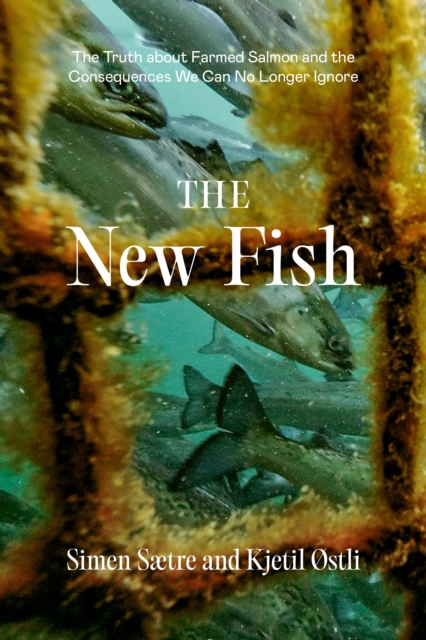
The New Fish: The Truth About Farmed Salmon and the Consequences We Can No Longer Ignore
Eat more fish, the doctors say. But is the salmon you are consuming really healthy? In the early 1970s, a group of scientists researched how to make more food for the growing population of the world. They looked to the sea. They sampled genes from salmon in 41 Norwegian and Swedish rivers and designed a new salmon that was fatter and faster growing. This was considered an amazing innovation and was the beginning of a new industry: salmon farming. The industry spread from coastal Norway to Scotland, Canada, Australia, Ireland, Chile, Iceland, the Faroe Islands, and the United States. Business boomed, jobs were created, and a new type of food, the farmed salmon, spread around the globe. People everywhere bought and enjoyed the abundant fish: grilled, poached, roasted, and as sushi and sashimi. They were grateful for this delicious, affordable protein. But at what cost? We now know that there were unintended consequences: some of these new fish escaped, competing for sustenance with other fish in the sea. The new fish spread diseases, salmon louse swarmed, and wild salmon stocks dwindles. In a prizewinning five-year investigation, authors Simen Sætre and Kjetil Østli took an in-depth look at Norway's role in the global salmon industry and, for the first time, produced a comprehensive evaluation of the detrimental effects of salmon farming. From lice to escapees, from concentrating the waste of sea pens in the fjords through which wild salmon swim to their natal streams to the fact that salmon farming causes a net reduction of protein reaped from the ocean, the results don't look good. Recent victories, such as the banning of net-pen fish farms in the waters of Washington State, are an indication that we are awakening to the environmental price of engineered fish. It is said that we will continue to make the same mistakes unless we understand them. The New Fish combines nature writing from Norwegian fjords, the coast of Canada, Icelandic landscapes and the far south of Chile with character-driven literary non-fiction and classic muckraking. The authors started with this question: What happens when you create a new animal and place it in the sea? This book will tell you the answer.
eBook

Industrial renewal: narratives in play in the development of green technologies in the Norwegian salmon farming industry
This study introduces a social science informed technology approach to move towards a more comprehensive understanding of industry renewal. We achieve this through an evolutionary perspective scrutinising how materiality and discourse interact in an ongoing technology greening programme within the salmon farming industry in Norway. The empirical part starts with a brief introduction to the history of the salmon farming industry. This is followed by a section focusing on how new technology solutions under development relate to narratives in play in the discourses around new technology formation. The analysis reveals that a global demand narrative has become a focal point for the majority of the participating stakeholders. The narrative promotes increased growth into the ongoing greening programme under cover of feeding the world's growing population with proteins. The potential technological solutions are different forms of landbased production systems, closed containment systems and offshore aquaculture operation systems. Undoubtedly, the systems represent huge material changes, but also a continuation of mass production rationality accountable for many of the environmental problems of the open-net pen technology the new technologies are supposed to solve. Accordingly, the narrative appears to block a 'cognitive renewal' of the technology complex under study. On this basis we argue that the case underlines a requirement for more discursively informed understandings of 'industrial renewal' when aspiring for the introduction of green technologies.
Journal Article

Assessing the effects of salmon farming seabed enrichment using bacterial community diversity and high-throughput sequencing
Aquaculture is an extremely valuable and rapidly expanding sector of the seafood industry. The sediment below active aquaculture farms receives inputs of organic matter from uneaten food and faecal material and this has led to concerns related to environmental sustainability. The impacts of organic enrichment on macrobenthic infauna are well characterized; however, much less is known about effect on bacterial communities. In this study, sediment, macrobenthic infauna samples and environmental data were collected along an enrichment gradient radiating out from a Chinook salmon (Oncorhynchus tshawytscha) farm (Marlborough Sounds; New Zealand). DNA and RNA were extracted and 16S rRNA metabarcodes from bacterial communities characterized using high-throughput sequencing. Desulfobacterales dominated at the cage (DNA and RNA), and at sites 50 m (DNA and RNA) and 150 m (RNA) from the farm. In contrast, unclassified bacteria from the class Gammaproteobacteria were the most abundant taxa at control sites (625 and 4000 m). Pronounced differences among DNA and RNA samples occurred at the cage site where Desulfobacterales abundance was markedly higher in RNA samples. There were strong correlations between shifts in bacterial communities and total organic matter and redox. This suggests that bacterial composition is strongly influenced by organic enrichment, a trait that may make them useful for assessing impacts associated with aquaculture farms.
This study demonstrates that sediment bacterial composition is strongly influenced by organic enrichment from salmon farming.
Journal Article
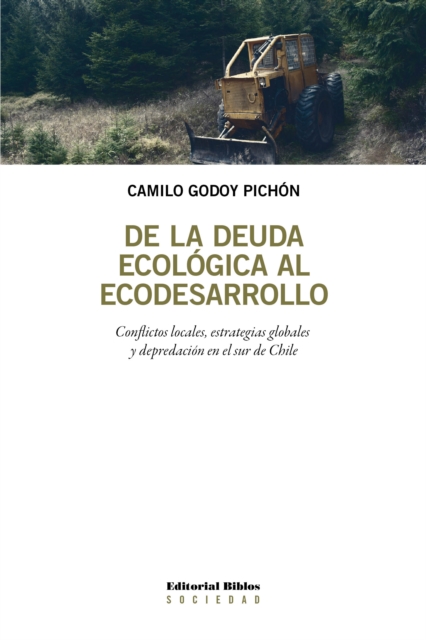
De la deuda ecológica al ecodesarrollo
De la deuda ecológica al ecodesarrollo: conflictos locales, estrategias globales y depredación en el sur de Chile es un libro que busca reflejar cómo la salmonicultura y la industria forestal son actividades que poseen características formales distintas, pero que tienen ciertas similitudes aplicables al caso de la inserción de Chile en la economía global. Esta inserción presenta diversas problemáticas, impactos y conflictos a nivel socioambiental, pero también trae aparejada la posibilidad de estudiar y reflexionar algunos conceptos de la tradición latinoamericana de los años setenta, como \"ecodesarrollo\" y \"deuda ecológica\"; nos obliga a ver cómo estas actividades pueden proyectar una inserción diferente de Chile y la región en el plano internacional.
eBook