
Catalogue Search | MBRL


Are you sure you want to remove the book from the shelf?

{{itemTitle}}
4
result(s) for
"San (African people) -- South Africa -- Cape of Good Hope -- History"
Sort by:


Genocide on Settler Frontiers: When Hunter-Gatherers and Commercial Stock Farmers Clash
European colonial conquest included many instances of indigenous peoples being exterminated. Cases where invading commercial stock farmers clashed with hunter-gatherers were particularly destructive, often resulting in a degree of dispossession and slaughter that destroyed the ability of these societies to reproduce themselves. The experience of aboriginal peoples in the settler colonies of southern Africa, Australia, North America, and Latin America bears this out. The frequency with which encounters of this kind resulted in the annihilation of forager societies raises the question of whether these conflicts were inherently genocidal, an issue not yet addressed by scholars in a systematic way.
eBook
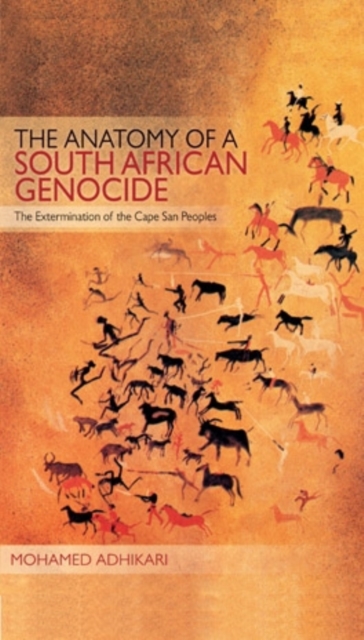
The Anatomy of a South African Genocide
In 1998 David Kruiper, the leader of the ‡Khomani San who today live in the Kalahari Desert in South Africa, lamented, \"We have been made into nothing.\" His comment applies equally to the fate of all the hunter-gatherer societies of the Cape Colony who were destroyed by the impact of European colonialism. Until relatively recently, the extermination of the Cape San peoples has been treated as little more than a footnote to South African narratives of colonial conquest.During the eighteenth and nineteenth centuries, Dutch-speaking pastoralists who infiltrated the Cape interior dispossessed its aboriginal inhabitants. In response to indigenous resistance, colonists formed mounted militia units known as commandos with the express purpose of destroying San bands. This ensured the virtual extinction of the Cape San peoples. InThe Anatomy of a South African Genocide,Mohamed Adhikariexamines the history of the San and persuasively presents the annihilation of Cape San society as genocide.
eBook

Genocide on Settler Frontiers
European colonial conquest included many instances of indigenous
peoples being exterminated. Cases where invading commercial stock
farmers clashed with hunter-gatherers were particularly
destructive, often resulting in a degree of dispossession and
slaughter that destroyed the ability of these societies to
reproduce themselves. The experience of aboriginal peoples in the
settler colonies of southern Africa, Australia, North America, and
Latin America bears this out. The frequency with which encounters
of this kind resulted in the annihilation of forager societies
raises the question of whether these conflicts were inherently
genocidal, an issue not yet addressed by scholars in a systematic
way.
eBook