
Catalogue Search | MBRL


Are you sure you want to remove the book from the shelf?

{{itemTitle}}
2,710
result(s) for
"Sandals"
Sort by:

The Effect of Need for Uniqueness on Word of Mouth
This research examines the psychosocial cost associated with positive word of mouth (WOM), which can decrease the uniqueness of possessions and thus harm high-uniqueness consumers (pilot study). As a result, high- (versus low-) uniqueness consumers are less willing to generate positive WOM for publicly consumed products that they own. However, high uniqueness does not decrease willingness to generate WOM for privately consumed products (Study 1). Study 2 demonstrates that for publicly consumed products, WOM that includes positive recommendations is more persuasive than WOM that only contains product details. Consequently, the effect of uniqueness is more pronounced for WOM recommendations than for WOM that only provides details (Study 3). Study 4 confirms that high- (versus low-) uniqueness consumers are less willing to recommend a public product to others but are equally willing to discuss product details. Study 5 analyzes real-world WOM content and finds evidence in support of these results.
Journal Article

Sandalwood: history, uses, present status and the future
Sandalwood (Santalum album L.) is a valuable tree associated with Indian culture. It is the second most expensive wood in the world. The heartwood of the tree is treasured for its aroma and is one of the finest natural materials for carving. Sandalwood oil is used in perfumes, cosmetics, aromatherapy and pharmaceuticals. The monopoly of sandalwood trade by the Governments of Karnataka, Tamil Nadu and Kerala and its consequences have resulted in severe exploitation, pushing S. album into the vulnerable category of the IUCN Red List. Extensive research has shown that sandalwood exhibits considerable genetic diversity for different traits. However, information pertaining to heartwood and oil content is meagre mainly because of non-availability of sandalwood plantations. Carrying out further research on these two important traits is difficult as natural populations have dwindled rapidly. We strongly urge that it is essential to encourage the establishment of community/corporate sandalwood plantations in different parts of India with appropriate incentives and adequate protective measures. These plantations can form the base population sources to regain the leadership of India in the sandalwood industry for perfumery and the precious art of carving.
Journal Article

Sandals of the Basketmaker and Pueblo Peoples
The decorated sandals worn by prehistoric southwesterners with their complex fiber structures and designs have been dissected, described, and interpreted for a century. Nevertheless, these artifacts remain mysterious in many respects. Teague and Washburn examine these sandals as sources of information on the history of the people known as the Basketmakers.
The unique sandals of early southwestern farmers appear in Basketmaker II and reach their greatest elaboration with the complex fabric structures and colorbanded designs of Basketmaker III. The appearance of this footwear coincides with the transition to fully sedentary maize agriculture. The authors address the origins of these sandals and what they may reveal about population movements onto and around the Colorado Plateau and about the cosmology of early farmers.
eBook

When Imitation Doesn’t Flatter: The Role of Consumer Distinctiveness in Responses to Mimicry
In a series of four experiments, the authors examine the implications of one consumer’s possession being mimicked by another consumer. The results demonstrate that when distinctiveness concerns are heightened, greater dissociation responses (i.e., possession disposal intentions, recustomization behaviors, and exchange behaviors) arise in response to being mimicked by a similar as opposed to dissimilar other. These effects are driven by threats to distinctiveness. Finally, these effects are mitigated when the imitated possession is nonsymbolic in nature and when a low degree of effort is exerted to initially obtain the possession. Implications for marketers and consumers are discussed.
Journal Article
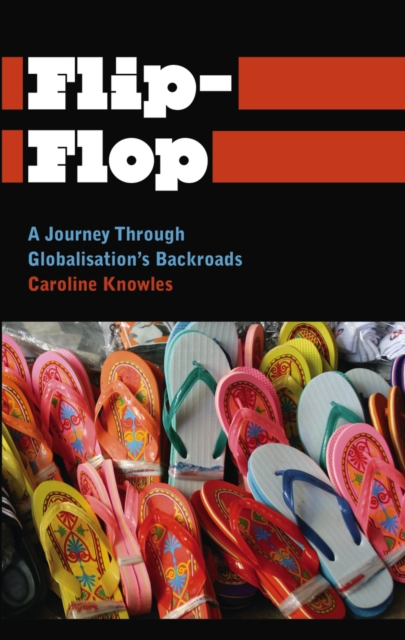
Flip-Flop
*Shortlisted for the BBC Radio 4 Thinking Allowed Award for Ethnography 2015* This book follows the global trail of one of the world's most unremarkable and ubiquitous objects - flip-flops. Through this unique lens, Caroline Knowles takes a ground level view of the lives and places of globalisation's back roads, providing new insights that challenge contemporary accounts of globalisation. Rather than orderly product chains, the book shows that globalisation along the flip-flop trail is a tangle of unstable, shifting, ad hoc and contingent connections. This book displays both the instabilities of the 'chains' and the complexities, personal topographies and skills with which people navigate these global uncertainties. Flip-Flop provides new ways of thinking about globalisation from the vantage point of the shifting landscape crossed by a seemingly ordinary and everyday commodity.
eBook
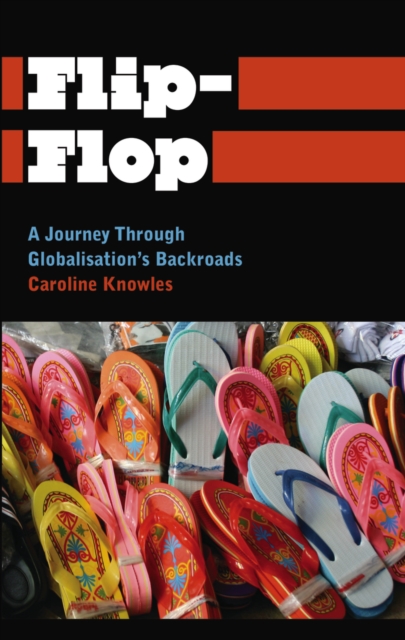
Navigating the flip-flop trail: a journey through globalisation's backroads
This title follows the trail of one of the world's most unremarkable and ubiquitous objects - flip-flops. Caroline Knowles takes a ground level view of globalisation's back roads, providing insights that challenge contemporary accounts of globalilsation.
eBook

Lower limb muscle co-contraction and joint loading of flip-flops walking in male wearers
Flip-flops may change walking gait pattern, increase muscle activity and joint loading, and predispose wearers to foot problems, despite that quantitative evidence is scarce. The purpose of this study was to examine the lower limb muscle co-contraction and joint contact force in flip-flops gait, and compare with those of barefoot and sports shoes walking. Ten healthy males were instructed to perform over-ground walking at self-selected speed under three footwear conditions: 1) barefoot, 2) sports shoes, and 3) thong-type flip-flops. Kinematic, kinetic and EMG data were collected and input to a musculoskeletal model to estimate muscle force and joint force. One-way repeated measures ANOVA was conducted to compare footwear conditions. It was hypothesized that flip-flops would induce muscle co-contraction and produce different gait kinematics and kinetics. Our results demonstrated that the musculoskeletal model estimation had a good temporal consistency with the measured EMG. Flip-flops produced significantly lower walking speed, higher ankle and subtalar joint range of motion, and higher shear ankle joint contact force than sports shoes (p < 0.05). There were no significant differences between flip-flops and barefoot conditions in terms of muscle co-contraction index, joint kinematics, and joint loading of the knee and ankle complex (p > 0.05). The variance in walking speed and footwear design may be the two major factors that resulted in the comparable joint biomechanics in flip-flops and barefoot walking. From this point of view, whether flip-flops gait is potentially harmful to foot health remains unclear. Given that shod walking is more common than barefoot walking on a daily basis, sports shoes with close-toe design may be a better footwear option than flip-flops for injury prevention due to its constraint on joint motion and loading.
Journal Article

A comparison of gait biomechanics of flip-flops, sandals, barefoot and shoes
Background
Flip-flops and sandals are popular choices of footwear due to their convenience. However, the effects of these types of footwear on lower extremity biomechanics are still poorly understood. Therefore, the objective of this study was to investigate differences in ground reaction force (GRF), center of pressure (COP) and lower extremity joint kinematic and kinetic variables during level-walking in flip-flops, sandals and barefoot compared to running shoes.
Methods
Ten healthy males performed five walking trials in the four footwear conditions at 1.3 m/s. Three-dimensional GRF and kinematic data were simultaneously collected.
Results
A smaller loading rate of the 1st peak vertical GRF and peak propulsive GRF and greater peak dorsiflexion moment in early stance were found in shoes compared to barefoot, flip-flops and sandals. Barefoot walking yielded greater mediolateral COP displacement, flatter foot contact angle, increased ankle plantarflexion contact angle, and smaller knee flexion contact angle and range of motion compared to all other footwear.
Conclusions
The results from this study indicate that barefoot, flip-flops and sandals produced different peak GRF variables and ankle moment compared to shoes while all footwear yield different COP and ankle and knee kinematics compared to barefoot. The findings may be helpful to researchers and clinicians in understanding lower extremity mechanics of open-toe footwear.
Journal Article
Anatomy and functional status of haustoria in field grown sandalwood tree (Santalum album L.)
A study on the physiology of root parasitism in sandal (Santalum album L.) was conducted by comparing a six-year-old sandal grown alone and along with a host (Casuarina equisetifolia). Although maximum haustorial connections were observed when grown along with the host, sandal formed haustorial connections with plants including grass up to a distance of 3 m. Anatomical studies on haustoria indicated a vascular connectivity between the host and sandal. While the haustoria functioned as a physiological unit supporting nutritional requirements of sandal, direct lumen–lumen xylem connections between sandal and host were absent. Functional status of the haustorial connection was studied by radio-labelling the host (Casuarina) and nearby grass with phosphorus (32P). Presence of translocated 32P in sandal was noticed after six hours of labelling the host. 32P activity was noticed from eight days up to 16 days after which then it started decreasing. Study with multiple hosts revealed that the extent of translocation from hosts to sandal varied from 28.9% (coconut + Casuarina + rubber as host) to 78.5% (Casuarina + rubber as hosts). Reverse translocation of 32P from sandal to host was also observed. The study concludes that it is not necessary to plant the host along with the sandal as it is practiced presently.
Journal Article

Host-specific influence on early growth and physiological attributes of sandal (Santalum album) grown in farmlands
Aim: The present study aimed to investigate the host- specific compatibility of sandal (Santalum album) for better root proliferation and boosting the growth of tree. Methodology: Sandal (Santalum album) was grown with 8 different leguminous and non-leguminous species at early stage to evaluate its biometric growth (height and basal diameter) and physiological (chlorophyll, photosynthesis rate and transpiration rate) performance under field conditions. Results: Sandal grown with Sesbania grandiflora recorded highest biometric observations, chlorophyll, photosynthesis and transpiration rate followed by Sandal + Albizia lebbeck and sandal + Casuarina junghuhniana. The sandal grown with leguminous host showed superior growth performance than sandal grown with non-leguminous host. Interpretation: The present study recommended that Sesbania grandiflora can be grown as transit host for boosting the growth of sandal.
Journal Article