
Catalogue Search | MBRL


Are you sure you want to remove the book from the shelf?

{{itemTitle}}
1,551
result(s) for
"Sandinista"
Sort by:

Nicaragua and the politics of utopia : development and culture in the modern state
\"Nicaragua and the Politics of Utopia proposes that utopias are not only for novelists and poets; contemporary dictators, Marxist revolutionaries, and neoliberal economists also deal with promises and hubris, with imagined national destinies that often end up in conflict and disaster\" -- Provided by publisher.
Book

Nicaragua and the Politics of Utopia
The history of modern Nicaragua is populated with leaders promising a new and better day. Inevitably, as Nicaragua and the Politics of Utopia demonstrates, reality casts a shadow and the community must look to the next leader. As an impoverished state, second only to Haiti in the Americas, Nicaragua has been the scene of cyclical attempts and failures at modern development. Author Daniel Chavez investigates the cultural and ideological bases of what he identifies as the three decisive movements of social reinvention in Nicaragua: the regimes of the Somoza family of much of the early to mid-twentieth century; the governments of the Sandinista party; and the present day struggle to adapt to the global market economy.
For each era, Chavez reveals the ways Nicaraguan popular culture adapted and interpreted the new political order, shaping, critiquing, or amplifying the regime's message of stability and prosperity for the people. These tactics of interpretation, otherwise known as meaning-making, became all-important for the Nicaraguan people, as they opposed the autocracy of Somocismo, or complemented the Sandinistas, or struggled to find their place in the Neoliberal era. In every case, Chavez shows the reflective nature of cultural production and its pursuit of utopian idealism.
eBook
Review of Nicaragua must survive. Sandinista revolutionary diplomacy in the Global Cold War
Nicaragua must survive. Sandinista revolutionary diplomacy in the Global Cold War, by Eline van Ommen. University of California Press, 2024
Journal Article

To Defend This Sunrise
To Defend this Sunrise examines how black women on the
Caribbean coast of Nicaragua engage in regional, national, and
transnational modes of activism to remap the nation's racial order
under conditions of increasing economic precarity and autocracy.
The book considers how, since the 19th century, black women
activists have resisted historical and contemporary patterns of
racialized state violence, economic exclusion, territorial
dispossession, and political repression. Specifically, it explores
how the new Sandinista state under Daniel Ortega and Rosario
Murillo has utilized multicultural rhetoric as a mode of political,
economic, and territorial dispossession. In the face of the
Sandinista state's co-optation of multicultural discourse and
growing authoritarianism, black communities have had to recalibrate
their activist strategies and modes of critique to resist these new
forms of \"multicultural dispossession.\" This concept describes the
ways that state actors and institutions drain multiculturalism of
its radical, transformative potential by espousing the rhetoric of
democratic recognition while simultaneously supporting illiberal
practices and policies that undermine black political demands and
weaken the legal frameworks that provide the basis for the claims
of these activists against the state.
eBook
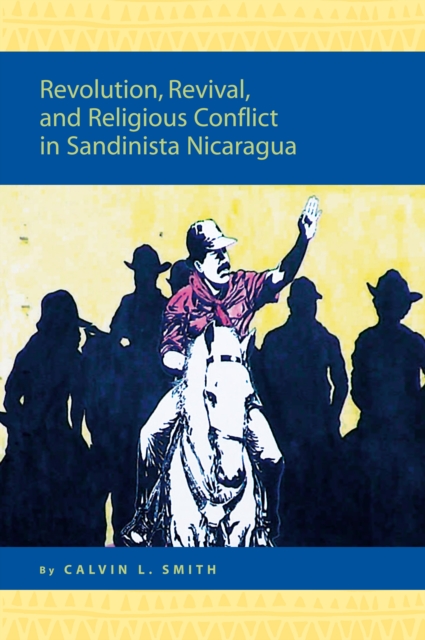
Revolution, Revival, and Religious Conflict in Sandinista Nicaragua
This book explores Protestant-Sandinista relations in revolutionary Nicaragua, demonstrating how and why most Protestants vigorously opposed the revolution, tracing Sandinista irritation with Pentecostal belief and practice, and identifying how brutal Sandinista repression of Pentecostals led many to join the Contras.
eBook

El mestre Sebas Parra: un puntal contra tots els analfabetismes
L’article fa un repàs de la trajectòria vital i professional del mestre de persones adultes Sebas Parra Nuño, que va morir el desembre de 2022. Des de 1976 fins al 2006 va treballar i dirigir l’Escola d’Adults de Salt (Gironès), un símbol del model d’escola social i comunitària al servei de les persones que es volien alfabetitzar o millorar les seves competències acadèmiques. Des d’allí va impulsar i assessorar la creació de l’Escola Africana d’Adults Samba Kubally, de Santa Coloma de Farners (Selva) i es va bolcar en la cooperació solidària, especialment en les diferents campanyes d’alfabetització, amb el poble de Nicaragua. Va ser un dels fundadors de l’Institut Paulo Freire d’Espanya, amb seu a Xàtiva, i és autor d’un nombre significatiu de llibres i articles.
The article reviews the life and professional career of the teacher for adults Sebas Parra Nuño, who died in December 2022. From 1976 to 2006 he worked and directed the Adult School of Salt (Gironès region), a symbol of the school model social and community at the service of adults who wanted to become literate or improve their academic skills. From there, he promoted and advised the creation of the Samba Kubally African School for Adults, in Santa Coloma de Farners (La Selva region), and dedicated his efforts to solidarity cooperation, especially with regard to the different literacy campaigns, with the people from Nicaragua. He was one of the founders of the Paulo Freire Institute of Spain, based in Xàtiva (Valen-cia), and is the author of a significant number of books and articles.
El artículo repasa la trayectoria vital y profesional del maestro de personas adultas Sebas Parra Nuño, que murió en diciembre de 2022. Desde 1976 hasta 2006 trabajó y dirigió la Escuela de Adultos de Salt (comarca del Gironès), un símbolo del modelo de escuela social y comunitaria al servicio de las personas adultas que querían alfabetizarse o mejorar sus competencias académicas. Desde allí impulsó y asesoró la creación de la Escuela Africana de Adultos Samba Kubally, de Santa Coloma de Farners (comarca de la Selva), y dedicó sus esfuerzos a la cooperación solidaria, especialmente a propósito de las distintas campañas de alfabetización, con el pueblo de Nicaragua. Fue uno de los fundadores del Instituto Paulo Freire de España, con sede en Xàtiva (Valencia), y es autor de un número significativo de libros y artículos.
Journal Article

Apuntes sobre las experiencias internacionalistas del Movimiento de Izquierda Revolucionaria (MIR) chileno en la Revolución Sandinista
La Revolución Sandinista atrajo la solidaridad de numerosos contingentes internacionalistas que, desde la etapa insurreccional y durante la reconstrucción de Nicaragua, se incorporaron al proceso revolucionario nicaragüense. En función de fuentes orales, profundizamos en las experiencias de colaboración e integración de militantes del Movimiento de Izquierda Revolucionaria (MIR) de Chile con el Frente Sandinista de Liberación Nacional (FSLN). Con este objetivo, analizamos las redes que permitieron su vinculación al proceso sandinista, la inserción en los diversos periodos y ámbitos del proceso revolucionario, y las tensiones que estas experiencias generaron al interior del MIR, en el marco de su estrategia de movilización antidictatorial.
Journal Article
Learning democracy
Historically, Nicaragua has been mired in poverty and political conflict, yet the country has become a model for the successful emergence of democracy in a developing nation. Learning Democracy tells the story of how Nicaragua overcame an authoritarian government and American interventionism by engaging in an electoral revolution that solidified its democratic self-governance. By analyzing nationwide surveys conducted during the 1990, 1996, and 2001 Nicaraguan presidential elections, Leslie E. Anderson and Lawrence C. Dodd provide insight into one of the most unexpected and intriguing recent advancements in third world politics. They offer a balanced account of the voting patterns and forward-thinking decisions that led Nicaraguans to first support the reformist Sandinista revolutionaries only to replace them with a conservative democratic regime a few years later. Addressing issues largely unexamined in Latin American studies, Learning Democracy is a unique and probing look at how the country's mass electorate moved beyond revolutionary struggle to establish a more stable democratic government by realizing the vital role of citizens in democratization processes.
eBook

Peasants in Arms
Drawing on testimonies from contra collaborators and ex-combatants, as well as pro-Sandinista peasants, this book presents a dynamic account of the growing divisions between peasants from the area of Quilalí who took up arms in defense of revolutionary programs and ideals such as land reform and equality and those who opposed the FSLN.Peasants.
eBook

The Ends of Modernization
The Ends of Modernization
studies the relations between Nicaragua and the United
States in the crucial years during and after the Cold War.
David Johnson Lee charts the transformation of the ideals of
modernization, national autonomy, and planned development as they
gave way to human rights protection, neoliberalism, and
sustainability. Using archival material, newspapers, literature,
and interviews with historical actors in countries across Latin
America, the United States, and Europe, Lee demonstrates how
conflict between the United States and Nicaragua shaped larger
international development policy and transformed the Cold War.
In Nicaragua, the backlash to modernization took the form of the
Sandinista Revolution which ousted President Anastasio Somoza
Debayle in July 1979. In the wake of the earlier reconstruction of
Managua after the devastating 1972 earthquake and instigated by the
revolutionary shift of power in the city, the Sandinista Revolution
incited radical changes that challenged the frankly ideological and
economic motivations of modernization. In response to threats to
its ideological dominance regionally and globally, the United
States began to promote new paradigms of development built around
human rights, entrepreneurial internationalism, indigenous rights,
and sustainable development.
Lee traces the ways Nicaraguans made their country central to
the contest over development ideals beginning in the 1960s,
transforming how political and economic development were imagined
worldwide. By illustrating how ideas about ecology and sustainable
development became linked to geopolitical conflict during and after
the Cold War, The Ends of Modernization provides a history
of the late Cold War that connects the contest between the two
then-prevailing superpowers to trends that shape our present,
globalized, multipolar world.
eBook