
Catalogue Search | MBRL


Are you sure you want to remove the book from the shelf?

{{itemTitle}}
9
result(s) for
"Sarkophag"
Sort by:

Life, death and afterlife in ancient Egypt : the Djehutymose coffin in the Kelsey Museum of Archaeology
The elaborately decorated coffin of Djehutymose, a priest of the ancient Egyptian god Horus from around 625-580 BC, is one of the central artifacts of the Kelsey Museum of Archaeology's Egyptian collection. Using the images and texts from the coffin along with related artifacts in the Kelsey Museum, Egyptologist T. G. Wilfong explores what the coffin tells us about ancient Egyptian ideas of life, death, and the afterlife.
Book
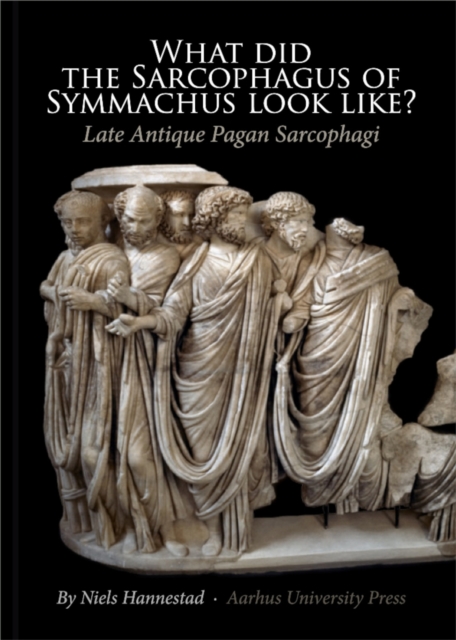
What did the Sarcophagus of Symmachus look like?
This book concerns the chronology of Roman mythological sarcophagi. The traditional chronology assumes a peak in production during the reign of Gallienus (AD 259-268) that fades away in the reign of Constantine. This chronology has some obvious flaws. The supposed peak under the reign of Gallienus, when the empire was falling apart, can only be described as a mirage. Some very fine sarcophagi were indeed produced in this period, but the number is very limited. With the reign of Constantine (AD 306-337) came wealth, and the so-called 'villa boom' that also revived sculpture in the round. At that time, it is believed that production of pagan sarcophagi had ceased to be replaced by Christian sarcophagi. This raises a very simple question, however: how were pagans buried? No doubt production of pagan sarcophagi continued beyond the turn of the century and Symmachus, who died in AD 402, was buried in such a sarcophagus.
eBook
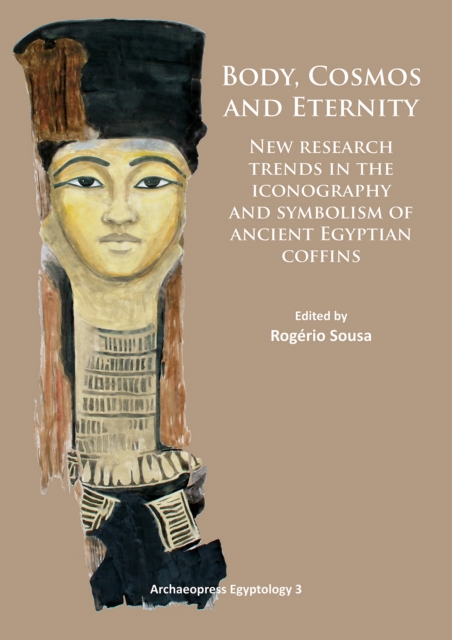
Body, cosmos and eternity: new research trends in the iconography and symbolism of ancient Egyptian coffins
The studies presented in this volume display an excellent overview on the new trends of research on coffin studies, with diverse contributions concerned either with symbolism or social significance of coffins, museums' collections or archaeological finds. These studies superbly showcase the richness of coffins as documental sources for the study of Egyptian religion, economy and society.
eBook
Life, Death and Representation
Millennium überschreitet Grenzen, Grenzen zwischen den Epochen und regionalen Räumen wie auch Grenzen zwischen den Disziplinen. Die Schriftenreihe Millennium-Studien ist, genauso wie das Jahrbuch, international, interdisziplinär und epochenübergreifend ausgerichtet. Das Herausgebergremium und der Beirat repräsentieren ein breites Spektrum von Fächern: Kunst- und literaturwissenschaftliche Beiträge kommen ebenso zu ihrem Recht wie historische, theologische und philosophische, Arbeiten zu den lateinischen und griechischen Kulturen genauso wie zu den nordafrikanischen und vorderasiatischen. In die Studien finden einschlägige Monographien und Sammelwerke aus dem gesamten Themenspektrum Aufnahme, zudem Kommentare und Editionen. Publikationssprachen sind vornehmlich Deutsch und Englisch; die Aufnahme französischer, italienischer und spanischer Arbeiten ist möglich. Reihenherausgeber*innen Wolfram Brandes, Frankfurt, Deutschland (Byzantinistik und Frühes Mittelalter): brandeswolfram@gmail.com [brandeswolfram@gmail.com] Laura Carrara, Pisa, Italien (Gräzistik): laura.carrara@unipi.it [laura.carrara@unipi.it] Dennis Pausch, Marburg, Deutschland (Latinistik): dennis.pausch@uni-marburg.de [dennis.pausch@uni-marburg.de] Rene Pfeilschifter, Würzburg, Deutschland (Alte Geschichte): Rene.Pfeilschifter@uni-wuerzburg.de [Rene.Pfeilschifter@uni-wuerzburg.de] Karla Pollmann, Tübingen, Deutschland (Frühes Christentum und Patristik): karla.pollmann@uni-tuebingen.de [karla.pollmann@uni-tuebingen.de] Falls Sie ein Manuskript für die Millennium-Studien einreichen möchten, bitten wir Sie, sich an den fachnächsten Reihenherausgeber zu wenden. Alle Manuskripte werden von dem jeweiligen Reihenherausgeber und von einem externen Gutachter beurteilt. Dabei gilt das Single-blind peer review-Verfahren. Wissenschaftlicher Beirat: Phil Booth, University of Oxford, UK Patricia Ciner, National University of San Juan, Argentinien Babett Edelmann-Singer, Freie Universität Berlin, Deutschland Philip Forness, Katholieke Universiteit Leuven, Belgien Lea Niccolai, Trinity College, University of Cambridge, Vereinigtes Königreich Claudia Rapp, Universität Wien, Österreich Verena Schulz, Katholische Universität Eichstätt, Deutschland Chiara Tommasi, Università di Pisa, Italien Lieve Van Hoof, Universität Ghent, Belgien
eBook

Life, Death and Representation
The volume presents essays on different aspects of Roman sarcophagi. These varied approaches produce freshinsights into a subject which has received increased interest in English-language scholarship, with a new awareness of the important contribution that sarcophagi can make to the study of the social use and production of Roman art. Metropolitan sarcophagi are the main focus of the volume, which will cover a wide time range from the first century AD to post classical periods (including early Christian sarcophagi and post-classical reception). Other papers will look at aspects of viewing and representation, iconography, and marble analysis.
eBook

La basilique funéraire de la rue Malaval à Marseille (Bouches-du-Rhône)
Des fouilles archéologiques préventives, réalisées en 2003-2004, ont révélé des vestiges inédits d'une église paléochrétienne d'une importante nécropole au nord immédiat de la ville antique de Marseille. Au Ve s., un bâtiment de plan basilical orienté, doté d'une grande abside, est construit le long de l'ancienne voie antique. Épierré sans doute au VIIe s., cet édifice recèle dans le choeur une imposante tumulatio ad sanctos de sarcophages autour d'une sépulture vénérée. Celle-ci comporte des dispositifs liturgiques particuliers liés à la vénération de deux personnages anonymes. Sous l'autel se trouvait un caisson à reliques également associé à des actes liturgiques. A l'intérieur et hors l'église s'est développée une zone sépulcrale dense déplus de 200 tombes aux architectures funéraires sobres mais variées destinées à des hommes, des femmes et des enfants. Le mobilier funéraire est rare, quelques épitaphes sur marbre sont à signaler. Des éléments lapidaires témoignent de décors simples. Le vocable de cette église contemporaine du premier édifice de Saint-Victor est inconnu. Des recherches scientifiques sont en cours, parallèlement à un programme de reconstitution à l'identique du site. In 2003-2004, unknown remains of an early Christian church and of a vast cemetery have been uncovered during archaeological rescue excavations, nearby the ancient town of Marseille. During the 5th c., a basilical shape monument, positioned with a wide apse, is built along the Roman road. The choir of this building-its stones probably have been removed in the 7th c. - contains an imposing tumulatio ad sanctos of sarcophages around a venerated burial. This tomb is equipped with particular liturgical devices in connection with the veneration of two anonymous individuals. Underneath the altar, a case with relics, being also associated to liturgical gestures. Inside and outside the church a sepulchral area of high density contains more than 200 burials with sober but varied funeral features, for men, women and children. Grave-goods are scarce outside some marble funerary inscriptions. Simple designs are visible on stone pieces. We don't know to whom this church, contemporary to the first monument of Saint-Victor, was dedicated. Scientific research is going on into a reconstruction programme. In den Jahren 2003-2004 durchgeführte Präventivgrabungen haben unmittelbar nördlich des antiken Marseille zur Aufdeckung unbekannter Überreste eines frühchristlichen Kirchenbaus und einer bedeutenden Nekropole geführt. Entlang der antiken Straβe wurde im 5. Jahrhundert eine Gebäude mit basilikalem Grundriβ und groβer Apsis errichtet. Der Bau, der zweifellos bereits im 7. Jahrhundert dem Steinraub zum Opfer fiel, barg in seinem Chorraum eine eindrucksvolle tumulatio ad sanctos von Sarkophagen um eine verehrte Grabstätte herum. Dieses Grab weist spezifische liturgische Vorrichtungen auf, die mit der Verehrung zweier unbekannter Personen in Verbindung zu bringen sind. Unter dem Altar befand sich ein gleichfalls mit liturgischen Handlungen zusammenhängender Reliquienbehälter. In und außerhalb der Kirche entwickelte sich ein dichtes Gräberfeld mit mehr als 200 Bestattungen, mit schlichtem aber für Männer, Frauen und Kinder unterschiedlich angelegtem Grabbau. Beigabenausstattung ist selten; lediglich einige Marmorepitaphien sind anzuzeigen. Die steinernen Bauteile weisen nur einfache Verzierungen auf. Das Patrozinium dieser Kirche die mit dem ersten Bau von Saint Victor gleichzeitig ist, ist nicht bekannt. Parallel zu dem Projekt einer originalgetreuen Rekonstruktion des Platzes sind derzeit weitere wissenschaftliche Untersuchungen im Gang.
Journal Article
Le monde des morts
Au cours des dernières décennies, les fouilles de nécropoles ont opéré un renouvellement radical de la documentation concernant les pratiques funéraires en Gaule méridionale, autorisant la révision d'anciens paradigmes et imposant des interprétations plus nuancées que par le passé. Typologie, orientation et chronologie des tombes, dépôt de mobilier, modalités et contexte des réutilisations, topographie des champs funéraires, permettent de reconstituer une évolution lente et sensiblement plus complexe qu'on ne l'a longtemps cru. Ce renouvellement de la problématique tient aussi aux premières avancées de l'anthropologie biologique. Des questions majeures comme celles de la christianisation et de l'impact des « invasions » ne peuvent plus désormais être abordées sur un mode binaire et imposent un déplacement et un élargissement de la perspective en envisageant plus globalement le changement culturel. Malgré de forts décalages dans le développement des recherches, qui laissent dans l'ombre de vastes secteurs géographiques, l'ensemble des données tisse une trame d'une grande densité, à l'image de la complexité des mutations opérées au cours de l'Antiquité finissante. During these last decades, burial excavations radically renewed the documentation concerning funerary practices in southern Gaul, allowing the reading of former paradigms and imposing more subtle interpretations than before. Burial typology, orientation and chronology, deposits, modes and context of reuse, topography of funerary areas, make possible the reconstruction of a slow and sensibly more complex evolution than it was for a long time thought. This new problematic is also due to the first developments of biological anthropology. Leading questions such as Christianisation and impact of invasions cannot be tackled on a binary pattern and impose different orientations and a widened perspective, in considering cultural change as a all. Despite strong gap differences in the increase of research, which leave in the dark some large areas, a very dense framework is being set by evidence being collected in the image of the complex mutations happened through the end of Antiquity. Die in den letzten Jahrzehnten durchgeführten Ausgrabungen von Nekropolen haben eine radikale Erneuerung unserer Kenntnis der Bestattungssitten im südlichen Gallien zur Folge. Damit wird jetzt die Revision alter Paradigmen möglich und nuanciertere Interpretationen als in der Vergangenheit werden provoziert. Informationen zu Typologie, Ausrichtung und Chronologie der Gräber, Beigabenausstattung, Modalitäten und Kontext von Wiederbelegungen, Topographie der Gräberfelder lassen uns eine langsame Entwicklung nachzeichnen, die spürbar komplexer ist, als man bisher glauben wollte. Der Neuansatz der wissenschaftlichen Fragestellungen ist auch auf die ersten Fortschritte der biologischen Anthropologie zurückzuführen. Zentrale Fragen wie die nach der Christianisierung und nach den Auswirkungen der « Invasionen » können fortan nicht mehr nach einem simplen « Ja-Nein-Schema » erörtert werden. Gefordert ist vielmehr ein Perspektivenwechsel und eine Horizonterweiterung im Hinblick auf einen Kulturwandel im weitesten Sinne. Mit dem höchst unterschiedlichen Forschungsstand bleiben zwar weite geographische Räume derzeit noch im toten Winkel. Entsprechend der Komplexität der kulturellen Veränderungsprozesse, die gegen Ende der Antike am Werk waren, ergeben die vorliegenden Daten aber nun ein äuβerst dichtes Gefüge.
Journal Article
