
Catalogue Search | MBRL


Are you sure you want to remove the book from the shelf?

{{itemTitle}}
33
result(s) for
"Sassanids History."
Sort by:


Reorienting the Sasanians : East Iran in late antiquity
In the mediaeval period, Central Asia rose to prominence as a centre of Persian-Islamic culture, from the Seljuks to the Mongols. Khodadad Rezakhani tells the back story of this rise to prominence, the story of the famed Kushans and mysterious 'Asian Huns', and their role in shaping both the Sasanian Empire and the rest of the Middle East.
eBook


The Sasanian World through Georgian Eyes
Georgian literary sources for Late Antiquity are commonly held to be later productions devoid of historical value. As a result, scholarship outside the Republic of Georgia has privileged Graeco-Roman and even Armenian narratives. However, when investigated within the dual contexts of a regional literary canon and the active participation of Caucasia’s diverse peoples in the Iranian Commonwealth, early Georgian texts emerge as a rich repository of late antique attitudes and outlooks. Georgian hagiographical and historiographical compositions open a unique window onto a northern part of the Sasanian world that, while sharing striking affinities with the Iranian heartland, was home to vibrant, cosmopolitan cultures that developed along their own trajectories. In these sources, precise and accurate information about the core of the Sasanian Empire-and before it, Parthia and Achaemenid Persia-is sparse; yet the thorough structuring of wider Caucasian society along Iranian and especially hybrid Iranic lines is altogether evident. Scrutiny of these texts reveals, inter alia, that the Old Georgian language is saturated with words drawn from Parthian and Middle Persian, a trait shared with Classical Armenian; that Caucasian society, like its Iranian counterpart, was dominated by powerful aristocratic houses, many of whose origins can be traced to Iran itself; and that the conception of kingship in the eastern Georgian realm of K’art’li (Iberia), even centuries after the royal family’s Christianisation in the 320s and 330s, was closely aligned with Arsacid and especially Sasanian models. There is also a literary dimension to the Irano-Caucasian nexus, aspects of which this volume exposes for the first time. The oldest surviving specimens of Georgian historiography exhibit intriguing parallels to the lost Sasanian XwadÄy-nÄmag, The Book of Kings, one of the precursors to FerdowsÄ«’s ShÄhnÄma. As tangible products of the dense cross-cultural web drawing the re
Stephen H. Rapp Jr is Associate Professor of History at Sam Houston State University, Texas, USA.
eBook


The Curious Case of the Jewish Sasanian Queen Šīšīnduxt: Exilarchal Propaganda and Zoroastrians in Tenth- to Eleventh-Century Baghdad
The Provincial Capitals of Ērānšahr, a medieval Zoroastrian Middle Persian text, recounts how the daughter of the Jewish exilarch married the Sasanian king Yazdgird I and gave birth to Wahrām Gōr, his successor. While the historicity of the text has been largely undermined, scant attention has been given to its authorship and purpose. This article proposes that the story's creators were members of the exilarch's household in the tenth through eleventh century who internalized the broader concern with (invented) Sasanian pedigree during the period known as the Iranian intermezzo in an effort to appeal to Iranian Jews and other elites alike. Studying this text and its origins provides evidence of contact between Jews and Zoroastrians during this period and offers a new suggestion about the cultural context of the Zoroastrians who produced The Provincial Capitals.
Journal Article

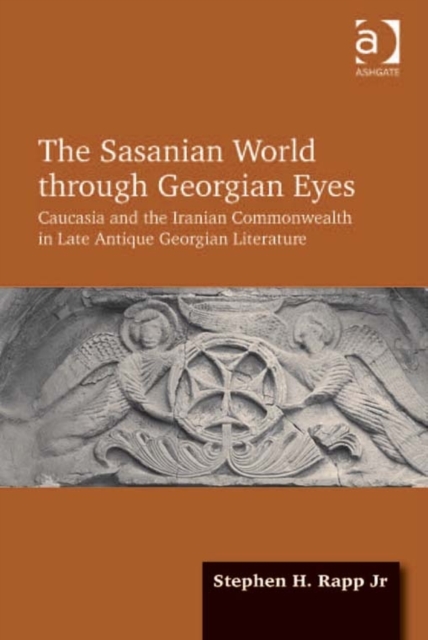
The Sasanian world through Georgian eyes: the Iranian Commonwealth in Late Antique Georgian literature
Georgian literary sources for Late Antiquity are commonly held to be later productions devoid of historical value. As a result, scholarship outside the Republic of Georgia has privileged Graeco-Roman and even Armenian narratives. However, when investigated within the dual contexts of a regional literary canon and the active participation of Caucasia?s diverse peoples in the Iranian Commonwealth, early Georgian texts emerge as a rich repository of late antique attitudes and outlooks. Georgian hagiographical and historiographical compositions open a unique window onto a northern part of the Sasanian world that, while sharing striking affinities with the Iranian heartland, was home to vibrant, cosmopolitan cultures that developed along their own trajectories.
eBook
