
Catalogue Search | MBRL


Are you sure you want to remove the book from the shelf?

{{itemTitle}}
10
result(s) for
"Saudi Arabia -- History -- 1932"
Sort by:

Saudi Arabia under Ibn Saud : economic and financial foundations of the state
At its founding in 1932, the Kingdom of Saudi Arabia was characterized by tribal warfare, political instability, chronic financial shortages and economic crises. As a desert chieftain, Abd al-Aziz Ibn Saud, the ruler and king until 1953, had the skills, the cunning and the power to control the tribes and bring peace to this realm. But financial and economic matters were not his forte and these he left mostly to a single individual, Abdullah al-Sulayman al-Hamdan. He was entrusted with nearly all of the country's early financial dealings and administrative development. This book examines the role of the Ministry of Finance and its minister, Abdullah al-Sulayman, in holding the country together financially and administratively until the promise of substantial oil income was realized a few years after the end of World War II.
Book

Awakening Islam : the politics of religious dissent in contemporary Saudi Arabia
Amidst the roil of war and instability across the Middle East, the West is still searching for ways to understand the Islamic world. Stéphane Lacroix has now given us a penetrating look at the political dynamics of Saudi Arabia, one of the most opaque of Muslim countries and the place that gave birth to Osama bin Laden.
The result is a history that has never been told before. Lacroix shows how thousands of Islamist militants from Egypt, Syria, and other Middle Eastern countries, starting in the 1950s, escaped persecution and found refuge in Saudi Arabia, where they were integrated into the core of key state institutions and society. The transformative result was the Sahwa, or \"Islamic Awakening,\" an indigenous social movement that blended political activism with local religious ideas. Awakening Islam offers a pioneering analysis of how the movement became an essential element of Saudi society, and why, in the late 1980s, it turned against the very state that had nurtured it. Though the \"Sahwa Insurrection\" failed, it has bequeathed the world two very different, and very determined, heirs: the Islamo-liberals, who seek an Islamic constitutional monarchy through peaceful activism, and the neo-jihadis, supporters of bin Laden's violent campaign.
Awakening Islam is built upon seldom-seen documents in Arabic, numerous travels through the country, and interviews with an unprecedented number of Saudi Islamists across the ranks of today's movement. The result affords unique insight into a closed culture and its potent brand of Islam, which has been exported across the world and which remains dangerously misunderstood.
eBook


Making the Desert Modern
In 1933 American oilmen representing what later became the Arabian American Oil Company (Aramco) signed a concession agreement with the Saudi Arabian king granting the company sole proprietorship over the oil reserves in the country's largest province. As drilling commenced and wells proliferated, Aramco soon became a major presence in the region. In this book Chad H. Parker tells Aramco's story, showing how an American company seeking resources and profits not only contributed to Saudi \"nation building\" but helped define U.S. foreign policy during the early Cold War.
In the years following World War II, as Aramco expanded its role in Saudi Arabia, the idea of \"modernization\" emerged as a central component of American foreign policy toward newly independent states. Although the company engaged in practices supportive of U.S. goals, its own modernizing efforts tended to be pragmatic rather than policy-driven, more consistent with furthering its business interests than with validating abstract theories. Aramco built the infrastructure necessary to extract oil and also carved an American suburb out of the Arabian desert, with all the air-conditioned comforts of Western modern life. At the same time, executives cultivated powerful relationships with Saudi government officials and, to the annoyance of U.S. officials, even served the monarchy in diplomatic disputes. Before long the company became the principal American diplomatic, political, and cultural agent in the country, a role it would continue to play until 1973, when the Saudi government took over its operation.
eBook


Crude Awakenings
\"The real story of global oil over the past twenty-five years is
not about the spillover effects of Palestinians fighting Israelis,
or terrorist attacks on U.S. forces in Saudi Arabia and Yemen, or
Iraq's stormy relationship with Kuwait. It is not even about
periodic small- and large-scale U.S. attacks on Iraq. Rather, the
real story is about longer-term developments that have changed the
international relations of the Middle East, politics at the global
level, and world oil markets. These developments have increased oil
stability.\"-from the Introduction
Thirty years after OAPEC shattered world markets for oil, the
Western world remains profoundly dependent on foreign, particularly
Middle Eastern, sources of petroleum. U.S. political rhetoric is
suffused with claims about the vulnerability caused by this
dependence. Hence, many political analysts assume that a search for
stability of petroleum supplies is an important element of
contemporary American foreign policy.
Steve A. Yetiv argues that common assumptions about oil markets
are wrong. Although prices remain volatile, Yetiv's account
portrays a world market in petroleum products far more benign and
predictable than the one to which we are accustomed. In Crude
Awakenings , he identifies and analyzes real and potential
threats to the global energy supply, including wars, revolutions,
coups, dangerous alliances, oil embargoes, Islamic radicalism, and
transnational terrorism. However, he also shows how some of these
threats have been mitigated and how global oil security has been
reinforced.
eBook

Unholy kingdom : religion, corruption and violence in Saudi Arabia
\"Malise Ruthven, a leading commentator on Islamic affairs, reconstructs the nation's history. He shows how the royal house co-opted Wahhabism to consolidate its power and enforce authoritarianism in collusion with Western businesses and governments. Unholy Kingdom looks to the nation's future in the hands of Crown Prince Mohammed Bin Salman, who touts the country's liberalisation while aggressively imposing his will upon the region\"-- Provided by publisher.
BOOK

Awakening Islam
With unprecedented access to a closed culture, Lacroix offers an account of Islamism in Saudi Arabia. Tracing the last half-century of the Sahwa, or “Islamic Awakening,\" he explains the brand of Islam that gave birth to Osama bin Laden—one that has been exported, and dangerously misunderstood, around the world.
eBook
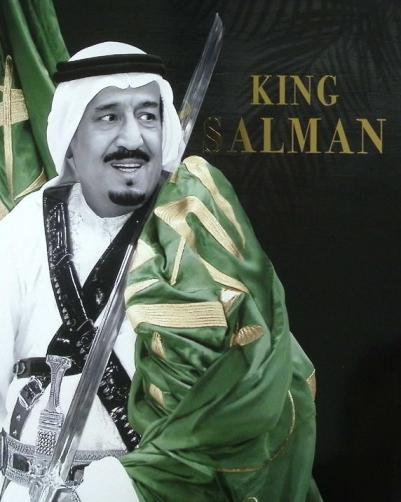
King Salman
This prestigious publication, also released under the Al-Turath (Heritage Foundation) imprint, serves as a comprehensive biographical and photographic record of Custodian of the Two Holy Mosques, King Salman bin Abdulaziz Al Saud. While your previous volume focused on the Founder (King Abdulaziz), this work documents the life of the leader who served as the \"Governor of Riyadh\" for over five decades before ascending to the throne, marking him as the primary architect of modern Saudi urban identity.
BOOK
