
Catalogue Search | MBRL


Are you sure you want to remove the book from the shelf?

{{itemTitle}}
461
result(s) for
"Saudi Arabia -- Politics and government"
Sort by:
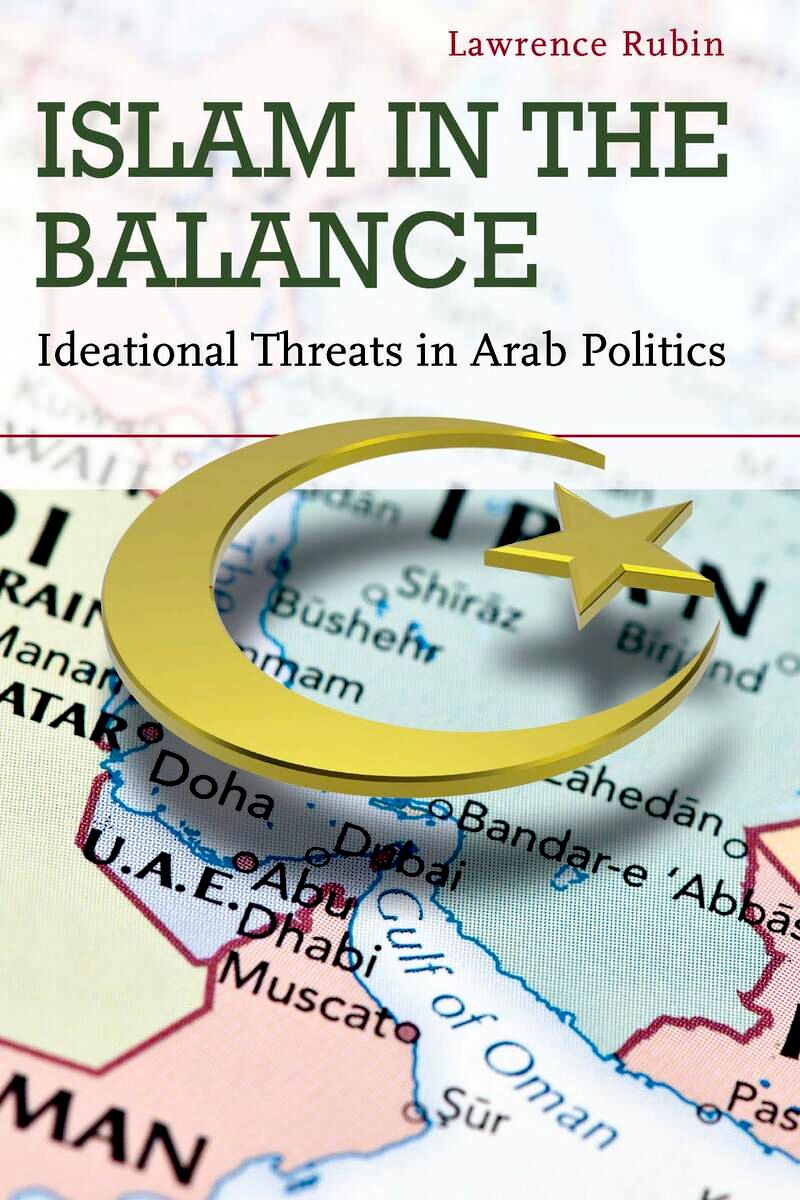
Islam in the Balance
Islam in the Balance: Ideational Threats in Arab Politics is an analysis of how ideas, or political ideology, can threaten states and how states react to ideational threats. It examines the threat perception and policies of two Arab Muslim majority states, Egypt and Saudi Arabia, in response to the rise and activities of two revolutionary \"Islamic states,\" established in Iran (1979) and Sudan (1989).
Using these comparative case studies, the book provides important insight about the role of religious ideology for the international and domestic politics of the Middle East and, in doing so, advances our understanding of how, why, and when ideology affects threat perception and state policy.
Rubin makes clear that transnational ideologies may present a greater and more immediate national security threat than shifts in the military balance of power: first because ideology, or ideational power, triggers threat perception and affects state policy; second because states engage in ideational balancing in response to an ideological threat.
The book has significant implications for international relations theory and engages important debates in comparative politics about authoritarianism and Islamic activism. Its findings about how an Islamist regime or state behaves will provide vital insight for policy creation by the US and its Middle East allies should another such regime or state emerge.
eBook

The Islamic Utopia
Will Saudi Arabia join the democratic wave in the Middle East? The uprisings and revolutions of 2011 do not, yet, seem to have affected the stability of the House of Saud, which remains secretive, highly repressive and propped up by the West. The Islamic Utopia uses a range of sources including first-hand reporting and recently released WikiLeaks documents to examine Saudi Arabia in the decade after the 9/11 attacks, when King Abdullah’s 'reform' agenda took centre stage in public debate. It considers Saudi claims of 'exemption' from the democratic demands of the Arab Spring. Andrew Hammond argues that for too long Western media and governments have accepted Saudi leaders' claims to be a buttress against jihadist Islam and that a new policy is needed towards the House of Saud.
eBook

Islam and Political Reform in Saudi Arabia
This book examines the link between Islamic thought/jurisprudence on the one hand and political action on the other. It shows how reformism is deeply rooted in Islamic tradition and how Sunni scholars have become activists for change in Saudi Arabia.
Mansoor Jassem Alshamsi, a political scientist working for the United Arab Emirates Government, received his PhD in Politics from the University of Exeter, UK, in 2004. The author of many research papers and studies on Middle Eastern affairs, US foreign policy and Islamic movements, Dr. Alshamsi emphasises the necessity of applying scientific and objective methods to the understanding of Middle Eastern politics.
\"... He focuses on three contemporary Islamic juridical scholars, Safar al-Hawai, Salman al-Oudah and Nassir al-Omar, all of whom advocate a return to the tenets of Islamic law. In the 1980s and early 1990s, the men lectured on government corruption, an imbalance of wealth and the alarming pact between the Saudi monarchy and the United States. Imprisoned without charges for five years, the three adopted a more conciliatory policy upon their release. Their taped lectures and TV appearances have spread their message far beyond Saudi academia. This account of their thoughts and the development of their religious/political platforms should be of interest to anyone attempting to understand Saudi Arabia today.\" -- © Feb 2011 Book News Inc.
\"[Mansoor Jassem Alshamsi] elucidates the link that exists between Islamic jurisprudence and political action by focusing on the contributions of three leading Ulama, namely Safar Al Hawali, Salman Al Awdah and Nasser Al Umar. By emphasising the discourses and performances of what he terms the \"Saudi Sunni Islamic Reformist Leadership\", Alshamsi theorises and sets out to demonstrate that the very idea of reform is deeply rooted in Islamic tradition... This richly annotated book will delight the specialist but should not put off the lay reader. Given how little is actually recorded on what the three Saudi shaikhs uttered, this is a valuable addition to the growing literature on a critical topic.\" - Joseph A. Kéchichian, Special to Weekend Review; Gulf News
1. Introduction 2. Context 3. The Sunni Fiqh 4. Further Perspectives on the Sunni Fiqh 5. Intellectual Interaction 6. Political Struggle 7. Countering Policy in the 1990s 8. Petitions and Challenges 9. The Monarchy and Support 10. Appeasement 11. External Focus 12. Political Realism 13. Conclusion
eBook


After the Sheikhs
Noted Gulf expert Christopher Davidson contends that the collapse of these kings, emirs, and sultans is going to happen, and was always going to.
eBook


Contesting the Saudi State
The terms Wahhabi or Salafi are seen as interchangeable and frequently misunderstood by outsiders. However, as Madawi al-Rasheed explains in a fascinating exploration of Saudi Arabia in the twenty-first century, even Saudis do not agree on their meaning. Under the influence of mass education, printing, new communication technology, and global media, they are forming their own conclusions and debating religion and politics in traditional and novel venues, often violating official taboos and the conservative values of the Saudi society. Drawing on classical religious sources, contemporary readings and interviews, Al-Rasheed presents an ethnography of consent and contest, exploring the fluidity of the boundaries between the religious and political. Bridging the gap between text and context, the author also examines how states and citizens manipulate religious discourse for purely political ends, and how this manipulation generates unpredictable reactions whose control escapes those who initiated them.
eBook