
Catalogue Search | MBRL


Are you sure you want to remove the book from the shelf?

{{itemTitle}}
5,215
result(s) for
"Scandinavia"
Sort by:


Iron Age Myth and Materiality
Iron Age Myth and Materiality: an Archaeology of Scandinavia AD 400-1000 considers the relationship between myth and materiality in Scandinavia from the beginning of the post-Roman era and the European Migrations up until the coming of Christianity. It pursues an interdisciplinary interpretation of text and material culture and examines how the documentation of an oral past relates to its material embodiment.
While the material evidence is from the Iron Age, most Old Norse texts were written down in the thirteenth century or even later. With a time lag of 300 to 900 years from the archaeological evidence, the textual material has until recently been ruled out as a usable source for any study of the pagan past. However, Hedeager argues that this is true regarding any study of a society's short-term history, but it should not be the crucial requirement for defining the sources relevant for studying long-term structures of the longue durée, or their potential contributions to a theoretical understanding of cultural changes and transformation. In Iron Age Scandinavia we are dealing with persistent and slow-changing structures of worldviews and ideologies over a wavelength of nearly a millennium. Furthermore, iconography can often date the arrival of new mythical themes anchoring written narratives in a much older archaeological context.
Old Norse myths are explored with particular attention to one of the central mythical narratives of the Old Norse canon, the mythic cycle of Odin, king of the Norse pantheon. In addition, contemporaneous historical sources from late Antiquity and the early European Middle Age - the narratives of Jordanes, Gregory of Tours, and Paul the Deacon in particular - will be explored. No other study provides such a broad ranging and authoritative study of the relationship of myth to the archaeology of Scandinavia.
eBook
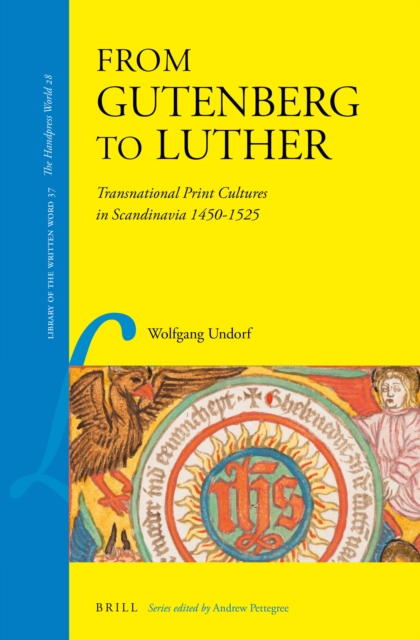
From Gutenberg to Luther
Based on thousands of contemporary provenances, statistics and book lists, this books achieves a repositioning of Scandinavian early modern print cultures as dynamic, self-confident actors in the multi-faceted transnational context of European book history.
eBook

Family Life in Transition
This volume examines the ways in which bordering practices influence the everyday lives of racialized parents in the changing welfare states of Finland, Denmark, Norway, and Sweden. Focusing on the need to negotiate, adjust, and reconcile family life, parenthood and parenting practices in the face of national, material, ideological, cultural, religious, and moral borders, it considers the manner in which these processes are complicated by recent changes in the legitimation of Nordic welfare states. The case studies centre on migrant, refugee, and asylum seeker parents, as well as parents of the indigenous Sámi communities. The book considers the ways in which the welfare state and its services construct borders of respectable parenthood, and examines the efforts on the part of racialized parents to negotiate such borders and organize their transnational everyday lives. Uncovering possibilities and obstacles that exist for families seeking to enact citizenship in the Nordic welfare states, Family Life in Transition will appeal to social scientists with interests in the sociology of the family, children, parenting, and the welfare state.
eBook


Complying With Colonialism
Complying with Colonialism presents a complex analysis of the habitual weak regard attributed to the colonial ties of Nordic Countries. It introduces the concept of 'colonial complicity' to explain the diversity through which northern European countries continue to take part in (post)colonial processes. The volume combines a new perspective on the analysis of Europe and colonialism, whilst offering new insights for feminist and postcolonial studies by examining how gender equality is linked to 'European values', thus often European superiority. With an international team of experts ranging from various disciplinary backgrounds, this volume will appeal not only to academics and scholars within postcolonial sociology, social theory, cultural studies, ethnicity, gender and feminist thought, but also cultural geographers, and those working in the fields of welfare, politics and International Relations. Policy makers and governmental researchers will also find this to be an invaluable source.
eBook

The Nordic civil sphere
\"This volume uses the theory of the civil sphere to shed new light on Nordic societies, while at the same time drawing on the distinctive experiences of the Nordic nations to reflect on and advance the theory of the civil sphere. Nordic societies have long been admired for creating a distinctive form of social democracy, but this admirable achievement has not been well conceptualized theoretically. Most attempts to explain Nordic social democracy focus on material and organizational factors. This volume, by contrast, emphasizes the cultural foundations and characteristics of social democracy, demonstrating how civil sensibilities are necessary for the creation of an egalitarian and democratic state\"-- Provided by publisher.
Book
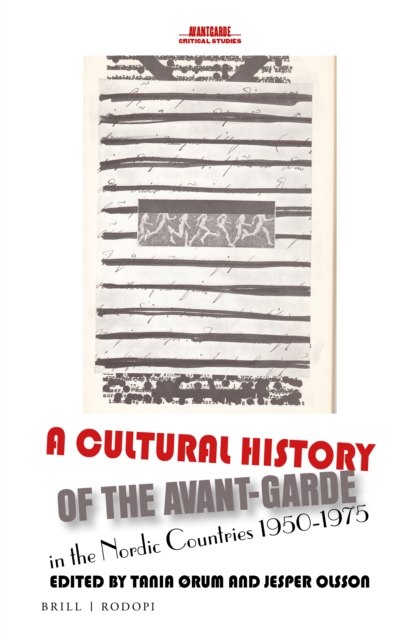
A Cultural History of the Avant-Garde in the Nordic Countries 1950–1975
A Cultural History of the Avant-Garde in the Nordic Countries 1950-1975 is the first publication to deal with the postwar avant-garde in the Nordic countries from a transnational perspective including all the arts and a broader cultural and political context.
eBook