
Catalogue Search | MBRL


Are you sure you want to remove the book from the shelf?

{{itemTitle}}
33
result(s) for
"Scandinavia -- Antiquities"
Sort by:


Iron Age Myth and Materiality
Iron Age Myth and Materiality: an Archaeology of Scandinavia AD 400-1000 considers the relationship between myth and materiality in Scandinavia from the beginning of the post-Roman era and the European Migrations up until the coming of Christianity. It pursues an interdisciplinary interpretation of text and material culture and examines how the documentation of an oral past relates to its material embodiment.
While the material evidence is from the Iron Age, most Old Norse texts were written down in the thirteenth century or even later. With a time lag of 300 to 900 years from the archaeological evidence, the textual material has until recently been ruled out as a usable source for any study of the pagan past. However, Hedeager argues that this is true regarding any study of a society's short-term history, but it should not be the crucial requirement for defining the sources relevant for studying long-term structures of the longue durée, or their potential contributions to a theoretical understanding of cultural changes and transformation. In Iron Age Scandinavia we are dealing with persistent and slow-changing structures of worldviews and ideologies over a wavelength of nearly a millennium. Furthermore, iconography can often date the arrival of new mythical themes anchoring written narratives in a much older archaeological context.
Old Norse myths are explored with particular attention to one of the central mythical narratives of the Old Norse canon, the mythic cycle of Odin, king of the Norse pantheon. In addition, contemporaneous historical sources from late Antiquity and the early European Middle Age - the narratives of Jordanes, Gregory of Tours, and Paul the Deacon in particular - will be explored. No other study provides such a broad ranging and authoritative study of the relationship of myth to the archaeology of Scandinavia.
eBook

The bones of Birka : unraveling the mystery of a female Viking warrior
\"How many female Viking warriors does it take to make a fact? When archaeologist Dr. Charlotte Hedenstierna-Jonson discovers that the bones contained in the most significant Viking warrior grave ever opened are in fact female, she and her team upend centuries of historically accepted conclusions and ignite a furious debate around the reality of female Viking warriors and the role of gender in both ancient and modern times. In The Bones of Birka, author C. M. Surrisi introduces young readers to the events that led up to this discovery and the impact it has had on scientists' and historians' views of gender roles in ancient societies and today. This is the inside account of the Birka warrior grave Bj 581 archaeological endeavor, including all of the dreams, setbacks, frustrations, excitement, politics, and personalities that went into this history-changing discovery. The finding has raised crucial questions about research bias, academic dialogue, and gender identity.\"- Dust jacket.
BOOK

Ancient Scandinavia
Although occupied only relatively briefly in the long span of world prehistory, Scandinavia is an extraordinary laboratory for investigating past human societies. The area was essentially unoccupied until the end of the last Ice Age when the melting of huge ice sheets left behind a fresh, barren land surface, which was eventually covered by flora and fauna. The first humans did not arrive until sometime after 13,500 BCE. The prehistoric remains of human activity in Scandinavia - much of it remarkably preserved in its bogs, lakes, and fjords - have given archaeologists a richly detailed portrait of the evolution of human society. In this book, Doug Price provides an archaeological history of Scandinavia-a land mass comprising the modern countries of Denmark, Sweden, and Norway-from the arrival of the first humans after the last Ice Age to the end of the Viking period, ca. AD 1050. Constructed similarly to the author's previous book, Europe before Rome, Ancient Scandinavia provides overviews of each prehistoric epoch followed by detailed, illustrative examples from the archaeological record. An engrossing and comprehensive picture emerges of change across the millennia, as human society evolves from small bands of hunter - gatherers to large farming communities to the complex warrior cultures of the Bronze and Iron Ages, which culminated in the spectacular rise of the Vikings. The material evidence of these past societies - arrowheads from reindeer hunts, megalithic tombs, rock art, beautifully wrought weaponry, Viking warships - give vivid testimony to the ancient humans who once called home this often unforgiving edge of the inhabitable world.
eBook

An arena for higher powers : ceremonial buildings and religious strategies for rulership in late Iron Age Scandinavia
In An Arena for Higher Powers Olof Sundqvist offers an account of the role played by religion in political undertakings among the pre-Christian ruling elites at ceremonial buildings in in Late Iron Age Scandinavia (i.e. AD 550-1050/1100).
eBook
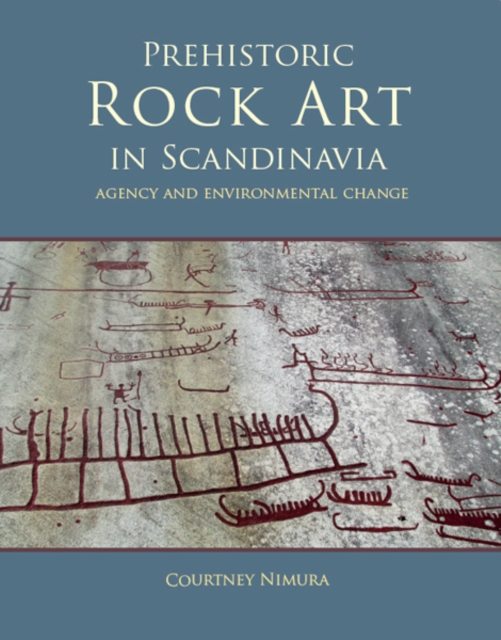
Prehistoric rock art in Scandinavia
Scandinavia is home to prolific and varied rock art images among which the ship motif is prominent. Because of this, the rock art of Scandinavia has often been interpreted in terms of social ritual, cosmology, and religion associated with the maritime sphere. This comprehensive review is based on the creation of a Scandinavia-wide GIS database for prehistoric rock art and reexamines theoretical approaches and interpretations, in particular with regard to the significance of the ship and its relationship to a maritime landscape Discussion focuses on material agency as a means to understanding the role of rock art within society. Two main theories are developed. The first is that the sea was fundamental to the purpose and meaning of rock art, especially in the Bronze Age and, therefore, that sea-level/shoreline changes would have inspired a renegotiation of the relationship between the rock art sites and their intended purpose. The fundamental question posed is: would such changes to the landscape have affected the purpose and meaning of rock art for the communities that made and used these sites? Various theories from within and outside of archaeology are drawn on to examine environmental change and analyze the rock art, led to second theory: that the purpose of rock art might have been altered to have an effect on the disappearing sea. The general theory that rock art would have been affected by environmental change was discussed in tandem with existing interpretations of the meaning and purpose of rock art. Imbuing rock art with agency means that it could be intertwined in an active web of relations involving maritime landscapes, shoreline displacement and communities. Though created in stone and fixed in time and place, rock art images have propagated belief systems that would have changed over time as they were re-carved, abandoned and used by different groups of inhabitants. In the thousands of years rock art was created, it is likely that shoreline displacement would have inspired a renegotiation of the purpose and meaning of the imagery situated alongside the Scandinavian seas. This journey through a prehistoric Scandinavian landscape will lead us into a world of ancient beliefs and traditions revolving around this extraordinary art form.
eBook

Tracing their tracks : identification of Nordic styles from the Early Middle Ages to the end of the Viking period
Understanding the relation of semiology to Western iconography is essential, as it is the element that, often unconsciously, influences perception in Western society. Scholars, such as Klaus Düwel with his outstanding knowledge of runic script, sometimes reach their limits if inscriptions are complemented with abstract images that may be accidental scratches or, on the other hand, a sign or signs indicating symbolic meaning. The detailed definition of the Medieval World by Margaret Clunies.
eBook

Field Archaeology
Since its first publication, Field Archaeology: An Introduction has proved to be a key handbook for all those undertaking introductory courses in archaeology or volunteering on their first excavation. In this revised second edition, key developments in technology, theory and changes in the law are included, bringing it up to date with the most recent fieldwork practices. The dig is the face of archaeology most immediately recognised by the general public, and is often what attracts both students and amateurs to the discipline. Yet there is much more to working in the field than digging alone. Peter Drewett's comprehensive survey explores the process, from the core work of discovery and excavation to the final product, the published archaeological report. The main topics are:
How an archaeological site is formed
Finding and recording archaeological sites
Planning excavations, digging the site and recording the results
Post-fieldwork planning, processing and finds analysis
Interpreting the evidence
Publishing the report
Illustrated with 100 photographs and line drawings, and using numerous case studies, this second edition of Field Archaeology ensures it will remain the essential introductory guide for archaeology students and the growing number of enthusiasts for the subject.
1. Introduction 2. What is an archaeological site? How is it formed and transformed? 3. Finding archaeological sites 4. Recording archaeological sites 5. Planning the excavation 6. Digging the site 7. Recording archaeological excavations 8. Post-fieldwork planning, processing and finds analysis 9. Interpreting the evidence 10. Publishing the report
Peter Drewett is Emeritus Professor of Archaeology at the University of Sussex. Prior to this, he taught field archaeology at the Institute of Archaeology, University College London, where he directed the undergraduate field training excavations and established the Institute’s Field Archaeology Unit. Early in his career he was particularly involved in the rescue excavation of plough damaged sites on the South Downs. He set up and directed the Barbados Archaeological Survey, as well as running field courses and rescue excavations in Portugal and Hong Kong. Professor Drewett has over 100 published works, including (with Mark Gardiner and David Rudling) The South East to AD 1000 (1988, Longman) and Prehistoric Barbados (1991, Archetype).
'In a time of uncertainty in the profession, it’s refreshing to read a book that puts archaeology in the context of the best field practice ... This is an optimistic book, with an upbeat, breezy style that reviews all the major field techniques from the formation of deposits and how to find sites, through how to record them to postexcavation. There is detailed discussion of the problems of excavation and interpretation, and the rapidly changing means of publishing the results ... [This book] remains one of the best introductions to the techniques and problems of dirt archaeology.' - Mike Nevell, British Archaeology
'... it remains that Drewett’s Field Archaeology is a companionable introduction to archaeological fieldwork, with a good balance between survey and excavation.' – Antiquity
eBook

Bronze Age Metalwork
Bronze ornaments of the Nordic Bronze Age were elaborate objects that served as status symbols to communicate social hierarchy. An interdisciplinary investigation of the artefacts (dating from 1500-1100 BC) was adopted to elucidate their manufacture and origin, resulting in new insights into metal craft in northern Europe during the Bronze Age.
eBook
