
Catalogue Search | MBRL


Are you sure you want to remove the book from the shelf?

{{itemTitle}}
6,065
result(s) for
"Scandinavian Languages"
Sort by:

The syntax of mainland Scandinavian
This book explores the syntactic structures of Mainland Scandinavian, a term that covers the Northern Germanic languages spoken in Denmark, Norway, Sweden, and parts of Finland. The continuum of mutually intelligible standard languages, regional varieties, and dialects stretching from southern Jutland to eastern Finland share many syntactic patterns and features, but also present interesting syntactic differences. In this volume, Jan Terje Faarlund discusses the main syntactic features of the national languages, alongside the most widespread or typologically interesting features of the non-standard varieties. Each topic is illustrated with examples drawn from reference grammars, research literature, corpora of various sorts, and the author's own research. The0framework is current generative grammar, but the volume is descriptive in nature, with technical formalities and theoretical discussion kept to a minimum. It will hence be a valuable reference for students and researchers working on any Scandinavian language, as well as for syntacticians and typologists interested in Scandinavian facts and data without necessarily being able to read Scandinavian.
Book
Syntactic Variation in Insular Scandinavian
This book presents the latest research on the syntax of the \"Insular Scandinavian\" languages (Faroese and Icelandic), with contributions from thirteen experts, and a significant introductory chapter by the four editors. The topics covered include some that have figured extensively in recent literature on Scandinavian syntax and its implications for syntactic theory: case, agreement, embedded clause word order, stylistic fronting, and the nature of \"expletive\" constructions. The volume is conceived around the topic of variation, both within and between the two languages studied-as well as more generally-and stands out for the wealth of new empirical detail from both Faroese and Icelandic, relating to each of the topics and theoretical issues discussed. Each chapter is written in a way to make it accessible to a wide audience within linguistics; the book will be essential reading for students and researchers with an interest in the syntax of the Germanic languages.
eBook

New Trends in Nordic and General Linguistics
The linguae& litterae series, edited by Peter Auer, Gesa von Essen and Werner Frick, documents the research activities of the School of Languageand Literature of the Freiburg Institute for Advanced Studies (FRIAS). These research activities in literary studies and linguistics are characterized by an approach that is theoretically and methodologically \"state of the art\" and interdisciplinarily open. In linguistics the accent is on the corpus-based, quantitative and qualitative investigation of language; in literary studies the focus is on the comparative, transdisciplinary analysis of literary phenomena in their cultural contexts. At the same time the series deals with the productive interfaces and synergies between modern linguistics and literary studies (as well as the humanities, social and natural sciences with which they interact). It seeks a new, contemporary reformulation of the humanities research curriculum and its problem and concept orientation for the future. The series has a clear international orientation - each volume is multilingual, containing German, English and French contributions and, depending on the volume, articles in Italian or Spanish as well. Each individual volume is peer reviewed by an international editorial board. Each year 2-4 volumes are published.
eBook


Translation im Kontext
What role do context and contextualization play in translation and interpreting? And what impact do they have on the reception of the translation? The relevance of context for both the creation of translations and their perception is undisputed. However, the diverse and complex ways in which different contexts interact only become apparent through in-depth analysis. In this volume, experts from Denmark, Finland, Greece, Italy, Norway, Austria, and Spain dedicate themselves to the various types and forms of contexts. They focus on linguistic and sociocultural connections, societal structures, and the spirit of the times, examining retranslations, phenomena of intertextuality, as well as multimodal structures combining texts and images. Additionally, the volume includes analyses addressing questions related to the specialized context of translation, translation strategies, and the impact of the setting in interpreting and the paratexts of a published translation on its reception. The research results presented here are groundbreaking for the study, teaching, and practice of translation and interpreting.
eBook
Norwegian Discourse Ellipsis
This book develops a grammar model for discourse ellipses in spoken Norwegian. Two major questions are addressed. Firstly, is there active syntactic structure in the ellipsis site? Secondly, how are discourse ellipses licensed? It is argued that both structural and semantic restrictions are required to account for the empirical patterns.
eBook
From pseudo-relatives to causative constructions : Scandinavian languages as a case study
This volume proposes a novel structural analysis for causative constructions, offering a solution for the long-standing mono/bi-clausal dualism. Causatives are claimed to instantiate a 'complex object' construction, insofar as the causee is not only the subject of the lexical verb, but also a participant that is related to the whole event. Furthermore, the analysis reveals that the realization of causatives implies a crucial interplay with the pseudo-relative construction, a much-debated structure as well. Data from Scandinavian languages are highlighted, through the results of an experimental test on the scope of negation and adverbs supporting the present analysis. The book offers a cross-linguistic perspective as it discusses the relevant constructions in languages including Italian, English, French, Portuguese and Spanish.
eBook

The Role of Inflection in Scandinavian Syntax
In this book, Holmberg and Platzack present a theory of the role which subject-verb agreement and case morphology play in syntax. Their theory is based mainly on a detailed comparison and inflectional properties in the various Scandinavian languages, although many other languages are discussed as well. The theoretical issues discussed include abstract vs. morphological case, functional heads, verb-second, null subjects and other empty categories, pronouns and clitics, various impersonal constructions, long distance reflexives, and the double object construction. Probably the most detailed and comprehensive study to date of the interplay of case, subject-verb agreement, and other grammatical properties in the syntax of related languages, this book offers important insights for professional linguists and students with an interest in generative grammar, typology/comparative grammar, or Scandinavian and Germanic languages.
eBook
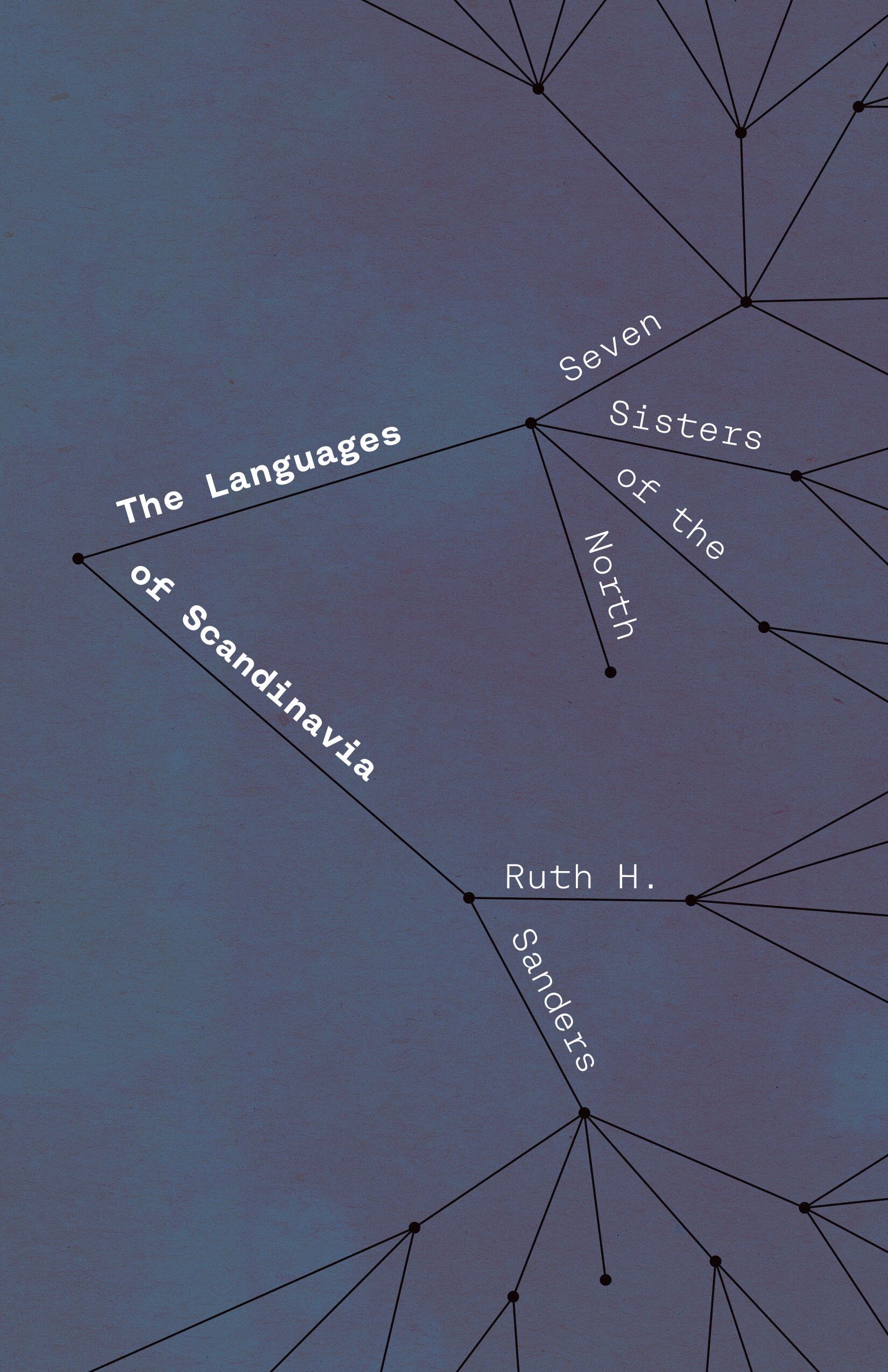
The Languages of Scandinavia
From fjords to mountains, schools of herring to herds of reindeer, Scandinavia is rich in astonishing natural beauty. Less well known, however, is that it is also rich in languages. Home to seven languages, Scandinavia has traditionally been understood as linguistically bifurcated between its five Germanic languages (Danish, Norwegian, Swedish, Icelandic, and Faroese) and its two Finno-Ugric ones (Finnish and Sámi). In The Languages of Scandinavia, Ruth H. Sanders takes a pioneering approach: she considers these Seven Sisters of the North together.
While the two linguistic families that comprise Scandinavia's languages ultimately have differing origins, the Seven Sisters have coexisted side by side for millennia. As Sanders reveals, a crisscrossing of names, territories, and even to some extent language genetics—intimate language contact—has created a body of shared culture, experience, and linguistic influences that is illuminated when the story of these seven languages is told as one. Exploring everything from the famed whalebone Lewis Chessmen of Norse origin to the interactions between the Black Death and the Norwegian language, The Languages of Scandinavia offers profound insight into languages with a cultural impact deep-rooted and far-reaching, from the Icelandic sagas to Swedish writer Stieg Larsson's internationally popular Millennium trilogy. Sanders's book is both an accessible work of linguistic scholarship and a fascinating intellectual history of language.
eBook