
Catalogue Search | MBRL


Are you sure you want to remove the book from the shelf?

{{itemTitle}}
8,581
result(s) for
"Schizophrenics."
Sort by:

The edge of every day : sketches of schizophrenia
\"Against the ... backdrop of Anchorage, Alaska, where [she] grew up, Marin Sardy weaves a fearless account of the shapeless thief--the schizophrenia--that kept her mother immersed in a world of private delusion and later manifested in her brother, ultimately claiming his life\"--Publisher marketing.
Book
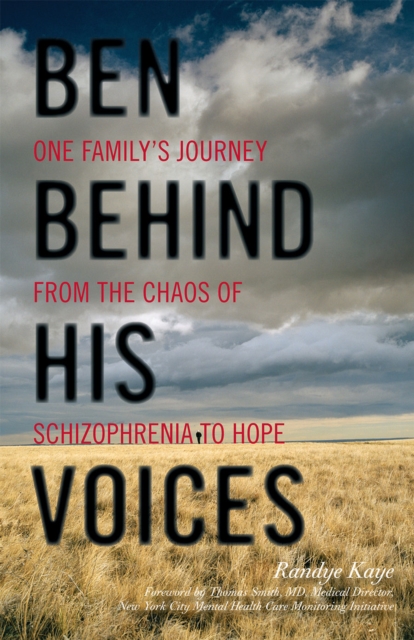
Ben behind his voices
When readers first meet Ben, he is a sweet, intelligent, seemingly well-adjusted youngster. Fast forward to his teenage years, though, and Ben's life has spun out of control. Ben is swept along by an illness over which he has no control—one that results in runaway episodes, periods of homelessness, seven psychotic breaks, seven hospitalizations, and finally a diagnosis and treatment plan that begins to work. Schizophrenia strikes an estimated one in a hundred people worldwide by some estimates, and yet understanding of the illness is lacking. Through Ben's experiences, and those of his mother and sister, who supported Ben through every stage of his illness and treatment, readers gain a better understanding of schizophrenia, as well as mental illness in general, and the way it affects individuals and families. Here, Kaye encourages families to stay together and find strength while accepting the reality of a loved one's illness; she illustrates, through her experiences as Ben's mother, the delicate balance between letting go and staying involved. She honors the courage of anyone who suffers with mental illness and is trying to improve his life and participate in his own recovery. Ben Behind His Voices also reminds professionals in the psychiatric field that every patient who comes through their doors has a life, one that he has lost through no fault of his own. It shows what goes right when professionals treat the family as part of the recovery process and help them find support, education, and acceptance. And it reminds readers that those who suffer from mental illness, and their families, deserve respect, concern, and dignity.
eBook

The ghost garden : inside the lives of schizophrenia's feared and forgotten
\"A rare work of narrative non-fiction that beautifully illuminates a world most of us try not to see: the daily lives of the severely mentally ill, who are medicated, marginalized, locked away and shunned. Susan Doherty's groundbreaking book brings us a population of lost souls, ill-served by society, feared, shunted from locked wards to rooming houses to the streets to jail and back again. For the past ten years, some of the people who cycle in and out of the severely ill wards of the Douglas Institute in Montreal, have found a friend in Susan, who volunteers on the ward, and then follows her friends out into the world as they struggle to get through their days. With their full cooperation, she brings us their stories, which challenge the ways we think about people with mental illness on every page. The spine of the book is the life of Caroline Evans (not her real name), a woman in her early sixties whom Susan has known since she was a bright and sunny school girl. Caroline has given Susan complete access to her medical files and her court records; through her, we experience what living with schizophrenia over time is really like. She has been through it all, including the way the justice system treats the severely mentally ill: at one point, she believed that she could save her roommate from the devil by pouring boiling water into her ear ... Susan interleaves Caroline's story with vignettes about her other friends, human stories that reveal their hopes, their circumstances, their personalities, their humanity. She's found that if she can hang in through the first ten to fifteen minutes of every coffee date with someone in the grip of psychosis, then true communication results. Their \"madness\" is not otherworldly: instead it tells us something about how they're surviving their lives and what they've been through. The Ghost Garden is not only touching, but carries a cargo of compassion and empathy.\"-- Provided by publisher.
Book

The Use of Non-Pharmacological Treatments Plus Drugs: A Promising Approach in the Management of Schizophrenic Patients
The Article Abstract is not available.
Journal Article


Living Outside Mental Illness
Schizophrenia is widely considered the most severe and disabling of the mental illnesses. Yet recent research has demonstrated that many people afflicted with the disorder are able to recover to a significant degree.Living Outside Mental Illness demonstrates the importance of listening to what people diagnosed with schizophrenia themselves have to say about their struggle, and shows the dramatic effect this approach can have on clinical practice and social policy. It presents an in-depth investigation, based on a phenomenological perspective, of experiences of illness and recovery as illuminated by compelling first-person descriptions.This volume forcefully makes the case for the utility of qualitative methods in improving our understanding of the reasons for the success or failure of mental health services. The research has important clinical and policy implications, and will be of key interest to those in psychology and the helping professions as well as to people in recovery and their families.
eBook

The drowning girl : a memoir
Imp, a struggling schizophrenic, fights to determine whether or not the strange mythological creatures she meets are due to her condition or are from something else entirely in this new novel from the award-winning author of The Red Tree.
Book

The Self in the Spectrum: A Meta-analysis of the Evidence Linking Basic Self-Disorders and Schizophrenia
Abstract
Disturbed self-experience has been reported as a characteristic feature of schizophrenia since the first formulation of its diagnostic concept; however, only in the last 2 decades an explicit notion of basic Self-disturbance, or Self-Disorders (SD), has emerged as target for a systematic research program. We conducted systematic searches in bibliographical databases to identify cross-sectional studies that explored SD across different diagnostic groups and explored diagnostic ascription within or outside schizophrenia spectrum disorders (SSD) as main outcome. Data were pooled using fixed- and random-effects meta-analysis models. Heterogeneity was assessed using stratified meta-analyses and meta-regression. Of 218 identified studies, 32 were included in the systematic review and 27 in the meta-analysis. Patients diagnosed with SSD scored higher on measures of SD than healthy controls (HC) (Hedges’ g = 1.8; 95% CI = 1.5 to 2.0), individuals diagnosed with other mental illness (OMI) (1.9; 1.6 to 2.2), bipolar or affective disorders (1.8; 1.4 to 2.2), and clinical high risk for psychosis (CHR) (1.6; 0.9 to 2.4). Patients with schizotypy or schizotypal personality disorder scored higher on measures of SD than OMI (1.5; 1.3 to 1.8) and HC (1.4; 1.1 to 1.7). Patients with first-episode psychosis scored higher on measures of SD than HC (2.5; 2.1 to 2.9) and OMI (1.6; 1.2 to 2.1). Subjects at CHR scored higher on measures of SD than HC (2.0; 1.7 to 2.2) and OMI (19; 1.6 to 2.2). Overall, heterogeneity ranged from negligible to high, especially in comparisons of the target group with OMI, probably as a reflection of the immanent diagnostic heterogeneity of this group. The findings suggest that SD selectively aggregate within schizophrenia spectrum disorders as compared to other mental disorders and that they could be a central phenotypic marker of vulnerability to schizophrenia across the different shades of severity of its spectrum of disorders.
Journal Article

The COVID-19 Global Pandemic: Implications for People With Schizophrenia and Related Disorders
The coronavirus disease-19 (COVID-19) global pandemic has already had an unprecedented impact on populations around the world, and is anticipated to have a disproportionate burden on people with schizophrenia and related disorders. We discuss the implications of the COVID-19 global pandemic with respect to: (1) increased risk of infection and poor outcomes among people with schizophrenia, (2) anticipated adverse mental health consequences for people with schizophrenia, (3) considerations for mental health service delivery in inpatient and outpatient settings, and (4) potential impact on clinical research in schizophrenia. Recommendations emphasize rapid implementation of measures to both decrease the risk of COVID-19 transmission and maintain continuity of clinical care and research to preserve safety of both people with schizophrenia and the public.
Journal Article