
Catalogue Search | MBRL


Are you sure you want to remove the book from the shelf?

{{itemTitle}}
3,088
result(s) for
"School administrators Training of."
Sort by:


Beyond Tears, Tirades, and Tantrums
This book introduces clinical simulations for school leader training, using standardized individuals to present real-world challenges without consequences. Leaders engage with students, parents, and teachers in scripted scenarios to practice decision-making. The provisions within are aimed at enhancing leadership preparation in K-12 schools.
eBook

Educational leadership preparation : innovation and interdisciplinary approaches to the Ed.D. and graduate education
\"This book explores the efficacy of innovative and interdisciplinary approaches to educational leadership preparation implemented at universities across the United States that serve K-12 populations in urban, rural, and suburban contexts. This collection of chapters draws from seminal and contemporary literature on preparation programs, the Carnegie Project for Education Doctorate. It demonstrates how theory and research play a pivotal role in the creation of new doctoral programs in educational leadership. The book focuses on trends, issues, challenges, and possibilities that weave commonalities and differentiate structures among seven professional doctorate programs in educational leadership (Ed.D.)\"--Provided by publisher.
Book
Becoming a Globally Competent School Leader
Schools today face a crisis of relevance. Issues that people everywhere face—climate change, disease, hunger—require interdisciplinary solutions. Yet schools are still predominately organized by single-subject courses and narrowly focused high-stakes tests. By contrast, our students need to develop a range of academic, social, and emotional competencies to solve issues that transcend national borders; live peacefully among neighbors in a culturally, politically, racially, ethnically, and religiously diverse society; and thrive in a global, knowledge-based economy. Youth and adults alike know this; it's time for schools to catch up. Global competence—the set of dispositions, knowledge, and skills needed to live and work in a diverse, global society—helps educators balance social-emotional and academic learning goals. To that end, school leaders play a critical role in designing and scaling relevant global learning experiences for both students and teachers. Becoming a Globally Competent School Leader details how school leaders can implement change by aligning aspirational initiatives to existing ones, generating will across school stakeholders, wrangling resources, and creating capacity. This book offers a holistic approach to school leadership, one that grounds education in the complexities of the real world and aims to prepare all students to understand, engage with, and influence what happens in that interconnected world.
eBook

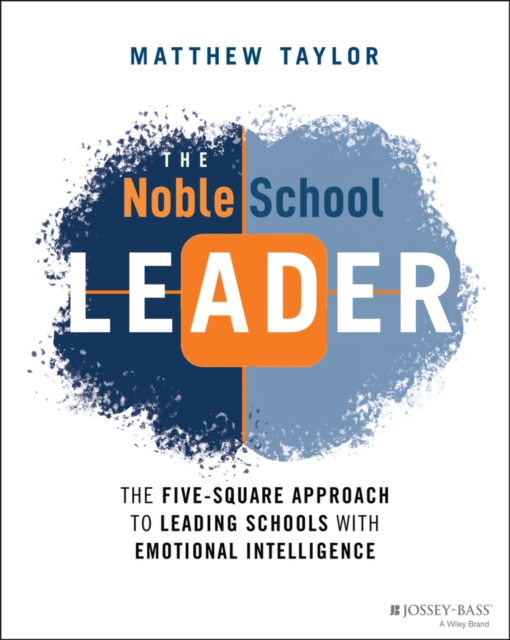
The noble school leader : the five-square approach to leading schools with emotional intelligence
A practical guide for school leaders and managers seeking concrete strategies for professional improvement Leading a learning community is a challenging endeavor that rewards those who build social-emotional and adaptive leadership competencies.
eBook

Case studies in 21st century school administration
Case Studies in 21st Century School Administration: Addressing Challenges for Educational Leadership presents real problems that confront today′s school leaders who must deal with issues of diversity, school improvement, and limited resources. Authors David L. Gray and Agnes E. Smith give prospective school leaders opportunities to resolve complex issues in K-12 school settings through reflective questions, activities, and authentic assessment tools for skill development.
eBook

Preparing Teachers and Developing School Leaders for the 21st Century
This book uses PISA data to show that a substantial proportion of students in OECD countries now attend schools that have high degrees of autonomy in different areas of decision making. But effective school autonomy depends on effective leaders, including system leaders, principals, teacher leaders, senior teachers, and head teachers, as well as strong support systems. That, in turn, requires well-distributed leadership, new types of training and development for school leaders, and appropriate support and incentives.
eBook

Closing the leadership gap
Ideal for creating a positive impact on leadership retention and student achievement, this resource helps close the gap between academic training and day-to-day issues by incorporating collaborative partnerships between university faculty and inservice administrators. Cultivate and sustain effective leadership with these field-tested tools, research-based leadership development strategies, and performance assessment and documentation methods!.
eBook
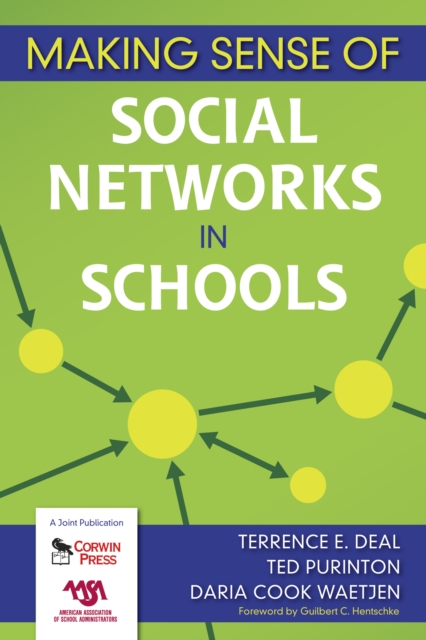
Making sense of social networks in schools
Discover how social networks can foster learning communities and promote school improvement! Social networks reflect the usually invisible relationships that control the power and flow of information within a school. This resource for school leaders examines types of networks-related to tasks, friendships, power, and culture-and provides tools for maximizing networks' positive schoolwide influence. You will find: - Samples of social network maps that illustrate the relationships among players in various types of networks - Steps for developing your own social network maps using interviews, surveys, and data analysis - Strategies and practical advice for managing social networks in support of school goals
eBook