
Catalogue Search | MBRL


Are you sure you want to remove the book from the shelf?

{{itemTitle}}
1,144
result(s) for
"School improvement programs United States."
Sort by:


Strategic Management of Human Capital in Education
Strategic Management of Human Capital in Education offers a comprehensive and strategic approach to address what has become labeled as \"talent and human capital.\" Grounded in extensive research and examples of leading edge districts, this book shows how the entire human resource system in schools—from recruitment, to selection/placement, induction, professional development, performance management and evaluation, compensation, and career progression—can be reformed and restructured to boost teacher and principal effectiveness in ways that dramatically improve instructional practice and student learning. Strategic Management of Human Capital in Education guides educators towards putting more effective teachers, teacher leaders, and principals in the country’s schools—especially in poverty-impacted urban and rural communities—equipping those teacher and principals with instructional and leadership expertise, and rewarding and retaining those who are successful in attaining these objectives. Drawing from cases, experiences, and deliberations from a national task force, this book outlines a comprehensive framework for how to transform current human resource management practices into authentic, strategic talent management systems in order to improve student achievement.
1. Strategic Management of Human Capital in Education: A Framework
2. A Powerful Education Improvement Strategy
3. Staffing and Recruiting Top Talent
4. Performance Management in Education
5. Measuring Teacher Performance for Strategic Human Capital Management, Anthony Milanowski
6. Induction and Professional Development
7. New Policies for Licensure, Tenure, Evaluation and Dismissal
8. The Compensation Side of Strategic Talent Management
9. Strategic Talent Management for Principals, Steven Kimball
10. Organizing to Implement Strategic Talent Management in Education, Allan Odden, Anthony Milanowski, and Steven Kimball
11. The State Role in Strategic Management of Education Talent
12. The Policy and Political Environment for Change, James A. Kelly
\"Rooted in improving student achievement, the book shows how strategy for developing people overlays with strategy for developing rigorous college ready curricula.\" —Teachers College Record
\"This important new book clearly and comprehensively addresses the new work in school reform that is changing the face of human resources in school systems.\"
-- From the Foreword by Carl A. Cohn, Professor and Co-Director, Urban Leadership Program, Claremont Graduate University
\"All the reorganization and restructuring in the world cannot compensate for poorly selected and developed personnel. Allan R. Odden provides future education leaders a comprehensive foundation for ensuring that school systems recruit, select, retain, and develop educators capable of meeting the challenges of high-stakes schooling.\"
-- Daniel L. Duke, Professor of Educational Leadership, University of Virginia
Allan R. Odden is Professor of Educational Leadership and Policy Analysis at University of Wisconsin-Madison, Director of Strategic Management of Human Capital, and Co-Director of the Consortium for Policy Research in Education in the Wisconsin Center for Education Research.
eBook

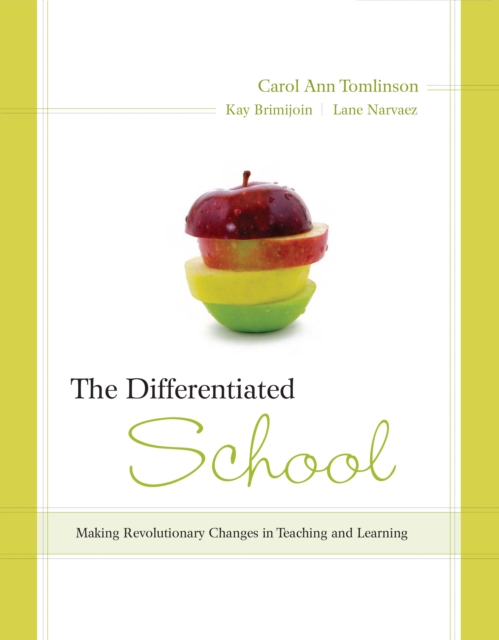
The differentiated school
Three educators share powerful, real-life accounts of how two schools successfully built differentiated instruction into every classroom and achieved sweeping positive results for their staff and students.
eBook


High-stakes reform
Performance accountability has been the dominant trend in education policy reform since the 1970s. State and federal policies set standards for what students should learn; require students to take high-stakes tests to measure what they have learned; and then hold students, schools, and school districts accountable for their performance. The goal of these policies is to push public school districts to ensure that all students reach a common threshold of knowledge and skills. High-Stakes Reform analyzes the political processes and historical context that led to the enactment of state-level education accountability policies across the country. It also situates the education accountability movement in the broader context of public administration research, emphasizing the relationships among equity, accountability, and intergovernmental relations. The book then focuses on three in-depth case studies of policy development in Massachusetts, New Jersey, and Connecticut. Kathryn McDermott zeroes in on the most controversial and politically charged forms of state performance accountability sanctions, including graduation tests, direct state intervention in or closing of schools, and state takeovers of school districts. Public debate casts performance accountability as either a cure for the problems of US public education or a destructive mistake. Kathryn McDermott expertly navigates both sides of the debate detailing why particular policies became popular, how the assumptions behind the policies influenced the forms they took, and what practitioners and scholars can learn from the successes and failures of education accountability policies.
eBook


What makes a world-class school and how we can get there
For years, students in the United States have lagged behind students in many other countries on such measures of achievement as the PISA and TIMSS assessments. In an increasingly globalized world, such a gap is worrisome. Armed with statistics, examples, and cautionary tales from Scandinavia to Japan, James H. Stronge and Xianxuan Xu have written a book that can help educators better prepare students and close that gap.In What Makes a World-Class School and How We Can Get There, you will find:Careful analysis of recent international assessment results-what they mean and what can be done to improve them.In-depth profiles of high-achieving education systems around the globe-their histories, their lessons learned, and what they can teach educators and policymakers in the United States.Strategies for aligning successful educational approaches from international systems to U.S. schools-which strategies to use, in which subjects, and with which students.Transformative ideas for cultivating a truly world-class system of schooling-both simple and complex ways to raise the bar for all students, no matter what their background.Educators in every country must ensure that their students are as prepared as possible to lead a future generation of citizens. This thought-provoking and copiously researched book provides educators with a blueprint for radical improvement based on the hard-learned experiences of their peers around the world.
eBook


Improve Learning by Building Community
Create visionary learning communities that improve student outcomes by shaping the internal school community and partnering with families and organizations in the external community.
eBook