
Catalogue Search | MBRL


Are you sure you want to remove the book from the shelf?

{{itemTitle}}
788,057
result(s) for
"Science, Mathematics, and Technology : Science and Technology"
Sort by:

Pacific CRYSTAL centre for science, mathematics, and technology literacy : lessons learned
The University of Victoria Pacific Centre for Scientific and Technological Literacy is one of five Centers for Research into Youth, Science Teaching and Learning (CRYSTAL) funded for 5 years (2005-2010) by the Natural Sciences and Engineering Research Council Canada (NSERC). Pacific CRYSTAL intended to promote scientific, mathematical, and technological literacy for responsible citizenship through research partnerships with university and educational communities ... This book provides descriptions of the target goals, research and development projects, and lessons learned -- from cover.
Book

Global Rhetorics of Science
With this volume, the field of rhetoric of science joins its sister disciplines in history and philosophy in challenging the dominance of Euro-American science as a global epistemology. The discipline of rhetoric understands world-making and community-building as interdependent activities: that is, if we practice science differently, we do politics differently, and vice versa. This wider aperture seems crucial at a time when we are confronted with the limitations of Euro-American science and politics in managing global risks such as pandemics and climate change—particularly in our most vulnerable communities. The contributors to this volume draw on their familiarity with a wide range of global scientific traditions—from Australian Aboriginal ecology to West African medicine to Polynesian navigation science—to suggest possibilities for reconfiguring the relationship between science and politics to better manage global risks. These possibilities should not only inspire scholars in rhetoric and technical communication but should also introduce readers from science and technology studies to some useful new approaches to the problem of decolonizing scenes of scientific practice around the world.
eBook

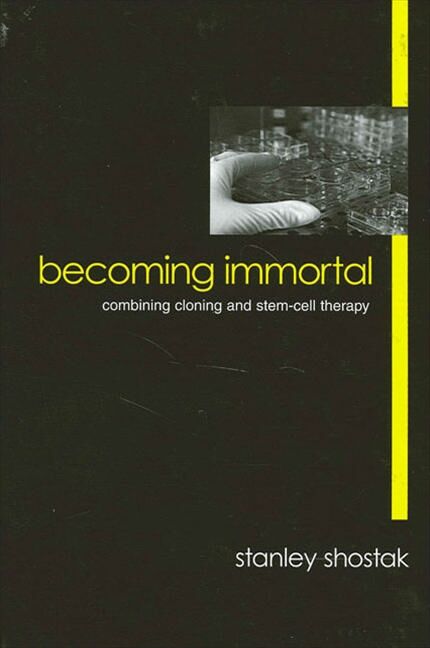
Becoming Immortal
Providing the philosophical, practical, and theoretical leverage for abandoning evolution and development in favor of engineering human beings, Becoming Immortal examines the directions biological change might take if civilization were to take charge of its own destiny. With the aid of embryonic manipulation, cloning, and stem-cell therapy, immortality would seem within the reach of future generations. The question is, \"Do we presently have the wisdom to undertake creating immortal organisms?\" The author examines every facet of this question, from theory to practice, and provides an answer through an in-depth analysis of life and death.
eBook


The Evolution of Death
In The Evolution of Death, the follow-up to Becoming Immortal: Combining Cloning and Stem-Cell Therapy, also published by SUNY Press, Stanley Shostak argues that death, like life, can evolve. Observing that literature, philosophy, religion, genetics, physics, and gerontology still struggle to explain why we die, Shostak explores the mystery of death from a biological perspective.
Death, Shostak claims, is not the end of a linear journey, static and indifferent to change. Instead, he suggests, the current efforts to live longer have profoundly affected our ecological niche, and we are evolving into a long-lived species. Pointing to the artificial means currently used to prolong life, he argues that as we become increasingly juvenilized in our adult life, death will become significantly and evolutionarily delayed. As bodies evolve, the embryos of succeeding generations may be accumulating the stem cells that preserve and restore, providing the resources necessary to live longer and longer. If trends like this continue, Shostak contends, future human beings may join the ranks of other animals with indefinite life spans.
eBook
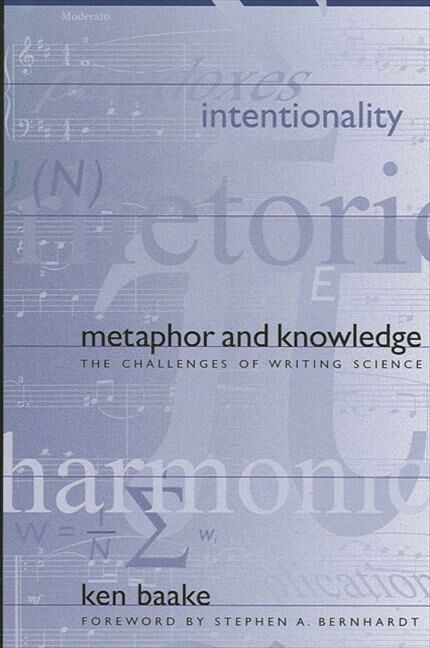
Metaphor and Knowledge
Metaphor and Knowledge offers a sweeping history of rhetoric and metaphor in science, delving into questions about how language constitutes knowledge. Weaving together insights from a group of scientists at the Santa Fe Institute as they shape the new interdisciplinary field of complexity science, Ken Baake shows the difficulty of writing science when word meanings are unsettled, and he analyzes the power of metaphor in science.
eBook

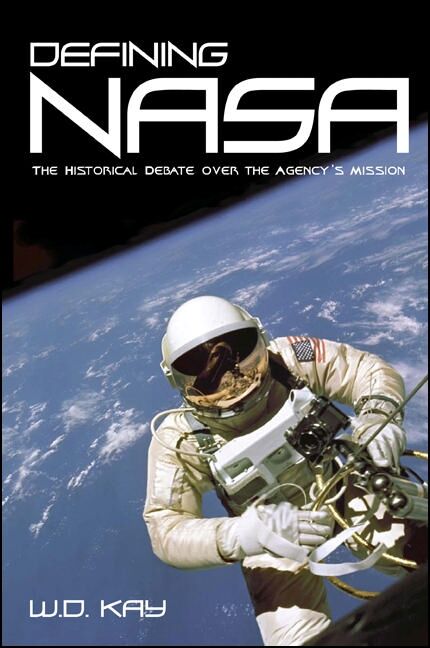
Defining NASA
Most observers would point to the 1969 Apollo moon landing as the single greatest accomplishment of NASA, yet prominent scientists, engineers, and public officials were questioning the purpose of the U.S. space program, even at the height of its national popularity. Defining NASA looks at the turbulent history of the space agency and the political controversies behind its funding. W. D. Kay examines the agency's activities and behavior by taking into account not only the political climate, but also the changes in how public officials conceptualize space policy. He explores what policymakers envisioned when they created the agency in 1958, why support for the Apollo program was so strong in the 1960s only to fade away in such a relatively short period of time, what caused NASA and the space program to languish throughout most of the 1970s only to reemerge in the 1980s, and, finally, what role the agency plays today.
eBook