
Catalogue Search | MBRL


Are you sure you want to remove the book from the shelf?

{{itemTitle}}
15,844
result(s) for
"Science, Medieval History"
Sort by:

Artisan/practitioners and the rise of the new sciences, 1400-1600
\"This book provides the historical background for a central issue in the history of science: the influence of artisans, craftsmen, and other practitioners on the emergent empirical methodologies that characterized the \"new sciences\" of the late sixteenth and seventeenth centuries. Long offers a coherent account and critical revision of the \"Zilsel thesis,\" an influential etiological narrative which argues that such craftsmen were instrumental in bringing about the \"Scientific Revolution.\" Artisan/Practitioners reassesses the issue of artisanal influence from three different perspectives: the perceived relationships between art and nature; the Vitruvian architectural tradition with its appreciation of both theory and practice; and the development of \"trading zones\"--arenas in which artisans and learned men communicated in substantive ways. These complex social and intellectual developments, the book argues, underlay the development of the empirical sciences. This volume provides new discussion and synthesis of a theory that encompasses broad developments in European history and study of the natural world. It will be a valuable resource for college-level teaching, and for scholars and others interested in the history of science, late medieval and early modern European history, and the Scientific Revolution\"-- Provided by publisher.
Book

Nothing Natural Is Shameful
In his Problemata, Aristotle provided medieval thinkers with the occasion to inquire into the natural causes of the sexual desires of men to act upon or be acted upon by other men, thus bringing human sexuality into the purview of natural philosophers, whose aim it was to explain the causes of objects and events in nature. With this philosophical justification, some late medieval intellectuals asked whether such dispositions might arise from anatomy or from the psychological processes of habit formation. As the fourteenth-century philosopher Walter Burley observed, \"Nothing natural is shameful.\" The authors, scribes, and readers willing to \"contemplate base things\" never argued that they were not vile, but most did share the conviction that they could be explained.From the evidence that has survived in manuscripts of and related to the Problemata, two narratives emerge: a chronicle of the earnest attempts of medieval medical theorists and natural philosophers to understand the cause of homosexual desires and pleasures in terms of natural processes, and an ongoing debate as to whether the sciences were equipped or permitted to deal with such subjects at all. Mining hundreds of texts and deciphering commentaries, indices, abbreviations, and marginalia, Joan Cadden shows how European scholars deployed a standard set of philosophical tools and a variety of rhetorical strategies to produce scientific approaches to sodomy.
eBook

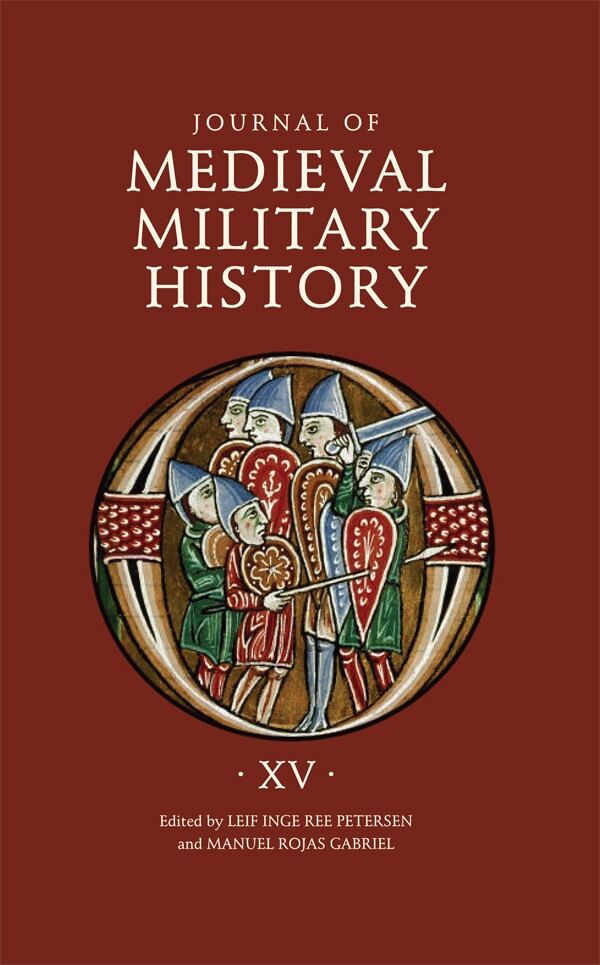
Journal of Medieval Military History
This special edition of the Journal aims to respond to the lively debate in recent years as to whether medieval military history was characterized by particular types of strategy, be it Grand, Vegetian or Battle-Seeking, It brings together many of the pre-eminent military historians active today to examine a number of cases that display the complexity and diversity of strategic realities, as well as exploring new models and methodological avenues in evaluating medieval strategies. Material ranges chronologically from the late Roman Empire to the late Middle Ages, and geographically from the Baltic and the British Isles to Iberia and the Crusader States, while the topics explored include the Viking Wars, the English long bow, and the economies of conquest. Leif Inge Ree Petersen is Associate Professor of Late Antique and Early Medieval History at the Norwegian University of Science and Technology, Trondheim; Manuel Rojas Gabriel is Professor of Medieval History at the University of Extremadura, Cáceres. Contributors: Richard Abels, Bernard S. Bachrach, Matthew Bennett, John France, Luis García-Guijarro Ramos, John Gillingham, Dolores Oliva García, Leif Inge Ree Petersen, Manuel Rojas Gabriel.
eBook

Medieval science (500-1500)
\"The period between the end of the Roman Empire and the Renaissance used to be known as the \"Dark Ages.\" As this book shows, it was in fact a time of constant technological innovation and an increasingly accurate understanding of the world, often based on ancient and classical wisdom\"--P. [4] of cover.
Book

Journal of Medieval Military History
This volume has a special focus on the topic of proxy actors and irregular forces in medieval warfare. John France and Jochen G. Schenk offer broad overviews: France addresses the military role of non-noble combatants and the significance of differences between medieval and modern ideas of the \"legitimacy\" of war-fighters, while Schenk applies a concept originating in political science - Mary Kaldor's idea of \"New Wars\" - to the conflicts of the Middle Ages, showing that in some ways, what is old is new again. Alex Mallett likewise ties the past to the present, comparing Muslim responses to the Crusades with modern responses to the Western-led invasion of Iraq in 2003. Michael Lower and Mike Carr, meanwhile, examine important groups of foreign fighters employed by North African states and Byzantium. In addition, the volume encompasses a study of Anglo-Norman siege engines (by Michael Fulton), three pieces on war and politics in fourteenth-century Iberia (by Douglas Biggs, Donald Kagay, and L.J. Andrew Villalon), and David Green's magisterial survey of imperial policy and military practice in the Plantagenet dominions in the fourteenth and fifteenth centuries. Contributors: Douglas Biggs, Mike Carr, Michael S. Fulton, David Green, Donald Kagay, Michael Lower, Alex Mallett, Jochen Schenk, Andrew Villalon
eBook

Medieval warfare : a reader
\"Medieval Warfare: A Reader examines how armed conflict was experienced in the Middle Ages both on the field of battle and at home. This comprehensive collection of primary source materials some translated here for the first time traces over one thousand years of military developments including the fall of Rome, the fight for Jerusalem, the building of castles and other fortifications, the rise of gunpowder, and the negotiation of treaties. Curated by two of the leading experts in medieval military history, the readings in Medieval Warfare tell a story of terrors and tragedies, triumphs and technologies in the Middle Ages. Chronicles, poems, songs, and letters provide a comprehensive look not just at the waging of war but at the impact war had on society. By reclaiming the voices of victims and veterans that have previously been ignored, the editors stake out a powerful new perspective on the long history of military conflict and suffering.\"-- Provided by publisher.
Book

Siege Warfare and \u2029Military Organization in the Successor States (400-800 ad)
Siege Warfare follows the adaptation of late Roman military organization among successor states to 800 AD from Francia to the Caliphate, as siege technology, military infrastructure and administrative techniques throughout the Mediterranean derived from 4th and 5th century imperial innovations.
eBook
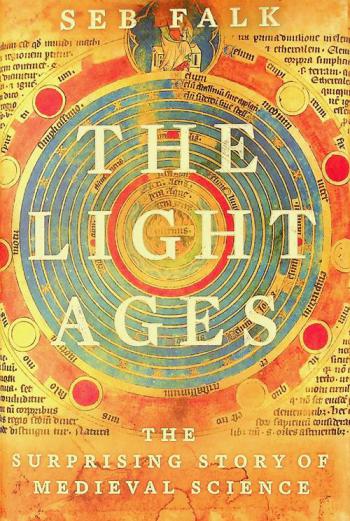
The light ages : the surprising story of medieval science
\"An illuminating guide to the scientific and technological achievements of the Middle Ages through the life of a crusading astronomer-monk. Soaring Gothic cathedrals, violent crusades, the Black Death: these are the dramatic forces that shaped the medieval era. But the so-called Dark Ages also gave us the first universities, eyeglasses, and mechanical clocks, proving that the Middle Ages were home to a vibrant scientific culture. In 'The Light Ages', Cambridge science historian Seb Falk takes us on an immersive tour of medieval science through the story of one fourteenth-century monk, John of Westwyk. From multiplying Roman numerals to navigating by the stars, curing disease, and telling time with an ancient astrolabe, we learn emerging science alongside Westwyk, while following the gripping story of the struggles and successes of an ordinary man in a precarious world. An enlightening history that argues that these times weren't so dark after all, 'The Light Ages' shows how medieval ideas continue to color how we see the world today\"-- Provided by publisher.

Medieval Warfare
Written by twelve expert historians, this well-illustrated account of the great confrontations of medieval Europe (c.700-1500) examines major developments in the methods of warfare from the time of Charlemagne through to the end of the Crusades. The result is a rich and fascinating history of a culture steeped in martial ideas, whose aristocrat.
eBook