
Catalogue Search | MBRL


Are you sure you want to remove the book from the shelf?

{{itemTitle}}
844
result(s) for
"Science Arab countries History."
Sort by:


Arabic Thought in the Liberal Age 1798–1939
Arabic Thought in the Liberal Age is the most comprehensive study of the modernizing trend of political and social thought in the Arab Middle East. Albert Hourani studies the way in which ideas about politics and society changed during the nineteenth and the first half of the twentieth centuries, in response to the expanding influence of Europe. His main attention is given to the movement of ideas in Egypt and Lebanon. He shows how two streams of thought, the one aiming to restate the social principles of Islam, and the other to justify the separation of religion from politics, flowed into each other to create the Egyptian and Arab nationalisms of the present century. The last chapter of the book surveys the main tendencies of thought in the post-war years. Since its publication in 1962, this book has been regarded as a modern classic of interpretation. It was reissued by the Cambridge University Press in 1983 and has subsequently sold over 8000 copies.
eBook


Language and Change in the Arab Middle East
In this study of the rise of modern Arabic, Ayalon examines 19th-century linguistic change in the Eastern Arab world, describing how the language responded to the infiltration of Western politics, technology, and culture. Focusing on the realm of political discourse, Ayalon looks at a wide array of evidence--local chronicles, travel accounts, translations of European writings, Arab political treatises, newspapers and periodicals, and dictionaries--to show how shifts in the color, tone, and meaning of the Arab vocabulary reflected a new socio-political and cultural reality.
eBook


Language and change in the Arab Middle East : the evolution of modern political discourse
This study of the rise of modern Arabic shows nineteenth-century linguistic changes in the eastern Arab world to mirror changing perceptions and responses to the West, and to act as a guide to the emergence of modern Arabic concepts, institutions, and practices.
eBook

The Arab spring
In this landmark book, Hamid Dabashi argues that the revolutionary uprisings from Morocco to Iran and from Syria to Yemen were driven by a 'delayed defiance' - a point of rebellion against domestic tyranny and globalized disempowerment alike - that signifies no less than the end of Postcolonialism.
eBook
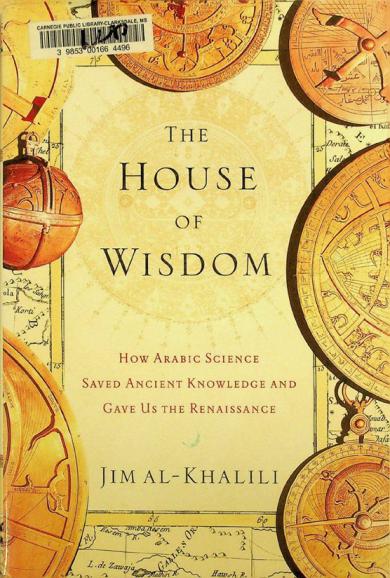
The house of wisdom : how Arabic science saved ancient knowledge and gave us the Renaissance
\"A myth-shattering view of the medieval Islamic world's myriad scientific innovations, which preceded-and enabled-the European Renaissance. The Arabic legacy of science and philosophy has long been hidden from the West. British-Iraqi physicist Jim Al-Khalili unveils that legacy to fascinating effect by returning to its roots in the hubs of Arab innovation that would advance science and jump-start the European Renaissance. Inspired by the Koranic injunction to study closely all of God's works, rulers throughout the Islamic world funded armies of scholars who gathered and translated Persian, Sanskrit, and Greek texts. From the ninth through the fourteenth centuries, these scholars built upon those foundations a scientific revolution that bridged the one-thousand-year gap between the ancient Greeks and the European Renaissance. Many of the innovations that we think of as hallmarks of Western science were actually the result of Arab ingenuity: Astronomers laid the foundations for the heliocentric model of the solar system long before Copernicus; physicians accurately described blood circulation and the inner workings of the eye ages before Europeans solved those mysteries; physicists made discoveries that laid the foundation for Newton's theories of optics. But the most significant legacy of Middle Eastern science was its evidence-based approach-the lack of which kept Europeans in the dark throughout the Dark Ages. The father of this experimental approach to science-what we call the scientific method-was an Iraqi physicist who applied it centuries before Europeans first dabbled in it. Al-Khalili details not only how discoveries like these were made, but also how they changed European minds and how they were ultimately obscured by later Western versions of the same principles. With transporting detail, Al-Khalili places the reader in the intellectual and cultural hothouses of the Arab Enlightenment: the House of Wisdom in Baghdad, one of the world's greatest academies, the holy city of Isfahan, the melting pots of Damascus and Cairo, and the embattled Islamic outposts of Spain. Al-Khalili tackles two tantalizing questions: Why did the Arab world enter its own Dark Age after such a dazzling enlightenment? And how much did Arabic learning contribute to making the Western world as we know it? Given his singular combination of expertise in both the Western and Middle Eastern scientific traditions, Al-Khalili is uniquely qualified to solve those riddles\"--Provided by publisher.
Book

Hanan al-cinema : affections for the moving image
An examination of experimental cinema and media art from the Arabic-speaking world that explores filmmakers' creative and philosophical inventiveness in trying times. In this book, Laura Marks examines one of the world's most impressive, and affecting, bodies of independent and experimental cinema from the last twenty-five years: film and video works from the Arabic-speaking world. Some of these works' creative strategies are shared by filmmakers around the world; others arise from the particular economic, social, political, and historical circumstances of Arab countries, whose urgency, Marks argues, seems to demand experiment and invention. Grounded in a study of infrastructures for independent and experimental media art in the Arab world and a broad knowledge of hundreds of films and videos, Hanan al-Cinema approaches these works thematically. Topics include the nomadism of the highway, nostalgia for '70s radicalism, a romance with the archive, algorithmic and glitch media, haptic and networked space, and cinema of the body. Marks develops an aesthetic of enfolding and unfolding to elucidate the different ways that cinema can make events perceptible, seek connections among them, and unfold in the bodies and thoughts of audiences. The phrase Hanan al-cinema expresses the way movies sympathize with the world and the way audiences feel affection for, and are affected by, them. Marks's clear and expressive writing conveys these affections in works by such internationally recognized artists and filmmakers as Akram Zaatari, Elia Suleiman, Hassan Khan, Mounir Fatmi, and Joana Hadjithomas and Khalil Joreige, and others who should be better known.
eBook