
Catalogue Search | MBRL


Are you sure you want to remove the book from the shelf?

{{itemTitle}}
11,639
result(s) for
"Science Canada History."
Sort by:

Made modern : science and technology in Canadian history
Science and technology have shaped not only economic empires and industrial landscapes, but also the identities, anxieties, and understandings of people living in modern times. Made Modern: Science and Technology in Canadian History draws together leading scholars from a wide range of fields to enrich our understanding of history inside and outside Canada's borders. The book's chapters examine how science and technology have allowed Canadians to imagine and reinvent themselves as modern. Focusing on topics including exploration, scientific rationality, the occult, medical instruments, patents, communication, and infrastructure, the contributors situate Canadian scientific and technological developments within larger national and transnational contexts. The first major collection of its kind in thirty years, Made Modern explores the place of science and technology in shaping Canadians' experience of themselves and their place in the modern world.-- Source other than Library of Congress.
Book

Inventing Canada
The Carleton Library Series makes available once again Inventing Canada, Suzanne Zeller's classic history of science, land, and nation in Victorian Canada. Zeller argues that the middle decades of the nineteenth century that saw the British North American colonies attempting to establish a transcontinental nation also witnessed the rise of an analytical tradition in science that challenged older conceptions of humanity's relationship with nature and the land. Zeller taps a wide range of archival and published sources to document the prominent place of Victorian science in British North American thought and society. Her focus on the creative functions of Victorian geological, geophysical, and botanical sciences highlights the formation of a Canadian community of scientists, politicians, educators, journalists, businessmen, and others who promoted public support of scientific activities and institutions. By moving beyond the eighteenth-century mechanical ideals that had forged the United States, they reassessed the land and its possibilities to redefine the transcontinental future of a northern variant of the British nation. Inventing Canada is a must-read for anyone interested in the scientific background of Canada's history, including its environmental history.
eBook


Browsing Science Research at the Federal Level in Canada
Science Research at the Federal Level in Canadais designed to provide much-needed information about the intertwined relationship between science research and politics at the federal level in Canada. Social, economic, and political imperatives drive the direction and scope of the scientific and technical research conducted by federal agencies, but little is known about the knowledge base of government publications and the literature of Canadian science and technology.
Covering the federal departments of Agriculture, Environment (including the Canadian Wildlife Service and the Meteorological Service of Canada), Fisheries and Oceans, and Natural Resources (including the Canadian Forest Service, the Earth Sciences Section, and the Geological Survey of Canada) as well as the National Research Council and Industry Canada, Brian Wilks provides a historical background, list of publications, and description of activities for most of the major science initiatives undertaken at the federal level. He surveys a wide range of government documents and monographic and serial science collections used by both faculty and students. Written primarily for science librarians and students, this comprehensive monograph will prove an invaluable addition to any science library.
eBook

Perogies and politics : Canada's Ukrainian left, 1891-1991
\"In Perogies and Politics, Rhonda Hinther explores the twentieth-century history of the Ukrainian left in Canada from the standpoint of the women, men, and children who formed and fostered it. For twentieth-century leftist Ukrainians, culture and politics were inextricably linked. The interaction of Ukrainian socio-cultural identity with Marxist-Leninism resulted in one of the most dynamic national working-class movements Canada has ever known. The Ukrainian left's success lay in its ability to meet the needs of and speak in meaningful, respectful, and empowering ways to its supporters' experiences and interests as individuals and as members of a distinct immigrant working-class community. This offered to Ukrainians a radical social, cultural, and political alternative to the fledgling Ukrainian churches and right-wing Ukrainian nationalist movements. Hinther's colourful and in-depth work reveals how left-wing Ukrainians were affected by changing social, economic, and political forces and how they in turn responded to and challenged these forces.\"-- Provided by publisher.
Book
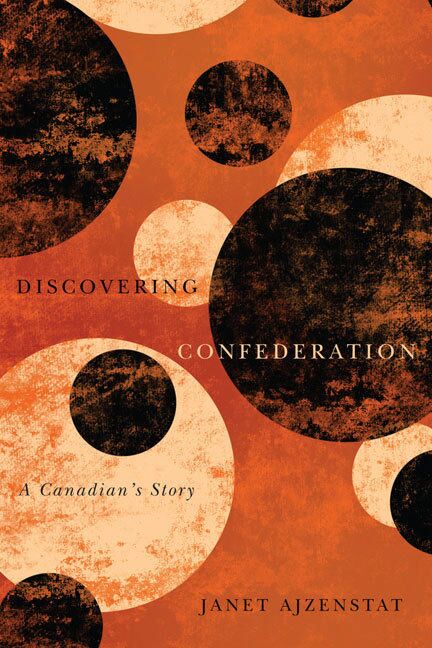
Discovering Confederation
Janet Ajzenstat is one of Canada's most respected thinkers on the moral and philosophical foundations of responsible government and Confederation. Discovering Confederation is a study of political science over the last forty years through the intellectual lens of her career. Ajzenstat details her academic journey, from her early years as a hopeful, radical activist in the 1960s, through her graduate studies at McMaster University and the University of Toronto, her commitment to the importance of primary source documents, and to her decades-long teaching career. Learning from prominent political thinker Allan Bloom and philosopher and political commentator George Grant, Ajzenstat began to form her own opinions about parliamentary democracy and constitutional debate. She presents her discovery of the argument for parliamentary democracy, explaining how and why parliamentary democracy is sufficient security for individual rights. Though sometimes referred to as a conservative, Ajzenstat shows that her work is a defence of the political constitution, which ensures unconstrained and continuing deliberation amongst parties, interests, and philosophies of all political stripes. A candid and engaging showcase of a great mind at work, Discovering Confederation is a revealing account of Canada's political history and recent academic life.
eBook


Inventing Canada
Tapping a wide range of archival and published sources, Suzanne Zeller documents the place of Victorian science in British North American thought and society during the era of Confederation.
eBook
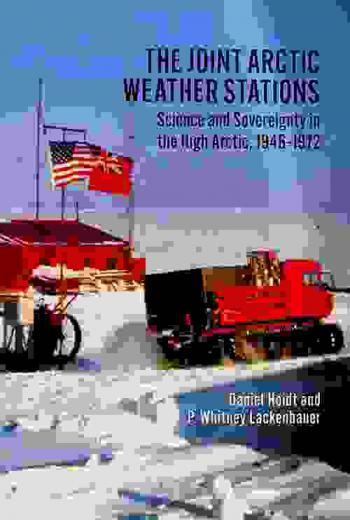
The joint Arctic weather stations : science and sovereignty in the high Arctic, 1946-1972
\"The first comprehensive study of the Canada-U.S. Joint Arctic Weather Stations, systematically analyzing large- and small-scale aspects from scientific diplomacy to site logistics to understand how these isolated posts were so successful. The Joint Arctic Weather Stations were five meteorological and scientific monitoring stations constructed at Resolute, Eureka, Mould Bay, Isachsen, and Alert with the cooperation of the Canadian Department of Transport's meteorological branch and the United States Weather Bureau. From 1947 to the early 1970s as few as four Canadians and four Americans worked and lived at each of the four satellite stations, observing and collecting scientific data. This is the first systematic account of the Joint Arctic Weather Stations, a project that profoundly shaped state activates and scientific inquiry in the Arctic Archipelago. Drawing on extensive archival evidence, unpublished personal memoirs, and interviews with former employees, The Joint Arctic Weather Stations analyzes the diplomatic, scientific, social, military, and environmental dimensions of the program alongside each station as a nexus of state planning and personal agency. Contrary to previous scholarship, The Joint Arctic Weather Stations reveals that Canadian officials sought--and achieved--a firm policy that afforded effective control of Canada's Arctic while enjoying the advantages of American contribution to the joint meteorological program. It explores the changing ways science was conducted over time and how the details of everyday life at remote stations, from the climate to leisure activities to debates over alcohol, hunting, and leadership, shaped the program's effectiveness. An exploration of the full duration of the Joint Arctic Weather Stations from high-level planning and diplomacy to personal interactions in the stations makes this book an essential exploration of collaborative polar science in the North American Arctic.\"-- Provided by publisher.

The comparative turn in Canadian political science
This volume is the first sustained attempt to describe, analyze, and assess the \"comparative turn\" in Canadian political science.
eBook