
Catalogue Search | MBRL


Are you sure you want to remove the book from the shelf?

{{itemTitle}}
202,571
result(s) for
"Science Data processing."
Sort by:

Data-driven science and engineering : machine learning, dynamical systems, and control
\"Data-driven discovery is revolutionizing the modelling, prediction, and control of complex systems. This textbook brings together machine learning, engineering mathematics, and mathematical physics to integrate modelling and control of dynamical systems with modern methods in data science. It highlights many of the recent advances in scientific computing that enable data-driven methods to be applied to a diverse range of complex systems, such as turbulence, the brain, climate, epidemiology, finance, robotics, and autonomy. Aimed at advanced undergraduate and beginning graduate students in the engineering and physical sciences, the text presents a range of topics and methods from introductory to state of the art\"-- Provided by publisher.
Book

Data analysis and statistics for geography, environmental science, and engineering
This practical, classroom-tested textbook helps readers learn quantitative methodology, including how to implement advanced analysis methods using an open-source software platform. Based on the author's many years of teaching undergraduate and graduate students in several countries, the book brings together principles of statistics and probability, multivariate analysis, and spatial analysis methods applied to a variety of geographical and environmental models. Theory is accompanied by practical hands-on computer exercises, progressing from easy to difficult. The text also presents a review of mathematical methods, making the book self-contained.
eBook

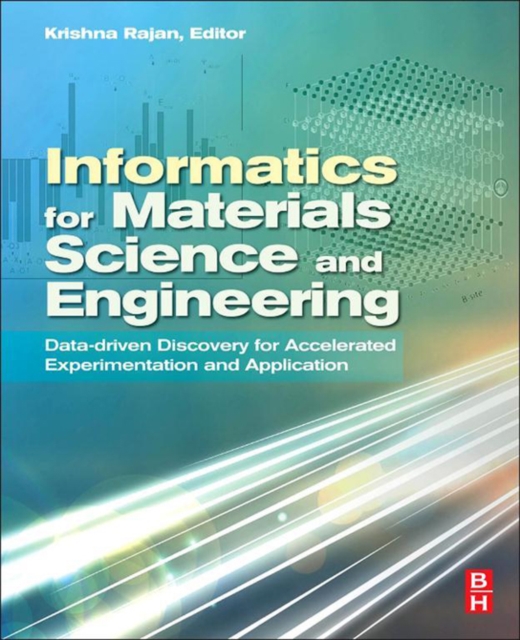
Informatics for materials science and engineering : data-driven discovery for accelerated experimentation and application
Materials informatics: a 'hot topic' area in materials science, aims to combine traditionally bio-led informatics with computational methodologies, supporting more efficient research by identifying strategies for time- and cost-effective analysis.The discovery and maturation of new materials has been outpaced by the thicket of data created by new.
eBook


Data mining for the social sciences
We live in a world of big data: the amount of information collected on human behavior each day is staggering, and exponentially greater than at any time in the past. Additionally, powerful algorithms are capable of churning through seas of data to uncover patterns. Providing a simple and accessible introduction to data mining, Paul Attewell and David B. Monaghan discuss how data mining substantially differs from conventional statistical modeling familiar to most social scientists. The authors also empower social scientists to tap into these new resources and incorporate data mining methodologies in their analytical toolkits. Data Mining for the Social Sciences demystifies the process by describing the diverse set of techniques available, discussing the strengths and weaknesses of various approaches, and giving practical demonstrations of how to carry out analyses using tools in various statistical software packages.
eBook

MATLAB for neuroscientists : an introduction to scientific computing in MATLAB
This is the first comprehensive teaching resource and textbook for the teaching of Matlab in the Neurosciences and in Psychology. Matlab is unique in that it can be used to learn the entire empirical and experimental process, including stimulus generation, experimental control, data collection, data analysis and modeling. Thus a wide variety of computational problems can be addressed in a single programming environment. The idea is to empower advanced undergraduates and beginning graduate students by allowing them to design and implement their own analytical tools. As students advance in their research careers, they will have achieved the fluency required to understand and adapt more specialized tools as opposed to treating them as \"black boxes\".
eBook

Data information literacy
The book lays out the history of diversity in the veterinary profession, in the context of historical changes and actions within US society. An overview of selected strategies from dental, pharmacy, and (human) medical schools is then offered. The impact of social constructs on career interest development is explored using the examples of race, gender, sexual orientation, and gender identity. Practical strategies for attracting preschool through undergraduate students to careers in the veterinary profession are presented, as well as metrics and tools to assess the impact of diversity and inclusiveness strategies. A systems approach to diversity and inclusiveness in the veterinary profession is called for in a manner that frames barriers as opportunities for improvement and progress. There is much that needs to happen to achieve professional inclusiveness and cultural competency, but the path to achieving this is clear. System-wide commitment, planning, execution, and continuous assessment will position the profession to better suit the population of the nation and the world that will be served. This book is a call to action for consistent championship and cohesive approaches, and it provides a road map to building a sustainably inclusive future.
eBook