
Catalogue Search | MBRL


Are you sure you want to remove the book from the shelf?

{{itemTitle}}
13,078
result(s) for
"Science Great Britain History."
Sort by:


Machiavelli, Hobbes, and the Formation of a Liberal Republicanism in England
Certain English writers of the seventeenth and early eighteenth centuries, whom scholars often associate with classical republicanism, were not, in fact, hostile to liberalism. Indeed, these thinkers contributed to a synthesis of liberalism and modern republicanism. As this book argues, Marchamont Nedham, James Harrington, Henry Neville, Algernon Sidney, and John Trenchard and Thomas Gordon, the co-authors of a series of editorials entitled Cato's Letters, provide a synthesis that responds to the demands of both republicans and liberals by offering a politically engaged citizenry as well as the protection of individual rights. The book also reinterprets the writings of Machiavelli and Hobbes to show that each contributed in a fundamental way to the formation of this liberal republicanism.
eBook

The Royal Society : and the invention of modern science
\"Historian Adrian Tinniswood recounts the founding and history of the Royal Society, created and devoted to advancing knowledge through experimentation. The 8,000 fellows elected to the Society since its founding in London in 1662 include all of the scientific leading lights of the last four centuries, including Isaac Newton, Charles Darwin, Tim Berners-Lee, and Stephen Hawking\"-- Provided by publisher.
Book

The Ploy of Instinct: Victorian Sciences of Nature and Sexuality in Liberal Governance
It is paradoxical that instinct became a central term for late Victorian sexual sciences as they were elaborated in the medicalized spaces of confession and introspection, given that instinct had long been defined in its opposition to self-conscious thought. The Ploy of Instinct ties this paradox to instinct's deployment in conceptualizing governmentality. Instinct's domain, Frederickson argues, extended well beyond the women, workers, and \"savages\" to whom it was so often ascribed. The concept of instinct helped to gloss over contradictions in British liberal ideology made palpable as turn-of-the-century writers grappled with the legacy of Enlightenment humanism. For elite European men, instinct became both an agent of \"progress\" and a force that, in contrast to desire, offered a plenitude in answer to the alienation of self-consciousness. This shift in instinct's appeal to privileged European men modified the governmentality of empire, labor, and gender. The book traces these changes through parliamentary papers, pornographic fiction, accounts of Aboriginal Australians, suffragette memoirs, and scientific texts in evolutionary theory, sexology, and early psychoanalysis.
eBook

Parliament : the biography
\"This first of two volumes takes us on a 500-year journey from Parliament's earliest days in the thirteenth century through the turbulent years of the Wars of the Roses and the upheavals of the Civil Wars, and up to 1801, when Parliament--and the United Kingdom, embracing Scotland and Ireland--emerged in a modern form. Chris Bryant tells this epic tale through the lives of the myriad MPs, lords and bishops who passed through Parliament. It is the vivid, colourful biography of a cast of characters whose passions and obsessions, strengths and weaknesses laid the foundations of modern democracy.\"--Book jacket.
Book
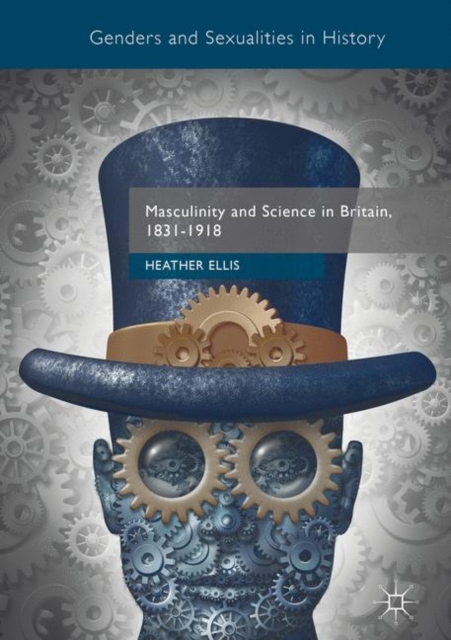
Masculinity and science in Britain, 1831-1918
This book offers the first in-depth study of the masculine self-fashioning of scientific practitioners in nineteenth and early twentieth-century Britain. Focusing on the British Association for the Advancement of Science, founded in 1831, it explores the complex and dynamic shifts in the public image of the British 'man of science' and questions the status of the natural scientist as a modern masculine hero. Until now, science has been examined by cultural historians primarily for evidence about the ways in which scientific discourses have shaped prevailing notions about women and supported the growth of oppressive patriarchal structures. This volume, by contrast, offers the first in-depth study of the importance of ideals of masculinity in the construction of the male scientist and British scientific culture in the nineteenth and early twentieth centuries. From the eighteenth-century identification of the natural philosopher with the reclusive scholar, to early nineteenth-century attempts to reinvent the scientist as a fashionable gentleman, to his subsequent reimagining as the epitome of Victorian moral earnestness and meritocracy, Heather Ellis analyzes the complex and changing public image of the British 'man of science'.
eBook

A history of British actuarial thought
This volume traces the development and implementation of actuarial ideas, from the conception of equitable life in the mid-18th century to the start of the 21st century. It analyses the historical development of British actuarial thought in each of its three main practice areas of life assurance, pensions and general insurance and discusses how new actuarial approaches were developed within each practice area, and how these emerging ideas interacted with each other and were often driven by common external factors such as shocks in the economic environment, new intellectual ideas from academia and developments in technology.
Book

The Allegiance of Thomas Hobbes
The Allegiance of Thomas Hobbes offers a new interpretation of Thomas Hobbes's response to the English Revolution. By focusing on his religious thought, it debunks the standard view of him as a royalist, and recovers his sympathies with the religious projects of the 1640s and 1650s. This reinterpretation culminates with an exploration of Hobbes.
eBook

