
Catalogue Search | MBRL


Are you sure you want to remove the book from the shelf?

{{itemTitle}}
500
result(s) for
"Science History Popular works."
Sort by:


The 100 Most Influential Scientists of All Time
Leonardo da Vinci's study of mechanics led to the creation of early prototypes of flying machines and submarines. Biologist Carolus Linnaeus pioneered the hierarchal system of taxonomic classification in use today, Barbara McClintock's genetics research garnered her the Nobel Prize in Medicine. The detailed profiles of these and many other notable scientists collected in these pages are bound to fascinate and inspire readers.
eBook


100 Most Influential Scientists
The 100 Most Influential Scientists is part of the Britannica Guide Series that offers a look into 100 scientists from Ancient Greece to the present day. The Britannica Guides series offers an essential introduction to many of the key issues of our time. Clear, accurate, and meticulously researched, the series gives both background and analysis for when you need to know for sure what is really happening in the world, whether you are an expert, student, or traveler.
eBook
To boldly go where no book has gone before : a joyous journey through all of science
In our muddled era of conspiracy theories, fake news and groupthink, science's only goal is truth. Like all human pursuits it can go wrong, but it has the great strength of being self-correcting. At its best, what lasts - after much deliberation, rigour and sweat - is the truth. The story of science is how we get there. Standing on the shoulders of giants, world-renowned immunologist Luke O'Neill (aka the People's Immunologist) tells the zigzag story of how we got to this moment in human history, and what the future might hold: from figuring out how the mind really works, space travel (for the sheer fun of it), and the discovery of extra-terrestrial life. With incredible wit and a talent for cutting through the noise, Luke O'Neill tackles some of the great questions of our age, from Artificial Intelligence to the climate catastrophe, with a keen eye on what science might discover next.
BOOK

It's a London thing
This book is a record of the Black music culture that emerged in post-colonial London at the end of the twentieth century; the people who made it, the racial and spatial politics of its development and change, and the part it played in founding London's precious, embattled multiculture. It tells the story of the linked Black musical scenes of the city, from ska, reggae and soul in the 1970s, to rare groove and rave in the 1980s and jungle and its offshoots in the 1990s, to dubstep and grime of the 2000s. Melville argues that these demonstrate enough common features to be thought of as one musical culture, an Afro-diasporic continuum. Core to this idea is that this dance culture has been ignored in history and cultural theory and that it should be thought of as a powerful and internationally significant form of popular art.This book is a record of the Black music culture that emerged in post-colonial London at the end of the twentieth century; the people who made it, the racial and spatial politics of its development and change, and the part it played in founding London's precious, embattled multiculture. It tells the story of the linked Black musical scenes of the city, from ska, reggae and soul in the 1970s, to rare groove and rave in the 1980s and jungle and its offshoots in the 1990s, to dubstep and grime of the 2000s. Melville argues that these demonstrate enough common features to be thought of as one musical culture, an Afro-diasporic continuum. Core to this idea is that this dance culture has been ignored in history and cultural theory and that it should be thought of as a powerful and internationally significant form of popular art.
eBook
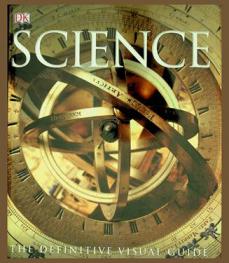
science
\"Covering the history, key discoveries, inventions and people, this illustrated science encyclopedia reveals the story of scientific progress from the invention of the wheel to 21st-century climate solutions, including coverage from ancient Greek geometry and quantum physics to the worldwide web.\"
Book

Afterlives
Simultaneously real and unreal, the dead are people, yet they are not. The society of medieval Europe developed a rich set of imaginative traditions about death and the afterlife, using the dead as a point of entry for thinking about the self, regeneration, and loss. These macabre preoccupations are evident in the widespread popularity of stories about the returned dead, who interacted with the living both as disembodied spirits and as living corpses or revenants. InAfterlives, Nancy Mandeville Caciola explores this extraordinary phenomenon of the living's relationship with the dead in Europe during the five hundred years after the year 1000.
Caciola considers both Christian and pagan beliefs, showing how certain traditions survived and evolved over time, and how attitudes both diverged and overlapped through different contexts and social strata. As she shows, the intersection of Christian eschatology with various pagan afterlife imaginings-from the classical paganisms of the Mediterranean to the Germanic, Celtic, Slavic, and Scandinavian paganisms indigenous to northern Europe-brought new cultural values about the dead into the Christian fold as Christianity spread across Europe. Indeed, the Church proved surprisingly open to these influences, absorbing new images of death and afterlife in unpredictable fashion. Over time, however, the persistence of regional cultures and beliefs would be counterbalanced by the effects of an increasingly centralized Church hierarchy. Through it all, one thing remained constant: the deep desire in medieval people to bring together the living and the dead into a single community enduring across the generations.
eBook


Undoing Work, Rethinking Community
This revolutionary book presents a new conception of community and the struggle against capitalism. InUndoing Work, Rethinking Community, James A. Chamberlain argues that paid work and the civic duty to perform it substantially undermines freedom and justice. Chamberlain believes that to seize back our time and transform our society, we must abandon the deep-seated view that community is constructed by work, whether paid or not.
Chamberlain focuses on the regimes of flexibility and the unconditional basic income, arguing that while both offer prospects for greater freedom and justice, they also incur the risk of shoring up the work society rather than challenging it. To transform the work society, he shows that we must also reconfigure the place of paid work in our lives and rethink the meaning of community at a deeper level. Throughout, he speaks to a broad readership, and his focus on freedom and social justice will interest scholars and activists alike. Chamberlain offers a range of strategies that will allow us to uncouple our deepest human values from the notion that worth is generated only through labor.
eBook