
Catalogue Search | MBRL


Are you sure you want to remove the book from the shelf?

{{itemTitle}}
477,289
result(s) for
"Science Language."
Sort by:

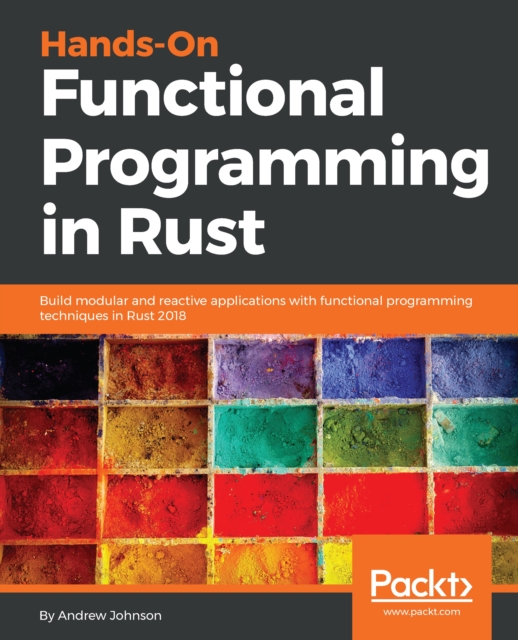
Hands-On Functional Programming in Rust
Explore the support Rust offers for creating functional applications in Rust. Learn about various design patterns, implementing concurrency, metaprogramming, and so on in the processAbout This Book• Learn generics, organization, and design patterns in functional programming• Modularize your applications and make them highly reusable and testable using functional design patterns• Get familiar with complex concepts such as metaprogramming, concurrency, and immutabilityWho This Book Is ForThis book is for Rust developers who are comfortable with the language and now want to improve their coding abilities by learning advanced functional techniques to enhance their skillset and create robust and testable apps.What You Will Learn• How Rust supports the use of basic functional programming principles• Use functional programming to handle concurrency with elegance• Read and interpret complex type signatures for types and functions• Implement powerful abstractions using meta programming in Rust• Create quality code formulaically using Rust's functional design patterns• Master Rust's complex ownership mechanisms particularly for mutabilityIn DetailFunctional programming allows developers to divide programs into smaller, reusable components that ease the creation, testing, and maintenance of software as a whole. Combined with the power of Rust, you can develop robust and scalable applications that fulfill modern day software requirements. This book will help you discover all the Rust features that can be used to build software in a functional way.We begin with a brief comparison of the functional and object-oriented approach to different problems and patterns. We then quickly look at the patterns of control flow, data the abstractions of these unique to functional programming. The next part covers how to create functional apps in Rust; mutability and ownership, which are exclusive to Rust, are also discussed. Pure functions are examined next and you'll master closures, their various types, and currying. We also look at implementing concurrency through functional design principles and metaprogramming using macros. Finally, we look at best practices for debugging and optimization. By the end of the book, you will be familiar with the functional approach of programming and will be able to use these techniques on a daily basis.Style and approachStep-by-step guide covering advanced concepts and building functional applications in Rust
eBook


Jupyter Cookbook
Jupyter has garnered a strong interest in the data science community of late, as it makes common data processing and analysis tasks much simpler. This book is for data science professionals who want to master various tasks related to Jupyter to create efficient, easy-to-share applications related to data analysis and visualization.
eBook

JAVA Basics Using ChatGPT/GPT-4
Encourages readers to compare and contrast hand-written code with ChatGPT-generated code.This approach fosters discussions on code efficiency, readability, and maintainability, enhancing understanding of programming paradigms and techniques.
eBook

Deep learning for natural language processing : creating neural networks with Python
Discover the concepts of deep learning used for natural language processing (NLP), with full-fledged examples of neural network models such as recurrent neural networks, long short-term memory networks, and sequence-2-sequence models. You'll start by covering the mathematical prerequisites and the fundamentals of deep learning and NLP with practical examples. The first three chapters of the book cover the basics of NLP, starting with word-vector representation before moving onto advanced algorithms. The final chapters focus entirely on implementation, and deal with sophisticated architectures such as RNN, LSTM, and Seq2seq, using Python tools: TensorFlow, and Keras. Deep Learning for Natural Language Processing follows a progressive approach and combines all the knowledge you have gained to build a question-answer chatbot system. This book is a good starting point for people who want to get started in deep learning for NLP. All the code presented in the book will be available in the form of IPython notebooks and scripts, which allow you to try out the examples and extend them in interesting ways. You will: Gain the fundamentals of deep learning and its mathematical prerequisites Discover deep learning frameworks in Python Develop a chatbot Implement a research paper on sentiment classification.
Book

GPT-4 For Developers
Extensive Python 3.x code samples generated using ChatGPT and GPT-4, covering diverse programming tasks and challenges.Comprehensive exploration of data visualization techniques using popular Python libraries such as Matplotlib and Seaborn.
eBook

What is ChatGPT doing ... and why does it work?
\"Nobody expected this--not even its creators: ChatGPT has burst onto the scene as an AI capable of writing at a convincingly human level. But how does it really work? What's going on inside its \"AI mind\"? In this short book, prominent scientist and computation pioneer Stephen Wolfram provides a readable and engaging explanation that draws on his decades-long unique experience at the frontiers of science and technology. Find out how the success of ChatGPT brings together the latest neural net technology with foundational questions about language and human thought posed by Aristotle more than two thousand years ago\"-- Provided by publisher.
BOOK
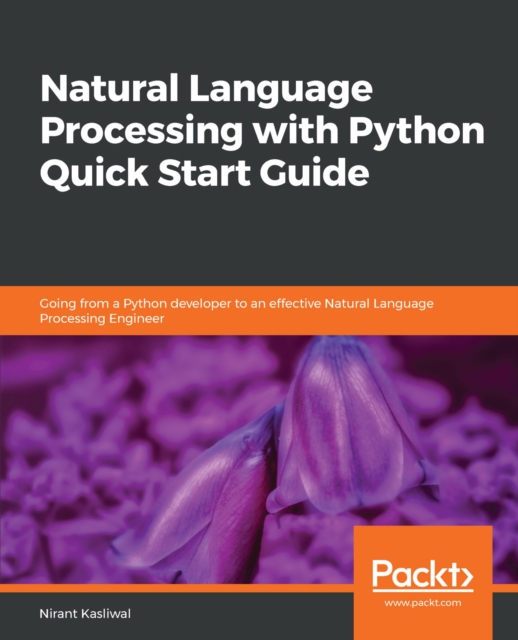
Natural Language Processing with Python Quick Start Guide
Build and deploy intelligent applications for natural language processing with Python by using industry standard tools and recently popular methods in deep learning Key Features * A no-math, code-driven programmer's guide to text processing and NLP * Get state of the art results with modern tooling across linguistics, text vectors and machine learning * Fundamentals of NLP methods from spaCy, gensim, scikit-learn and PyTorch Book Description NLP in Python is among the most sought after skills among data scientists. With code and relevant case studies, this book will show how you can use industry-grade tools to implement NLP programs capable of learning from relevant data. We will explore many modern methods ranging from spaCy to word vectors that have reinvented NLP. The book takes you from the basics of NLP to building text processing applications. We start with an introduction to the basic vocabulary along with a workflow for building NLP applications. We use industry-grade NLP tools for cleaning and pre-processing text, automatic question and answer generation using linguistics, text embedding, text classifier, and building a chatbot. With each project, you will learn a new concept of NLP. You will learn about entity recognition, part of speech tagging and dependency parsing for Q and A. We use text embedding for both clustering documents and making chatbots, and then build classifiers using scikit-learn. We conclude by deploying these models as REST APIs with Flask. By the end, you will be confident building NLP applications, and know exactly what to look for when approaching new challenges. What you will learn * Understand classical linguistics in using English grammar for automatically generating questions and answers from a free text corpus * Work with text embedding models for dense number representations of words, subwords and characters in the English language for exploring document clustering * Deep Learning in NLP using PyTorch with a code-driven introduction to PyTorch * Using an NLP project management Framework for estimating timelines and organizing your project into stages * Hack and build a simple chatbot application in 30 minutes * Deploy an NLP or machine learning application using Flask as RESTFUL APIs Who this book is for Programmers who wish to build systems that can interpret language. Exposure to Python programming is required. Familiarity with NLP or machine learning vocabulary will be helpful, but not mandatory.
eBook