
Catalogue Search | MBRL


Are you sure you want to remove the book from the shelf?

{{itemTitle}}
1,763
result(s) for
"Science Popular works"
Sort by:

Science in seconds : 200 key concepts explained in an instant
Muir provides a visually enhanced introduction to key science concepts. Each idea is quickly and clearly explained, and easy to remember thanks to the simple yet essential illustrations that complement each description.
Book

Science Goes Viral
Dr. Joe provides a framework for coming to grips with the onslaught of COVID-19 information and misinformation. He reminds us that although our daily activities have been hijacked by the pandemic, life does go on. He delves into COVID-19 related science and distracts us with an array of topics such as essential oils, plant protein, and omega-3.
eBook

Superfoods, Silkworms, and Spandex
In this new collection of bite-size pop science essays, bestselling author, chemistry professor, and radio broadcaster Dr. Joe Schwarcz shows that you can find science virtually anywhere you look. And the closer you look, the more fascinating it becomes. In this volume, we look through our magnifying glass at maraschino cherries, frizzy hair, duct tape, pickle juice, yellow school buses, aphrodisiacs, dental implants, and bull testes. If those don't tickle your fancy, how about aconite murders, shot towers, book smells, Swarovski crystals, French wines, bees, or head transplants? You can also learn about the scientific escapades of James Bond, California's confusing Proposition 65, the problems with oxygen on Mars, Valentine's Meat Juice, the benefits of pasteurization, the pros and cons of red light therapy, the controversy swirling around perfluoroalkyl substances (PFAS), why English cucumbers are wrapped in plastic, and how probiotics may have seeded Hitler's downfall.
Superfoods, Silkworms, and Spandex answers all your burning questions about the science of everyday life, like:
* why \"superfood\" is a marketing term, not a scientific one;
* why plastic wrap is sometimes the environmental choice;
* why supplements to reduce inflammation may just reduce your bank account;
* how maraschino cherries went from a luxury good to a cheap sundae topper;
* what's behind \"old book smell\";
* how margarine became a hot item for bootleggers;
* why duct tape is useful, but not on ducts; and
* how onstage accidents led to fireproof fabrics.
eBook
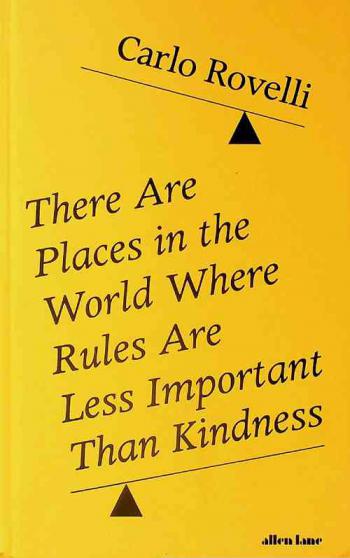
There are places in the world where rules are less important than kindness
One of our most beloved scientists, a fearless free spirit, Carlo Rovelli is also a masterful storyteller. In this collection of writings, the logbook of an intelligence always on the move, he follows his curiosity and invites us on a voyage through science, literature, philosophy and politics. Written with his usual clarity and wit, these pieces, most of which were first published in Italian newspapers, range widely across time and space: from Newton's alchemy to Einstein's mistakes, from Nabokov's lepidoptery to Dante's cosmology, from travels in Africa to the consciousness of an octopus, from mind-altering psychedelic substances to the meaning of atheism. Charming, pithy and elegant, this book is the perfect gateway to the universe of one of the most influential physicists of our age.

An introduction to nanoscience and nanotechnology
A clear primer on the basics of this emerging field What is nanotechnology? What does it do, and why is it expected to have a significant impact on our lives? These seemingly simple questions do not have easy, direct answers. There are so many aspects to nanotechnology that the uninitiated often find it challenging to begin to understand and appreciate it. Introduction to Nanoscience and Nanotechnology explains the basics in clear language, even to those who do not have a scientific background. It reveals the present state of the art and latest applications in nanotechnology, makes estimates of where the technology is headed, and predicts what will be possible in the future. The book begins by addressing how small the nanometer length scale is in comparison to macroscopic objects and why it is special. From a discussion of naturally occurring nanoparticles and nanoparticles composed of carbon, the book then presents the tools of nanotechnology that can build, image, and manipulate nanostructures to build materials and devices (such as MEMS devices and scanning probe technologies), as well as one of the most exciting aspects of the field-combining Bottom-up and Top-down approaches so that individual nanostructures can be probed. Readers will learn about artificially produced nanostructures that have a built-in functionality, such as magnetic nanoparticles that can store a data bit. They'll see how it is possible to produce biologically active nanoparticles that can interact with specific cells in the body, which can lead to powerful new treatments for diseases such as cancer. In addition, they'll discover the potential for building autonomous machines with nanoscale components-and how the tools of nanotechnology may one day lead to a deeper understanding of our universe. From new areas of biomedical applications to probing the \"quantum
vacuum,\" Introduction to Nanoscience and Nanotechnology is accessible to all general science readers, as well as to undergraduates and graduate students studying nanotechnology.
eBook

How things work encyclopedia
Uses detailed photographs and illustrations to explore the inner workings of the world around us.
Book
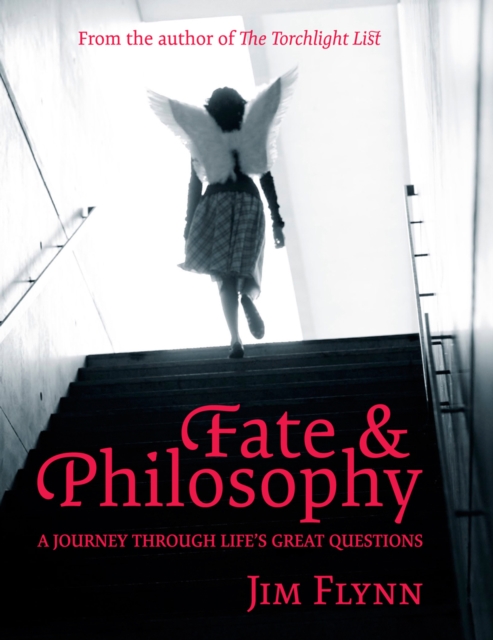
Fate & Philosophy
A provocative sequel to The Torchlight List, this book examines the answers that thinkers throughout the ages—from Plato in ancient Greece to contemporary psychologists and scientists—have proposed for life's great questions: Do human beings have free will? Is a good society possible? Is patriotism ethical? and Can modern science penetrate the mind? Exploring the moral ideals, attitudes, and religious beliefs that affect everyday life, this account is an exhilarating introduction to philosophy and a manual for becoming a fully alive member of the human race. It is also a stunning exploration of the challenges that 21st-century science—from brain research to the discovery of dark matter in the universe—pose to long-held philosophic beliefs.
eBook

To boldly go where no book has gone before : a joyous journey through all of science
In our muddled era of conspiracy theories, fake news and groupthink, science's only goal is truth. Like all human pursuits it can go wrong, but it has the great strength of being self-correcting. At its best, what lasts - after much deliberation, rigour and sweat - is the truth. The story of science is how we get there. Standing on the shoulders of giants, world-renowned immunologist Luke O'Neill (aka the People's Immunologist) tells the zigzag story of how we got to this moment in human history, and what the future might hold: from figuring out how the mind really works, space travel (for the sheer fun of it), and the discovery of extra-terrestrial life. With incredible wit and a talent for cutting through the noise, Luke O'Neill tackles some of the great questions of our age, from Artificial Intelligence to the climate catastrophe, with a keen eye on what science might discover next.
BOOK

Earth
\"It's impossible to grasp the whole planet or integrate all the
descriptions of it. But because we live here, we have to try. This
is not just an artistic compulsion or an existential yearning,
still less an academic exercise. It's a survival issue. This is the
only planet we have. We're stuck here, and we don't own the
place-it would be the height of arrogance to assume that we do.
We're tenants here, not owners, but we're tenants with hope for a
long-term tenancy. We want to extend our lease just as far as we
can.\"-from Earth: A Tenant's Manual
In Earth: A Tenant's Manual, the distinguished
geologist Frank H. T. Rhodes, President Emeritus of Cornell
University, provides a sweeping, accessible, and deeply informed
guide to the home we all share, showing us how we might best
preserve the Earth's livability for ourselves and future
generations.
Rhodes begins by setting the scene for our active planet and
explaining how its location and composition determine how the Earth
works and why it teems with life. He emphasizes the changes that
are of concern to us today, from earthquakes to climate change and
the clashes over the energy resources needed for the Earth's
exploding population. He concludes with an extended exploration of
humanity's prospects on a complex, protean, and ultimately finite
world.
It is not a question of whether the planet is sustainable; the
challenge facing life on Earth-and the life of the Earth-is whether
an expanding and high-consumption species like ours is sustainable.
Only new resources, new priorities, new policies and, most of all,
new knowledge, can reverse the damage that humanity is doing to our
home-and ourselves. A sustainable human future, Rhodes concludes in
this eloquent, sobering, but ultimately optimistic book, will
require a sense of responsible stewardship, for we are not owners
of this planet; we are tenants.
Surveying the systems, large and small, that govern Earth's
processes and influence its changes, Rhodes addresses the negative
consequences of human activities for the health of its regulatory
systems but offers practical suggestions as to how we might effect
repairs, or at least limit further damage to our home.
\"It's impossible to grasp the whole planet or integrate all the
descriptions of it. But because we live here, we have to try. This
is not just an artistic compulsion or an existential yearning,
still less an academic exercise. It's a survival issue. This is the
only planet we have. We're stuck here, and we don't own the
place-it would be the height of arrogance to assume that we do.
We're tenants here, not owners, but we're tenants with hope for a
long-term tenancy. We want to extend our lease just as far as we
can.\"-from Earth: A Tenant's Manual
In Earth: A Tenant's Manual , the distinguished
geologist Frank H. T. Rhodes, President Emeritus of Cornell
University, provides a sweeping, accessible, and deeply informed
guide to the home we all share, showing us how we might best
preserve the Earth's livability for ourselves and future
generations.
Rhodes begins by setting the scene for our active planet and
explaining how its location and composition determine how the Earth
works and why it teems with life. He emphasizes the changes that
are of concern to us today, from earthquakes to climate change and
the clashes over the energy resources needed for the Earth's
exploding population. He concludes with an extended exploration of
humanity's prospects on a complex, protean, and ultimately finite
world.
It is not a question of whether the planet is sustainable; the
challenge facing life on Earth-and the life of the Earth-is whether
an expanding and high-consumption species like ours is sustainable.
Only new resources, new priorities, new policies and, most of all,
new knowledge, can reverse the damage that humanity is doing to our
home-and ourselves. A sustainable human future, Rhodes concludes in
this eloquent, sobering, but ultimately optimistic book, will
require a sense of responsible stewardship, for we are not owners
of this planet; we are tenants.
Surveying the systems, large and small, that govern Earth's
processes and influence its changes, Rhodes addresses the negative
consequences of human activities for the health of its regulatory
systems but offers practical suggestions as to how we might effect
repairs, or at least limit further damage to our home.
eBook