
Catalogue Search | MBRL


Are you sure you want to remove the book from the shelf?

{{itemTitle}}
3,692
result(s) for
"Science Soviet Union History."
Sort by:

Soviet science and engineering in the shadow of the Cold War
\"The 1950s were a vital time in the history of science. In accordance with the intensification of the Cold War, many scientific talents were mobilized to several military-related research and development projects not only in the United States, but also in the Soviet Union. Contrary to the expectation of General Leslie Groves, a leader of the Manhattan Project, the Soviet Union succeeded in their nuclear weapon development in a very short time. And then, by the end of the decade, mankind reached the dawn of the Atomic Age proper with the beginning of the operation of the world's first civil nuclear power plant in Obninsk in 1954. The risky and costly developments of new weapons such as rockets, jet warplanes, and computers were achieved by the Soviet Union in a very short time after World War ? in spite of the heavy economic damage caused by the battles with the German troops in Soviet territory. Why were such a great number of scientific talents mobilized to various Soviet Cold War research and development projects? What were the true natures, and real consequences of the rushed Cold War projects? How did Soviet scientists approach the nuclear age? Thanks to the study of formerly classified Soviet archives, a more nuanced view of Soviet society has become possible. To resolve the above-mentioned questions, Ichikawa analyses the complicated interactions among various factors, including the indigenous contradictions in the historical development of science in the Soviet Union; conflicts among the related interest groups; relationships with the political leadership and the military; and the role of ideology\"-- Provided by publisher.
Book
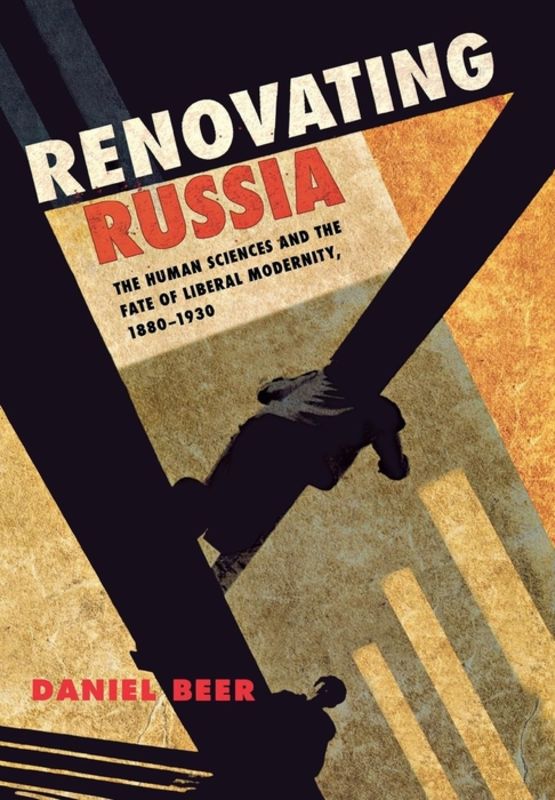
Renovating Russia
This is a comparative investigation of late imperial and early Soviet medico-scientific theories of moral and social disorder. Beer shows how liberal programmes of scientific social engineering developed in the imperial period meshed with the radical project of Bolshevism.
eBook


Renovating Russia
Renovating Russiais a richly comparative investigation of late Imperial and early Soviet medico-scientific theories of moral and social disorder. Daniel Beer argues that in the late Imperial years liberal psychiatrists, psychologists, and criminologists grappled with an intractable dilemma. They sought to renovate Russia, to forge a modern enlightened society governed by the rule of law, but they feared the backwardness, irrationality, and violent potential of the Russian masses. Situating their studies of degeneration, crime, mental illness, and crowd psychology in a pan-European context, Beer shows how liberals' fears of societal catastrophe were only heightened by the effects of industrial modernization and the rise of mass politics.
In the wake of the orgy of violence that swept the Empire in the 1905 Revolution, these intellectual elites increasingly put their faith in coercive programs of scientific social engineering. Their theories survived liberalism's political defeat in 1917 and meshed with the Bolsheviks' radical project for social transformation. They came to sanction the application of violent transformative measures against entire classes, culminating in the waves of state repression that accompanied forced industrialization and collectivization.Renovating Russiathus offers a powerful revisionist challenge to established views of the fate of liberalism in the Russian Revolution.
eBook


Stalinist Science
Some scholars have viewed the Soviet state and science as two monolithic entities--with bureaucrats as oppressors, and scientists as defenders of intellectual autonomy. Based on previously unknown documents from the archives of state and Communist Party agencies and of numerous scientific institutions,Stalinist Scienceshows that this picture is oversimplified. Even the reinstated Science Department within the Central Committee was staffed by a leading geneticist and others sympathetic to conventional science. In fact, a symbiosis of state bureaucrats and scientists established a much more terrifying system of control over the scientific community than any critic of Soviet totalitarianism had feared. Some scientists, on the other hand, developed more elaborate devices to avoid and exploit this control system than any advocate of academic freedom could have reasonably hoped.
Nikolai Krementsov argues that the model of Stalinist science, already taking hold during the thirties, was reversed by the need for inter-Allied cooperation during World War II. Science, as a tool for winning the war and as a diplomatic and propaganda instrument, began to enjoy higher status, better funding, and relative autonomy. Even the reinstated Science Department within the Central Committee was staffed by a leading geneticist and others sympathetic to conventional science. However, the onset of the Cold War led to a campaign for eliminating such servility to the West. Then the Western links that had benefited genetics and other sciences during the war and through 1946 became a liability, and were used by Lysenko and others to turn back to the repressive past and to delegitimate whole research directions.
eBook

The Bolsheviks and the Russian Empire
\"This comparative historical sociology of the Bolshevik revolutionaries offers a reinterpretation of political radicalization in the last years of the Russian Empire. Finding that two-thirds of the Bolshevik leadership were ethnic minorities - Ukrainians, Latvians, Georgians, Jews and others - this book examines the shared experiences of assimilation and socioethnic exclusion that underlay their class universalism. It suggests that imperial policies toward the Empire's diversity radicalized class and ethnicity as intersectional experiences, creating an assimilated but excluded elite: lower-class Russians and middle-class minorities universalized particular exclusions as they disproportionately sustained the economic and political burdens of maintaining the multiethnic Russian Empire. The Bolsheviks' social identities and routes to revolutionary radicalism show especially how a class-universalist politics was appealing to those seeking secularism in response to religious tensions, a universalist politics where ethnic and geopolitical insecurities were exclusionary, and a tolerant 'imperial' imaginary where Russification and illiberal repressions were most keenly felt\"-- Provided by publisher.
Book

Stalin and the scientists : a history of triumph and tragedy 1905-1953
Scientists throughout history, from Galileo to today's experts on climate change, have often had to contend with politics in their pursuit of knowledge. But in the Soviet Union, where the ruling elites embraced, patronized, and even fetishized science like never before, scientists lived their lives on a knife edge. The Soviet Union had the best-funded scientific establishment in history. Scientists were elevated as popular heroes and lavished with awards and privileges. But if their ideas or their field of study lost favor with the elites, they could be exiled, imprisoned, or murdered. And yet they persisted, making major contributions to 20th century science. Stalin and the Scientists tells the story of the many gifted scientists who worked in Russia from the years leading up to the Revolution through the death of the \"Great Scientist\" himself, Joseph Stalin. It weaves together the stories of scientists, politicians, and ideologues into an intimate and sometimes horrifying portrait of a state determined to remake the world. They often wreaked great harm. Stalin was himself an amateur botanist, and by falling under the sway of dangerous charlatans like Trofim Lysenko (who denied the existence of genes), and by relying on antiquated ideas of biology, he not only destroyed the lives of hundreds of brilliant scientists, he caused the death of millions through famine. But from atomic physics to management theory, and from radiation biology to neuroscience and psychology, these Soviet experts also made breakthroughs that forever changed agriculture, education, and medicine. A masterful book that deepens our understanding of Russian history, Stalin and the Scientists is a great achievement of research and storytelling, and a gripping look at what happens when science falls prey to politics.
eBook


Scorched Earth
German scholar Jörg Baberowski is one of the world's leading experts on the Stalin era, but his work has seldom been translated into English. This book, an unremitting indictment of the mad violence with which Stalin ruled the Soviet Union, depicts Stalinism as a cruel and deliberate attack on Russian society, driven by \"totalitarian ambitions\" and the goal of modernizing and rationalizing a backward people. Baberowski takes a twofold approach, emphasizing Stalin's personal role and responsibility as well as the continuity he sees in Communist aims and ideology since 1917. Unlike recent apologist accounts that focus on the challenges of modernization or on the operational complexities of managing the Soviet state, this hard-hitting analysis unequivocally locates the origins of the terror in the culture of violence and the techniques of power. Detailed, well-documented, and including many new details on the workings of the Stalinist state, this powerful work encompasses the dictator's brutal reign from his achievement of total power in 1929 to his death in 1953.
eBook