
Catalogue Search | MBRL


Are you sure you want to remove the book from the shelf?

{{itemTitle}}
91
result(s) for
"Science Study and teaching (Preschool) Activity programs."
Sort by:

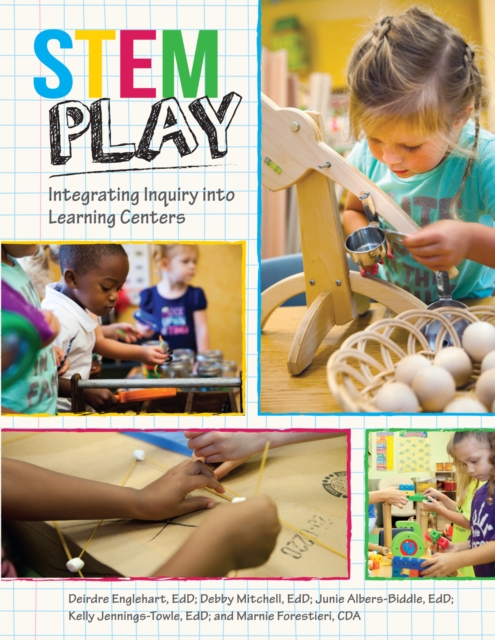
STEM Play
Most early childhood teachers are using learning centers in the classroom, but do not approach them in ways that fully support a variety of learning opportunities. This book approaches learning centers through the STEM (science, technology, engineering, math) lens, and shares how themes can be integrated into centers to promote creativity and highler-level thinking.
eBook

SEL Interventions in Early Childhood
Young children who enter school without sufficient social and emotional learning (SEL) skills may have a hard time learning. Yet early childhood educators say they don't get enough training to effectively help children develop such skills. In this article, Megan McClelland, Shauna Tominey, Sara Schmitt, and Robert Duncan examine the theory and science behind early childhood SEL interventions. Reviewing evaluation results, they find that several interventions are promising, though we need to know more about how and why their results vary for different groups of children. Three strategies appear to make interventions more successful, the authors write. First, many effective SEL interventions include training or professional development for early childhood teachers; some also emphasize building teachers' own SEL skills. Second, effective interventions embed direct instruction and practice of targeted skills into daily activities, giving children repeated opportunities to practice SEL skills in different contexts; its best if these activities grow more complex over time. Third, effective interventions engage children's families, so that kids have a chance to work on their SEL skills both at school and at home. Family components may include teaching adults how to help children build SEL skills or teaching adults themselves how to practice and model such skills. Are early childhood SEL interventions cost-effective? The short answer is that it's too soon to be sure. We won't know how the costs and benefits stack up without further research that follows participants into later childhood and adulthood. In this context, we particularly need to understand how the long-term benefits of shorter, less intensive, and less costly programs compare to the benefits of more intensive and costlier ones.
Journal Article

Effects of a teacher-led social cognitive theory-based multicomponent movement education program on preschoolers’ fundamental movement skills and physical activity: the PA-REALITY cluster-randomized controlled trial
Background
A growing body of studies has shown that fundamental movement skills (FMS) and physical activity (PA) are crucial for preschoolers’ development. However, most Hong Kong preschoolers still do not meet the WHO guidelines for PA and demonstrate poor FMS performance. The present study examined the effectiveness of physical activity routines, education, assessment, literacy, and information technology application in young children (PA-REALITY), a social cognitive theory-based movement education program led by preschool teachers.
Methods
Twenty-nine preschools signed up for the program and were cluster-randomized into an experimental group (15 preschools) and a wait-list control group (14 preschools). Totally 440 (age = 4 ± 0.95 years; 54.5% male) preschoolers took part in the baseline test and 349 preschoolers from 26 schools took part in the post-test (10 months). We delivered intervention contents including teacher workshops, teaching materials (booklet, simple sports equipment), and a mobile application to teachers. At baseline and post-test (10 months), respectively, preschoolers’ FMS proficiency, PA, and executive function (EF) were assessed using objective tools. Mixed-linear models using intention-to-treat analyses were used to examine intervention effects.
Results
Participants in the experimental group showed significant improvements in catch (
B
= 0.37,
p
< .001) and moderate-to-vigorous PA (
B
= 4.49,
p
= .04) at 10 months, compared with participants in the wait-list control group. No effects were found for total PA other FMS and EF outcomes.
Conclusions
The PA-REALITY intervention improved some FMS outcomes and MVPA at 10 months. These results highlight the important roles of teachers in developing children’s movement skills and PA. Continuous professional development training for teachers may be an effective and sustainable way to improve existing practices.
Journal Article

Parental beliefs and the influence of formal and informal literacy environments on preschoolers’ attitudes toward English learning
English learning among Chinese preschoolers has increased in recent years. Despite policies that strongly oppose external English instruction for this age group, many parents are unrelenting and persist in providing English learning opportunities for their children. This study seeks to address how formal and informal literacy activities within the Home Literacy Environment (HLE) mediate the relationship between parental beliefs and Chinese children’s attitudes towards learning English in a foreign language context. Specifically, it explores: (1) how formal literacy activities within the HLE mediate this relationship, (2) how informal literacy activities within the HLE mediate this relationship. The study involved 405 participants who completed a questionnaire on family demographics, beliefs about the importance of early English education, the HLE, and children’s attitudes towards English learning. Quantitative data were analyzed using Structural Equation Modeling (SEM) with a Partial Least Squares (PLS) approach. Parental beliefs positively influence children’s attitudes towards English through formal and informal learning. These results highlight the importance of fostering a supportive and engaging HLE to enhance children’s positive attitudes towards learning English. The implications suggest that policy and practice should recognize the value of various literacy activities in early childhood education, particularly in the context of a foreign language and academically focused Asian society.
Journal Article

Preschool STEM Activities: Preschool Teachers’ Preparation and Views
The aim of this study was to determine preschool teachers' STEM training, STEM classroom activities, lesson planning processes, problems, and evaluation strategies and methods during activities. The study sample consisted of 20 preschool teachers. Participants were recruited using criterion sampling, which is a purposive sampling method. This was a case study, which is a qualitative research method. Data were collected using a semi-structured interview form. Qualitative data were analyzed inductive content analysis. Themes, categories, and codes were developed according to the content analysis results in line with the research purpose. Content analysis results showed that participants implemented different preschool STEM activities and used different strategies, methods, and techniques while implementing those activities. They also stated that they faced various problems during those activities. They stated that the STEM training helped them to develop professional competence. However, they had difficulty planning lessons in line with STEM education, due to lack of content knowledge.
Journal Article

Inclusive Preschool Practitioners’ Implementation of Naturalistic Developmental Behavioral Intervention Using Telehealth Training
This single-case investigation was designed to evaluate the effects of telehealth training on practitioner implementation of a naturalistic developmental behavioral intervention (NDBI). Six general education preschool practitioners engaged in an intervention with six children with varying disabilities in inclusive classroom settings. The telehealth training package included a collaborative approach to intervention planning, online training module, video self-evaluation, and performance feedback via videoconferencing. Following telehealth training, practitioners reached criteria for implementation fidelity and increased communication opportunities. Additionally, child participants increased communication behaviors above baseline levels. All behaviors generalized to a different activity context and maintained over time. Social validity was measured and results suggest high levels of acceptability for the telehealth training package.
Journal Article

Fostering Algorithmic Thinking and Environmental Awareness via Bee-Bot Activities in Early Childhood Education
In order to meet the learning demands and challenges of the 21st century, computational thinking (CT) skills are important to start developing in early childhood education. The best way to cultivate CT skills, such as algorithmic thinking, is by implementing multidisciplinary education, introducing state-of-the-art technological tools, and adopting engaging teaching strategies like robotics. Within this context, we introduce a play-based educational framework that is developmentally appropriate for second graders and aims to exercise pupils’ algorithmic thinking amid the Environmental Studies course. Keeping in mind that the early childhood period is crucial in developing environmentally friendly attitudes, intentions, and behaviours, we designed the proposed educational framework not only to cultivate pupils’ algorithmic thinking but environmental awareness too. The main technology exploited was the Bee-Bot, which stimulates children to learn how to solve problems efficiently and imaginatively through playful programming. This article reports a relevant case study conducted in October 2023 in Crete, Greece, adopting a robust ethical framework and being implemented under the umbrella of the qualitative research methodology. Studying the data obtained shows that the pupils embraced the proposed robotics activities, exercised their algorithmic thinking, and cultivated their environmental awareness in a playful, collaborative, and engaging learning environment.
Journal Article

Digital Technologies in Early Childhood Art
Through art children make sense of their experiences and the world around them.Drawing, painting, collage and modelling are open-ended and playful processes through which children engage in physical exploration, aesthetic decision-making, identity construction and social understanding.
eBook

A Randomized Trial of Embedded Instruction Training and Coaching for Preschool Teachers: Impacts on Teacher Implementation and Child Outcomes
The increasing number of children with disabilities served in inclusive preschool classrooms has heightened the need for instructional approaches that support learning during naturally occurring classroom activities and routines. Embedded instruction (EI) is a naturalistic teaching approach that allows teachers to provide systematic learning opportunities for children with disabilities within everyday classroom contexts. This study examined the effects of two professional development approaches, Supporting Early Education through Embedded Instruction (SEED-EI) workshops and SEED-EI workshops combined with practice-based coaching, on preschool teachers’ implementation of EI and the learning outcomes of children with disabilities. A randomized controlled design was used with 36 preschool teachers and 36 children with disabilities. Teachers were randomly assigned to one of three conditions: business-as-usual (BAU), SEED-EI workshops, or SEED-EI workshops plus coaching. Results indicated that teachers who participated in the SEED-EI interventions implemented EI practices more frequently and with greater accuracy than teachers in the BAU condition, with the highest levels observed among teachers who received coaching. Children whose teachers participated in the intervention conditions demonstrated greater improvements in target behaviors, particularly in the coaching condition. Findings highlight the importance of sustained, job-embedded professional development supports for improving the implementation of evidence-based instructional practices in inclusive preschool classrooms.
Journal Article