
Catalogue Search | MBRL


Are you sure you want to remove the book from the shelf?

{{itemTitle}}
412,851
result(s) for
"Science and state United States."
Sort by:


STEM the Tide
Proven strategies for reforming STEM education in America's schools, colleges, and universities. One study after another shows American students ranking behind their international counterparts in the STEM fields—science, technology, engineering, and math. Businesspeople and cultural critics such as Bill Gates warn that this alarming situation puts the United States at a serious disadvantage in the high-tech global marketplace of the twenty-first century, and President Obama places improvement in these areas at the center of his educational reform. What can be done to reverse this poor performance and to unleash America's wasted talent? David E. Drew has good news—and the tools America needs to keep competitive. Drawing on both academic literature and his own rich experience, Drew identifies proven strategies for reforming America's schools, colleges, and universities, and his comprehensive review of STEM education in the United States offers a positive blueprint for the future. These research-based strategies include creative and successful methods for building strong programs in science and mathematics education and show how the achievement gap between majority and minority students can be closed. A crucial measure, he argues, is recruiting, educating, supporting, and respecting America's teachers. Accessible, engaging, and hard hitting, STEM the Tide is a clarion call to policymakers, administrators, educators, and everyone else concerned about students' participation in the STEM fields and America's competitive global position.
eBook
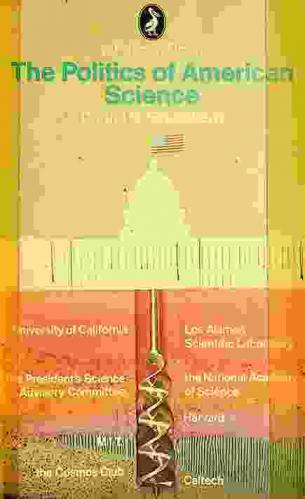

In Sputnik's Shadow
In today's world of rapid advancements in science and technology, we need to scrutinize more than ever the historical forces that shape our perceptions of what these new possibilities can and cannot do for social progress.In Sputnik's Shadowprovides a lens to do just that, by tracing the rise and fall of the President's Science Advisory Committee from its ascendance under Eisenhower in the wake of the Soviet launching of Sputnik to its demise during the Nixon years. Members of this committee shared a strong sense of technological skepticism; they were just as inclined to advise the president about what technologycouldn'tdo-for national security, space exploration, arms control, and environmental protection-as about what itcoulddo.Zuoyue Wang examines key turning points during the twentieth century, including the beginning of the Cold War, the debates over nuclear weapons, the Sputnik crisis in 1957, the struggle over the Vietnam War, and the eventual end of the Cold War, showing how the involvement of scientists in executive policymaking evolved over time. Bringing new insights to the intellectual, social, and cultural histories of the era, this book not only depicts the drama of Cold War American science, it gives perspective to how we think about technological advancements today.
eBook

Science, democracy, and the American university : from the Civil War to the Cold War
\"This book reinterprets the rise of the natural and social sciences as sources of political authority in modern America. Andrew Jewett demonstrates the remarkable persistence of a belief that the scientific enterprise carried with it a set of ethical values capable of grounding a democratic culture - a political function widely assigned to religion. The book traces the shifting formulations of this belief from the creation of the research universities in the Civil War era to the early Cold War years. It examines hundreds of leading scholars who viewed science not merely as a source of technical knowledge, but also as a resource for fostering cultural change. This vision generated surprisingly nuanced portraits of science in the years before the military industrial complex and has much to teach us today about the relationship between science and democracy.
Book
Institutions and incentives in regulatory science
Institutions and Incentives in Regulatory Science explores fundamental problems with regulatory science in the environmental and natural resource law field. Each chapter covers a variety of natural resource and regulatory areas, ranging from climate change to endangered species protection and traditional health-based environmental regulation. Regulatory laws and institutions themselves strongly influence the direction of scientific research by creating a system of rewards and penalties for science. As a consequence, regulatory laws or institutions that are designed naively end up incentivizing scientists to generate and then publish only those results that further the substantive regulatory goals preferred by the scientists. By relying so heavily on science to dictate policy, regulatory laws and institutions encourage scientists to use their assessment of the state of the science to further their own preferred scientific and regulatory policy agendas. Additionally, many environmental and natural resource regulatory agencies have been instructed by legislatures to rely heavily upon science in their rulemaking. In areas of rapidly evolving science, regulatory agencies are inevitably looking for scientific consensus prematurely, before the scientific process has worked through competing hypotheses and evidence. The contributors in this volume address how institutions for regulatory science should be designed in light of the inevitable misfit between the political or legal demand for regulatory action and the actual state of evolving scientific knowledge.
eBook

Science and political controversy : a reference handbook
\"A shrewd and compelling examination of how political figures throughout history have used scientific findings to achieve their objectives--just as scientists have often put political forces to work to achieve their own goals\"-- Provided by publisher.
Book

Science Be Dammed
Science Be Dammed is an alarming reminder of the high
stakes in the management-and perils in the mismanagement-of water
in the western United States. It seems deceptively simple: even
when clear evidence was available that the Colorado River could not
sustain ambitious dreaming and planning by decision-makers
throughout the twentieth century, river planners and political
operatives irresponsibly made the least sustainable and most
dangerous long-term decisions. Arguing that the science of the
early twentieth century can shed new light on the mistakes at the
heart of the over-allocation of the Colorado River, authors Eric
Kuhn and John Fleck delve into rarely reported early studies,
showing that scientists warned as early as the 1920s that there was
not enough water for the farms and cities boosters wanted to build.
Contrary to a common myth that the authors of the Colorado River
Compact did the best they could with limited information, Kuhn and
Fleck show that development boosters selectively chose the
information needed to support their dreams, ignoring inconvenient
science that suggested a more cautious approach. Today water
managers are struggling to come to terms with the mistakes of the
past. Focused on both science and policy, Kuhn and Fleck unravel
the tangled web that has constructed the current crisis. With key
decisions being made now, including negotiations for rules
governing how the Colorado River water will be used after 2026,
Science Be Dammed offers a clear-eyed path forward by
looking back. Understanding how mistakes were made is crucial to
understanding our contemporary problems. Science Be Dammed
offers important lessons in the age of climate change about the
necessity of seeking out the best science to support the decisions
we make.
eBook


Science and Technology Policy in the United States
During the latter half of the twentieth century, federal funding in the United States for scientific research and development increased dramatically. Yet despite the infusion of public funds into research centers, the relationship between public policy and research and development remains poorly understood. How does the federal government attempt to harness scientific knowledge and resources for the nation's economic welfare and competitiveness in the global marketplace? Who makes decisions about controversial scientific experiments, such as genetic engineering and space exploration? Who is held accountable when things go wrong? In this lucidly-written introduction to the topic, Sylvia Kraemer draws upon her extensive experience in government to develop a useful and powerful framework for thinking about the American approach to shaping and managing scientific innovation. Kraemer suggests that the history of science, technology, and politics is best understood as a negotiation of ongoing tensions between open and closed systems. Open systems depend on universal access to information that is complete, verifiable, and appropriately used. Closed systems, in contrast, are composed of unique and often proprietary features, which are designed to control usage. From the Constitution's patent clause to current debates over intellectual property, stem cells, and internet regulation, Kraemer shows the promise-as well as the limits-of open systems in advancing scientific progress as well as the nation's economic vitality.
eBook