
Catalogue Search | MBRL


Are you sure you want to remove the book from the shelf?

{{itemTitle}}
7
result(s) for
"Science and state-Europe-History-18th century"
Sort by:

European warfare, 1350-1750
\"The period 1350-1750 saw major developments in European warfare, which not only had a huge impact on the way wars were fought, but also are critical to long-standing controversies about state development, the global ascendancy of the West, and the nature of 'military revolutions' past and present. However, the military history of this period is usually written from either medieval or early-modern, and either Western or Eastern European, perspectives. These chronological and geographical limits have produced substantial confusion about how the conduct of war changed. The essays in this book provide a comprehensive overview of land and sea warfare across Europe throughout this period of momentous political, religious, technological, intellectual, and military change. Written by leading experts in their fields, they not only summarise existing scholarship, but also present new findings and new ideas, casting new light on the art of war, the rise of the state, and European expansion\"--Provided by publisher.
Book

In the Land of Marvels
In 1749, the celebrated French physicist Jean-Antoine Nollet set out on a journey through Italy to solve an international controversy over the medical uses of electricity. At the end of his nine-month tour, he published a highly influential account of his philosophical battle with his Italian counterparts, discrediting them as misguided devotees of the marvelous. Paola Bertucci's In the Land of Marvels brilliantly reveals the mysteries of Nollet's journey, uncovering a subterranean world of secretive and ambitious intelligence gathering masked as scientific inquiry. The advent of electricity was a pivotal phenomenon not only in the history of physical experimentation, but also in the cultivation of popular scientific interest. Nollet's journey was supposedly inspired by the need to investigate, and subsequently report on, claims of the use of electrified \"medicated tubes\" by their Italian inventor Gianfrancesco Pivati. Motivated by economic interests in the silk industry, Nollet's journey was in fact an undercover mission commissioned by the French state to discover the secrets of Italian silk manufacture and possibly supplant its international success. The event that sparked the medical controversy-the unusual cure of a bishop-was a complete fabrication. Bertucci insightfully contrasts published accounts of the event with private documents and discusses how eighteenth-century scientists published fictional events and results to bolster their careers, ultimately leading to long-lasting misrepresentations of scientific practice and enduring stereotypes. In the Land of Marvels reveals the constellation of historical actors, from reputed physicists to travel writers and electrical amateurs, who manipulated information to gain authority and prestige. (HRK / Abstract übernommen).
eBook

Apogee of empire : Spain and New Spain in the age of Charles III, 1759-1789
Once Europe's supreme maritime power, Spain by the mid-eighteenth century was facing fierce competition from England and France. England, in particular, had successfully mustered the financial resources necessary to confront its Atlantic rivals by mobilizing both aristocracy and merchant bourgeoisie in support of its imperial ambitions. Spain, meanwhile, remained overly dependent on the profits of its New World silver mines to finance both metropolitan and colonial imperatives, and England's naval superiority constantly threatened the vital flow of specie. When Charles III ascended the Spanish throne in 1759, then, after a quarter-century as ruler of the Kingdom of the Two Sicilies, Spain and its colonial empire were seriously imperiled. Two hundred years of Hapsburg rule, followed by a half-century of ineffectual Bourbon \"reforms,\" had done little to modernize Spain's increasingly antiquated political, social, economic, and intellectual institutions. Charles III, recognizing the pressing need to renovate these institutions, set his Italian staff—notably the Marqués de Esquilache, who became Secretary of the Consejo de Hacienda (the Exchequer)—to this formidable task. In Apogee of Empire, Stanley J. Stein and Barbara H. Stein trace the attempt, initially under Esquilache's direction, to reform the Spanish establishment and, later, to modify and modernize the relationship between the metropole and its colonies. Within Spain, Charles and his architects of reform had to be mindful of determining what adjustments could be made that would help Spain confront its enemies without also radically altering the Hapsburg inheritance. As described in impressive detail by the authors, the bitter, seven-year conflict that ensued between reformers and traditionalists ended in a coup in 1766 that forced Charles to send Esquilache back to Italy. After this setback at home, Charles still hoped to effect constructive change in Spain's imperial system, primarily through the incremental implementation of a policy of comercio libre (free-trade). These reforms, made half-heartedly at best, failed as well, and by 1789 Spain would find itself ill prepared for the coming decades of upheaval in Europe and America. An in-depth study of incremental response by an old imperial order to challenges at home and abroad, Apogee of Empire is also a sweeping account of the personalities, places, and policies that helped to shape the modern Atlantic world.
eBook

Freedom's Debt
In the years following the Glorious Revolution, independent slave traders challenged the charter of the Royal African Company by asserting their natural rights as Britons to trade freely in enslaved Africans. In this comprehensive history of the rise and fall of the RAC, William A. Pettigrew grounds the transatlantic slave trade in politics, not economic forces, analyzing the ideological arguments of the RAC and its opponents in Parliament and in public debate. Ultimately, Pettigrew powerfully reasons that freedom became the rallying cry for those who wished to participate in the slave trade and therefore bolstered the expansion of the largest intercontinental forced migration in history.Unlike previous histories of the RAC, Pettigrew's study pursues the Company's story beyond the trade's complete deregulation in 1712 to its demise in 1752. Opening the trade led to its escalation, which provided a reliable supply of enslaved Africans to the mainland American colonies, thus playing a critical part in entrenching African slavery as the colonies' preferred solution to the American problem of labor supply.
eBook
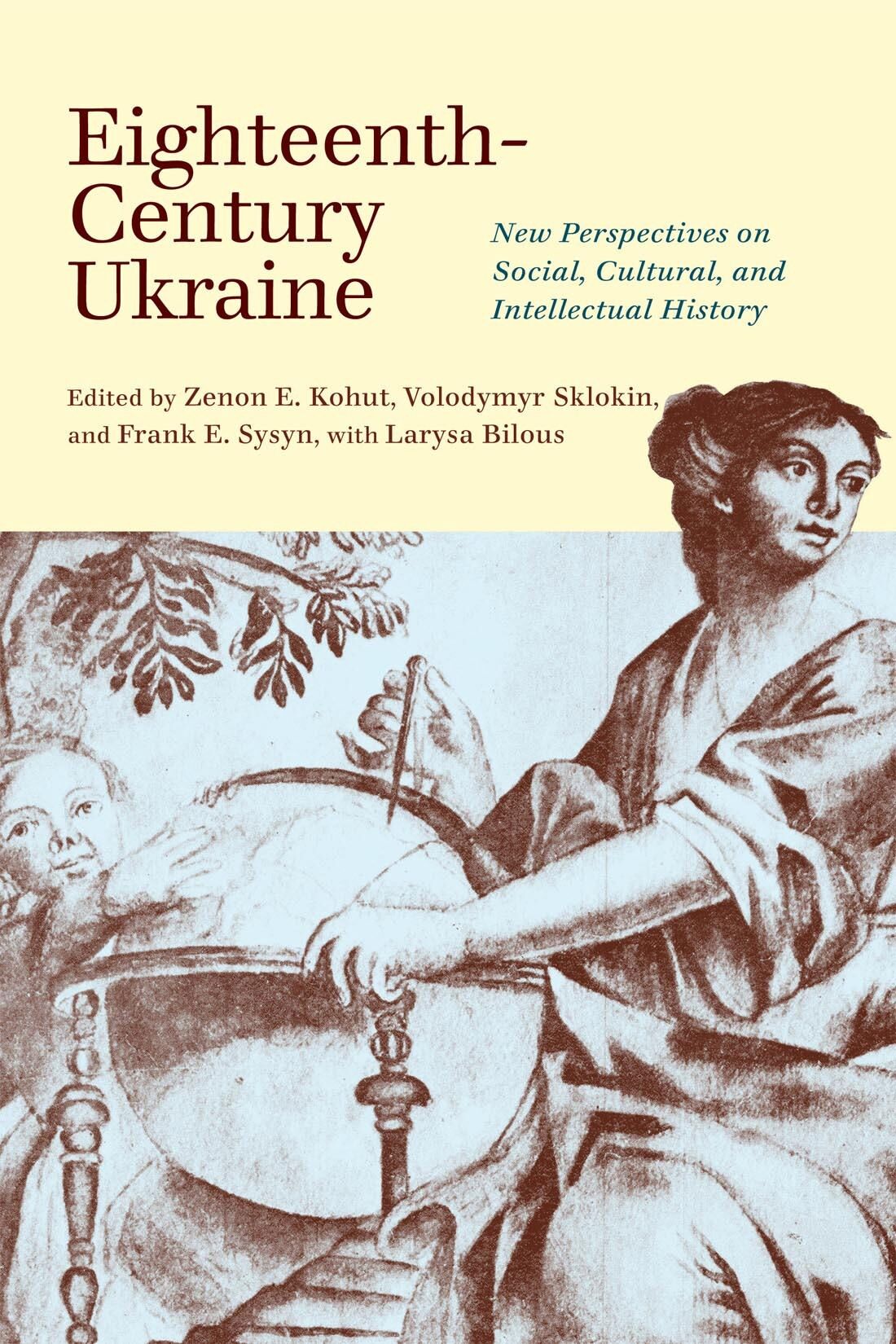
Eighteenth-Century Ukraine
In 1648, the Cossack revolution of Eastern Europe established a new social and political order that endured until the early nineteenth century. Eighteenth-Century Ukraine provides an innovative reassessment of this crucial period and reflects new developments in the study of eighteenth-century Ukrainian social and cultural history.
eBook

State and Status
Arguing that states emerged in Western Europe as powerful political-geographical centres rather than nation-states or national states, Samuel Clark examines and compares the centres and peripheries of these two large regional zones, focusing not only on England and France but also on Wales, Scotland, Ireland, Savoy, and the Southern Low Countries. This wide-ranging and multifaceted work shows how the state shaped the aristocracy and transformed its political, economic, cultural, and status power.
eBook

The Scandal of Empire
Many have told of the East India Company's extraordinary excesses in eighteenth-century India, of the plunder that made its directors fabulously wealthy and able to buy British land and titles, but this is only a fraction of the story. When one of these men—Warren Hastings—was put on trial by Edmund Burke, it brought the Company's exploits to the attention of the public. Through the trial and after, the British government transformed public understanding of the Company's corrupt actions by creating an image of a vulnerable India that needed British assistance. Intrusive behavior was recast as a civilizing mission. In this fascinating, and devastating, account of the scandal that laid the foundation of the British Empire, Nicholas Dirks explains how this substitution of imperial authority for Company rule helped erase the dirty origins of empire and justify the British presence in India. The Scandal of Empire reveals that the conquests and exploitations of the East India Company were critical to England's development in the eighteenth century and beyond. We see how mercantile trade was inextricably linked with imperial venture and scandalous excess and how these three things provided the ideological basis for far-flung British expansion. In this powerfully written and trenchant critique, Dirks shows how the empire projected its own scandalous behavior onto India itself. By returning to the moment when the scandal of empire became acceptable we gain a new understanding of the modern culture of the colonizer and the colonized and the manifold implications for Britain, India, and the world.
eBook