
Catalogue Search | MBRL


Are you sure you want to remove the book from the shelf?

{{itemTitle}}
586,422
result(s) for
"Science and the arts."
Sort by:

Theatre and evolution from Ibsen to Beckett
Evolutionary theory made its stage debut as early as the 1840s, reflecting a scientific advancement that was fast changing the world. Tracing this development in dozens of mainstream European and American plays, as well as in circus, vaudeville, pantomime, and 'missing link' performances, this study reveals the deep, transformative entanglement among science, art and culture in modern times.
eBook


The diffusion of military power
The Diffusion of Military Power examines how the financial and organizational challenges of adopting new methods of fighting wars can influence the international balance of power. Michael Horowitz argues that a state or actor wishing to adopt a military innovation must possess both the financial resources to buy or build the technology and the internal organizational capacity to accommodate any necessary changes in recruiting, training, or operations. How countries react to new innovations--and to other actors that do or don't adopt them--has profound implications for the global order and the likelihood of war.
eBook

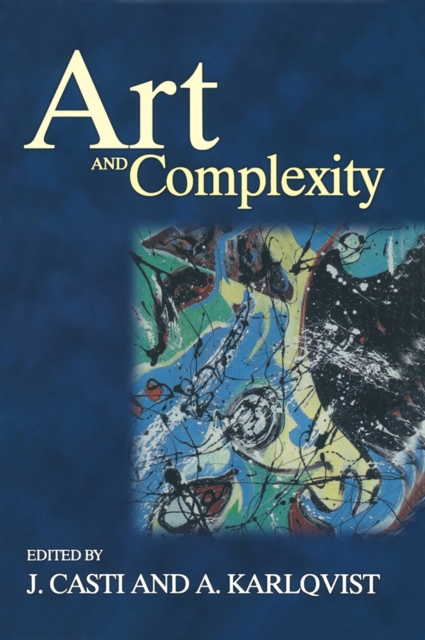
Art and complexity
This title is the result of a one-week workshop sponsored by the Swedish research agency, FRN, on the interface between complexity and art. Among others, it includes discussions on whether \"good\" art is \"complex\" art, how artists see the term \"complex\", and what poets try to convey in word about complex behavior in nature.
eBook


Fakebusters II
Now that the sale of a Picasso painting has exceeded US$100 million at auction, the forgers are extricating their bag of tricks. This fascinating collection of papers provides an eclectic coverage of the art and philatelic concerns in safeguarding the integrity of creative artists. It paints a broader swath of the problems in art authentication, including philatelic fraud.The articles represent 24 expert contributions on relevant topics pertaining to the scientific detection of forgery in art and philately.
eBook


Routledge Handbook of Art, Science, and Technology Studies
Art and science work is experiencing a dramatic rise coincident with burgeoning Science and Technology Studies (STS) interest in this area. Science has played the role of muse for the arts, inspiring imaginative reconfigurations of scientific themes and exploring their cultural resonance. Conversely, the arts are often deployed in the service of science communication, illustration, and popularization. STS scholars have sought to resist the instrumentalization of the arts by the sciences, emphasizing studies of theories and practices across disciplines and the distinctive and complementary contributions of each. The manifestation of this commonality of creative and epistemic practices is the emergence of Art, Science, and Technology Studies (ASTS) as the interdisciplinary exploration of art–science. This handbook defines the modes, practices, crucial literature, and research interests of this emerging field. It explores the questions, methodologies, and theoretical implications of scholarship and practice that arise at the intersection of art and STS. Further, ASTS demonstrates how the arts are intervening in STS. Drawing on methods and concepts derived from STS and allied fields including visual studies, performance studies, design studies, science communication, and aesthetics and the knowledge of practicing artists and curators, ASTS is predicated on the capacity to see both art and science as constructions of human knowledge-making. Accordingly, it posits a new analytical vernacular, enabling new ways of seeing, understanding, and thinking critically about the world. This handbook provides scholars and practitioners already familiar with the themes and tensions of art–science with a means of connecting across disciplines. It proposes organizing principles for thinking about art–science across the sciences, social sciences, humanities, and arts. Encounters with art and science become meaningful in relation to practices and materials manifest as perceptual habits, background knowledge, and cultural norms. As the chapters in this handbook demonstrate, a variety of STS tools can be brought to bear on art–science so that systematic research can be conducted on this unique set of knowledge-making practices.
eBook