
Catalogue Search | MBRL


Are you sure you want to remove the book from the shelf?

{{itemTitle}}
562
result(s) for
"Science fiction, Russian"
Sort by:

Celestial Hellscapes
The common thread of astronomy is fantastically important for understanding the Strugatskiis' works--their most important works are experiments in cosmology. This book explores how the Strugatskiis cosmological explorations are among the most fundamental elements of their art. It also examines how these explorations connect to their predecessors in the Russian literary tradition.
eBook

Hard to be a God
Anton is an undercover operative from future Earth, who travels to an alien world whose culture has not progressed beyond the Middle Ages. Although in possession of far more advanced knowledge than the society around him, he is forbidden to interfere with the natural progress of history. His place is to observe rather than interfere - but can he remain aloof in the face of so much cruelty and injustice ...?
Book

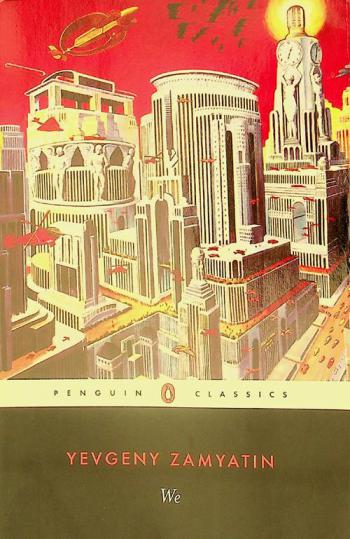
We
A dystopian novel completed in 1921, written in response to the author's personal experiences with the Russian revolutions of 1905 and 1917, his life in the Newcastle suburb of Jesmond and work in the Tyne shipyards at nearby Wallsend during the First World War. It was at Tyneside that he observed the rationalization of labour on a large scale. The book influenced Orwell's 1984 and possibly Huxley's Brave new world.
Book

Celestial Hellscapes
Neither Arkadii nor Boris Strugatskii had originally intended to
make a living in writing. Arkadii dreamed of becoming an
astronomer, but his wartime experience and training led him to work
as a translator and editor of Japanese literature. Boris intended
to become a physicist, trained as an astronomer, and ended up as a
computer specialist at Pulkovo Observatory. This common thread of
astronomy turns out to be fantastically important for understanding
their works, as their most important ones are experiments in
cosmology, and their shared expertise is instrumental in their
construction of literary hellscapes. This book explores how the
Strugatskiis' cosmological explorations are among the most
fundamental elements of their art. It examines also how these
explorations connect to their predecessors in the Russian literary
tradition-particularly to the poetry of Pushkin.
eBook

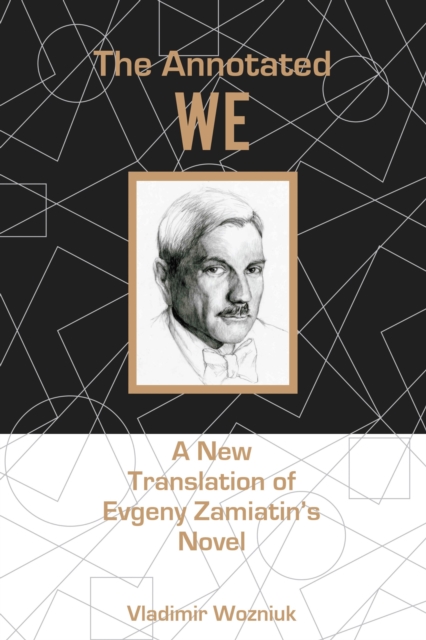
The annotated We
The AnnotatedWe represents the first fully annotated translation of Evgeny Zamiatin's classic novel in English.Generally recognized as the first modern anti-utopian novel, Zamiatin's We has puzzled scholars and critics alike, for it is both serious and playful, full of games.
eBook


One Billion Years after the End of the World: Historical Deadlock, Contemporary Dystopia, and the Continuing Legacy of the Strugatskii Brothers
The importance of Arkadii and Boris Strugatskii in Soviet science fiction has been thoroughly examined. A less-explored question concerns how they have continued to inspire post-Soviet authors who muse on an environment that differs drastically from the one that gave rise to their works. Sofya Khagi explores how prominent contemporary writers—Garros-Evdokimov (Aleksandr Garros and Aleksei Evdokimov), Dmitrii Bykov, and Viktor Pelevin—examine the Strugatskiis to dramatize their own darker visions of modernization, progress, and morality. They continue the tradition of science fiction as social critique—in this case, a critique of society after the collapse of socialist ideology with its modernizing projects of historical progress, technological development, and social improvement. According to their parables a contrario to the Strugatskiis, the dreams of modernity embodied by the classics of Soviet fantastika have been shattered but not replaced by a viable alternative social scenario. As they converse with their predecessors, contemporary writers examine stagnation, not just in post-Soviet Russia, but in global, postmodern, commodified reality.
Journal Article