
Catalogue Search | MBRL


Are you sure you want to remove the book from the shelf?

{{itemTitle}}
108,724
result(s) for
"Sciences Study and teaching"
Sort by:


International Handbook of Research on Environmental Education
The environment and contested notions of sustainability are increasingly topics of public interest, political debate, and legislation across the world. Environmental education journals now publish research from a wide variety of methodological traditions that show linkages between the environment, health, development, and education. The growth in scholarship makes this an opportune time to review and synthesize the knowledge base of the environmental education (EE) field.
The purpose of this 51-chapter handbook is not only to illuminate the most important concepts, findings and theories that have been developed by EE research, but also to critically examine the historical progression of the field, its current debates and controversies, what is still missing from the EE research agenda, and where that agenda might be headed.
Published for the American Educational Research Association (AERA).
eBook


New Natures
New Naturesbroadens the dialogue between the disciplines of science and technology studies (STS) and environmental history in hopes of deepening and even transforming understandings of human-nature interactions. The volume presents richly developed historical studies that explicitly engage with key STS theories, offering models for how these theories can help crystallize central lessons from empirical histories, facilitate comparative analysis, and provide a language for complicated historical phenomena. Overall, the collection exemplifies the fruitfulness of cross-disciplinary thinking.
The chapters follow three central themes: ways of knowing, or how knowledge is produced and how this mediates our understanding of the environment; constructions of environmental expertise, showing how expertise is evaluated according to categories, categorization, hierarchies, and the power afforded to expertise; and lastly, an analysis of networks, mobilities, and boundaries, demonstrating how knowledge is both diffused and constrained and what this means for humans and the environment.
Contributors explore these themes by discussing a wide array of topics, including farming, forestry, indigenous land management, ecological science, pollution, trade, energy, and outer space, among others. The epilogue, by the eminent environmental historian Sverker Sörlin, views the deep entanglements of humans and nature in contemporary urbanity and argues we should preserve this relationship in the future. Additionally, the volume looks to extend the valuable conversation between STS and environmental history to wider communities that include policy makers and other stakeholders, as many of the issues raised can inform future courses of action.
eBook

Teaching big history
\"Big History is a new field on a grand scale: it tells the story of the universe over time through a diverse range of disciplines that spans cosmology, physics, chemistry, astronomy, geology, evolutionary biology, anthropology, and archaeology, thereby reconciling traditional human history with environmental geography and natural history. Weaving the myriad threads of evidence-based human knowledge into a master narrative that stretches from the beginning of the universe to the present, the Big History framework helps students make sense of their studies in all disciplines by illuminating the structures that underlie the universe and the connections among them. Teaching Big History is a powerful analytic and pedagogical resource, and serves as a comprehensive guide for teaching Big History, as well for sharing ideas about the subject and planning a curriculum around it. Readers are also given helpful advice about the administrative and organizational challenges of instituting a general education program constructed around Big History. The book includes teaching materials, examples, and detailed sample exercises. This book is also an engaging first-hand account of how a group of professors built an entire Big History general education curriculum for first-year students, demonstrating how this thoughtful integration of disciplines exemplifies liberal education at its best and illustrating how teaching and learning this incredible story can be transformative for professors and students alike\"--Provided by publisher.
Book

Next Generation Science Standards
Next Generation Science Standards identifies the science all K-12 students should know. These new standards are based on the National Research Council's A Framework for K-12 Science Education . The National Research Council, the National Science Teachers Association, the American Association for the Advancement of Science, and Achieve have partnered to create standards through a collaborative state-led process. The standards are rich in content and practice and arranged in a coherent manner across disciplines and grades to provide all students an internationally benchmarked science education.
The print version of Next Generation Science Standards complements the nextgenscience.org website and:
Provides an authoritative offline reference to the standards when creating lesson plans
Arranged by grade level and by core discipline, making information quick and easy to find
Printed in full color with a lay-flat spiral binding
Allows for bookmarking, highlighting, and annotating
eBook
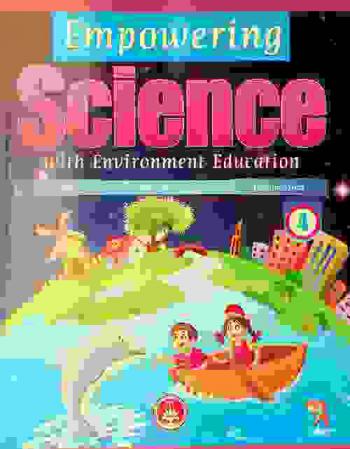

How Students Learn
How Students Learn: Science in the Classroom builds on the discoveries detailed in the best-selling How People Learn . Now these findings are presented in a way that teachers can use immediately, to revitalize their work in the classroom for even greater effectiveness.
Organized for utility, the book explores how the principles of learning can be applied in science at three levels: elementary, middle, and high school. Leading educators explain in detail how they developed successful curricula and teaching approaches, presenting strategies that serve as models for curriculum development and classroom instruction. Their recounting of personal teaching experiences lends strength and warmth to this volume.
This book discusses how to build straightforward science experiments into true understanding of scientific principles. It also features illustrated suggestions for classroom activities.
eBook

Teaching social studies in an era of divisiveness
Teaching controversial social issues can be a daunting, and oftentimes terrifying, prospect for social studies teachers.In many ways, this fear is warranted given the politically polarized nature of American society in the 21st century.
eBook