
Catalogue Search | MBRL


Are you sure you want to remove the book from the shelf?

{{itemTitle}}
14
result(s) for
"Scotland -- Intellectual life -- 19th century"
Sort by:


Reading the Scottish Enlightenment
Drawing on a range of methodologies associated with the history of reading, this book explores the reception of the Scottish Enlightenment, assessing the impact that major texts had on the lives, beliefs and habits of mind of contemporary readers.
eBook

Scottish philosophy in the nineteenth and twentieth centuries
A History of Scottish Philosophy is a series of collaborative studies, each volume being devoted to a specific period. Together they provide a comprehensive account of the Scottish philosophical tradition, from the centuries that laid the foundation of the remarkable burst of intellectual fertility known as the Scottish Enlightenment, through the Victorian age and beyond, when it continued to exercise powerful intellectual influence at home and abroad. The books aim to be historically informative, while at the same time serving to renew philosophical interest in the problems with which the Scottish philosophers grappled, and in the solutions they proposed. This volume covers the history of Scottish philosophy after the Enlightenment period, through the nineteenth and twentieth centuries. Leading experts explore the lives and work of major figures including Thomas Brown, William Hamilton, J. F. Ferrier, Alexander Bain, John Macmurray, and George Davie, and address important developments in the period from the Scottish reception of Kant and Hegel to the spread of Scottish philosophy in Europe, America and Australasia, and the relation of Common Sense philosophy and American pragmatism. A concluding chapter investigates the nature and identity of a 'Scottish philosophical tradition'.
Book

Intellectual Politics and Cultural Conflict in the Romantic Period
Intellectual Politics and Cultural Conflict in the Romantic Period maps the intellectual formation of English plebeian radicalism and Scottish philosophic Whiggism over the long eighteenth century and examines their associated strategies of critical engagement with the cultural, social and political crises of the early nineteenth century. It is a story of the making of a wider British public sphere out of the agendas and discourses of the radical and liberal publics that both shaped and responded to them. When juxtaposed, these competing intellectual formations illustrate two important expressions of cultural politics in the Romantic period, as well as the peculiar overlapping of national cultural histories that contributed to the ideological conflict over the public meaning of Britain's industrial modernity. Alex Benchimol's study provides an original contribution to recent scholarship in Romantic period studies centred around the public sphere, recovering the contemporary debates and national cultural histories that together made up a significant part of the ideological landscape of the British public sphere in the early nineteenth century.
eBook

The Community of the College of Justice
A unique institution in a unique jurisdiction: an institutional history of Scotland's eighteenth-century legal community. How important can a court and its members be in influencing the development of a country? In Scotland's case, the answer is surprising. The remarkable metamorphosis of eighteenth-century Edinburgh, from crisis conditions in the 1690s through the Union to the intellectual heights of Enlightenment and the development of the spectacular New Town, owed a great deal to those who spent their professional lives working in the Court of Session as members of the unique institution known as the College of Justice. James Boswell, Lord Kames, Henry Dundas and Walter Scott are just some of those who emerged from the College to influence Scotland's place in Europe. This study investigates the important role of College members in the cultural and economic flowering of Scotland as a whole, and Edinburgh in particular, and argues that a single Law institution had a marked influence on the Scottish cultural landscape to the present day. Key Features
* An original study making use of a range of manuscript sources. No existing work has made such extensive use of session papers or has looked at the manuscript town council minutes of Edinburgh in such depth for legal historical purposes.
* Reveals the working milieu within which Scots law developed at a key period following the parliamentary Union of 1707 as Scots law consolidated itself as one of the world's few mixed jurisdictions.
* Shows the development of Edinburgh's history as an example of community interaction in an urban setting in comparison to courts across Europe and elsewhere.
* Readers interested in social history will find out a great deal about the collective working experience of a range of individuals of very different backgrounds and status.
eBook

John stuart blackie
John Stuart Blackie was one of the most impressive and influential figures of nineteenth-century Scotland, as well as one of the most striking and flamboyant. As an intellectual he translated Goethe's Faust and brought first-hand knowledge of German philosophy to Scotland as a means of keeping the Enlightenment tradition alive. As first Professor of Humanity at Aberdeen from 1839 to 1852 and then as Professor of Greek at Edinburgh until 1882, he played a, perhaps the, central role in modernising the Scottish university curriculum, removing the dead hand of theological orthodoxy, raising standards (and the entry age), introducing tutorial teaching and establishing new chairs (including the Edinburgh chair of Celtic). His role in the reform of secondary school teaching was equally central.
eBook

Paris-Edinburgh
By the end of the nineteenth century, Paris was widely acknowledged as the cultural capital of the world, the home of avant-garde music and art, symbolist literature and bohemian culture. Edinburgh, by contrast, may still be thought of as a rather staid city of lawyers and Presbyterian ministers, academics and doctors. While its great days as a centre for the European Enlightenment may have been behind it, however, late Victorian Edinburgh was becoming the location for a new set of cultural institutions, with its own avant-garde, that corresponded with a renewed Scottish national consciousness. While Morningside was never going to be Montparnasse, the period known as the Belle Epoque was a time in both French and Scottish society when there were stirrings of non-conformity, which often clashed with a still powerful establishment. And in this respect, French bourgeois society could be as resistant to change as the suburbs of Edinburgh. With travel and communication becoming ever easier, a growing number of international contacts developed that allowed such new and radical cultural ideas to flourish. In a series of linked essays, based on research into contemporary archives, documents and publications in both countries, as well as on new developments in cultural research, this book explores an unexpected dimension of Scottish history, while also revealing the Scottish contribution to French history. In a broader sense, and particularly as regards gender, it considers what is meant by 'modern' or 'radical' in this period, without imposing any single model. In so doing, it seeks not to treat Paris-Edinburgh links in isolation, or to exaggerate them, but to use them to provide a fresh perspective on the internationalism of the Belle Epoque.
eBook
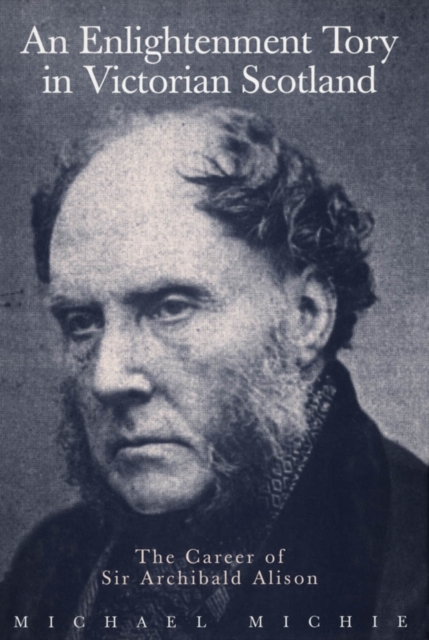
Enlightenment Tory in Victorian Scotland
An Enlightenment Tory in Victorian Scotland is a political and intellectual biography of Sir Archibald Alison (1792-1867), historian, social critic, criminal lawyer, and sheriff of Lanarkshire. The first author to examine the full range of Alison's writings and activities, Michael Michie reveals a significant link between the Scottish Enlightenment and Victorian conservatism.
eBook
Scotland and the Borders of Romanticism
Originally published in 2004, Scotland and the Borders of Romanticism is a collection of critical essays devoted to Scottish writing between 1745 and 1830 - a key period marking the contested divide between Scottish Enlightenment and Romanticism in British literary history. Essays in the volume, by leading scholars from Scotland, England, Canada and the USA, address a range of major figures and topics, among them Hume and the Romantic imagination, Burns's poetry, the Scottish song and ballad revivals, gender and national tradition, the prose fiction of Walter Scott and James Hogg, the national theatre of Joanna Baillie, the Romantic varieties of historicism and antiquarianism, Romantic Orientalism, and Scotland as a site of English cultural fantasies. The essays undertake a collective rethinking of the national and period categories that have structured British literary history, by examining the relations between the concepts of Enlightenment and Romanticism as well as between Scottish and English writing.
eBook
