
Catalogue Search | MBRL


Are you sure you want to remove the book from the shelf?

{{itemTitle}}
45
result(s) for
"Scottish literature-20th century-History and criticism"
Sort by:

Ethically Speaking
As politics and cultures interact within an increasingly diverse Scotland, and differences in values become more evident across generations, the need for clear understanding and cooperation within and between communities becomes a pressing issue. This relates both to local and larger concerns: language, violence, morality, gender and sexuality, education, ethnicity, truth and lies. The chapters gathered here focus on significant Scottish writers of the late twentieth and early twenty first centuries, (Edwin Morgan, A.L. Kennedy, Liz Lochhead, John Burnside, Jackie Kay, Robin Jenkins, Muriel Spark, William McIlvanney, Ali Smith, James Kelman and others) and the communities described are certainly Scottish, but the issues raised are universal. Questions are asked about the relationship of the individual to others, and therefore, on a larger scale, about the means through which any community is both constructed and sustained: linguistically, spiritually, ethically. If their multiple voices evoke a \"zigzag of contradictions\", it is at any rate a creative zigzag which discovers, or uncovers, many contradictory aspects of life in modern Scotland that should particularly be brought to light in a re-emergent nation. Ethically speaking, Scottish writers point out the need to attend to many different narratives and retellings, in order that Scots might live more honestly and clear-sightedly with themselves and with the wider world.
eBook

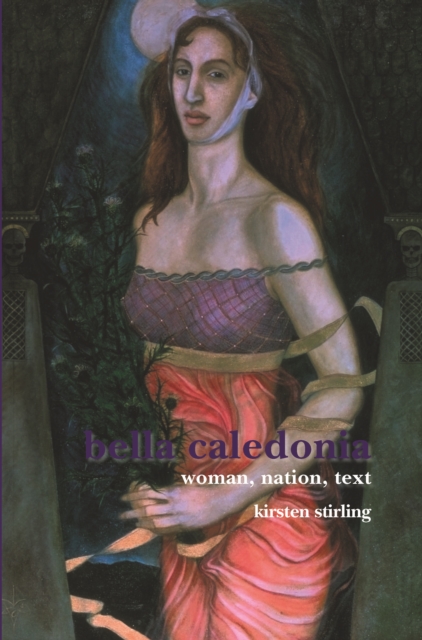
Bella Caledonia
Bella Caledonia: Woman, Nation, Text looks at the widespread tradition of using a female figure to represent the nation, focusing on twentieth-century Scottish literature. The woman-as-nation figure emerged in Scotland in the twentieth century, but as a literary figure rather than an institutional icon like Britannia or France's Marianne. Scottish writers make use of familiar aspects of the trope such as the protective mother nation and the woman as fertile land, which are obviously problematic from a feminist perspective. But darker implications, buried in the long history of the figure, rise to the surface in Scotland, such as woman/nation as victim, and woman/nation as deformed or monstrous. As a result of Scotland's unusual status as a nation within the larger entity of Great Britain, the literary figures under consideration here are never simply incarnations of a confident and complete nation nurturing her warrior sons. Rather, they reflect a more modern anxiety about the concept of the nation, and embody a troubled and divided national identity. Kirsten Stirling traces the development of the twentieth-century Scotland-as-woman figure through readings of poetry and fiction by male and female writers including Hugh MacDiarmid, Naomi Mitchison, Neil Gunn, Lewis Grassic Gibbon, Willa Muir, Alasdair Gray, A.L. Kennedy, Ellen Galford and Janice Galloway.
eBook

Fifteen Jugglers, Five Believers
T. V. Reed urges an affiliation between literary theory and
political action-and between political action and literary theory.
What can the \"new literary theory\" learn from \"new social
movements,\" and what can social activists learn from
poststructuralism, new historicism, feminist theory, and
neomarxism? In striking interpretations of texts in four different
genres-James Agee and Walker Evans's Let Us Now Praise Famous
Men, Ralph Ellison's Invisible Man, Norman Mailer's
Armies of the Night, and the ecofeminist Women's Pentagon
Actions of the early 1980s-Reed shows how reading literary texts
for their political strategies and reading political movements as
texts can help us overcome certain rhetorical traps that have
undermined American efforts to combat racism, sexism, and economic
inequality. This title is part of UC Press's Voices Revived
program, which commemorates University of California Press's
mission to seek out and cultivate the brightest minds and give them
voice, reach, and impact. Drawing on a backlist dating to 1893,
Voices Revived makes high-quality, peer-reviewed scholarship
accessible once again using print-on-demand technology. This title
was originally published in 1992.
eBook


Ghost-Watching American Modernity:Haunting, Landscape, and the Hemispheric Imagination
In Ghost-Watching American Modernity, Maria del Pilar Blanco revisits nineteenth- and twentieth-century texts from Spanish America and the United States to ask how different landscapes are represented as haunted sites. Moving from foundational fictions to Westerns, Blanco explores the diverse ways in which ghosts and haunting emerge across the American hemisphere for authors who are preoccupied with evoking the experience of geographical transformations during a period of unprecedented development. The book offers an innovative approach that seeks to understand ghosts in their local specificity, rather than as products of generic conventions or as allegories of hidden desires. Its chapters pursue formally attentive readings of texts by Domingo Sarmiento, Henry James, Jose Marti, W. E. B. Du Bois, Juan Rulfo, Felisberto Hernandez, and Clint Eastwood. In an intervention that will reconfigure the critical uses of spectrality for scholars in U.S./Latin American Studies, narrative theory, and comparative literature, Blanco advances ghost-watching as a method for rediscovering haunting on its own terms.
eBook

Community in modern Scottish literature
\"Community in Modern Scottish Literature is the first book to examine representations and theories of community in Scottish writing of the twentieth and twenty-first centuries across a broad range of authors and from various conceptual perspectives. The leading scholars in the field examine work in the novel, poetry, and drama, by key Scottish authors such as MacDiarmid, Kelman, and Galloway, as well as less well known writers. This includes postmodern and postcolonial readings, analysis of writing by gay and Gaelic authors, alongside theorists of community such as Nancy, Bauman, Delanty, Cohen, Blanchot, and Anderson. This book will unsettle and yet broaden traditional conceptions of community in Scotland and Scottish literature, suggesting a more plural idea of what community might be\"-- Provided by publisher.
Book

London Writing of the 1930s
A bold new study of literary and photographic depictions of London in the 1930s London Writing in the 1930s offers a new perspective on the decade that has long been associated with the Auden generation and the rise of documentary. It argues for the centrality of urban fiction and photography to the decade's experiments in representing daily life. Why the period's London-set novels were so often described as 'photographic', and what kind of photographs inspired such comparisons? Tracing representations of London by a wide range of 1930s writers and photographers, including Patrick Hamilton, Jean Rhys, George Orwell, and Bill Brandt, the book's chapters are organised around London's spaces of leisure. Teashops, cinemas, and the night clubs of Soho were central to 1930s negotiations of the interrelation between urban life, gender, and class; these settings provide this book both with cultural-historical context and with the basis for its argument about the decade's aesthetic orientations. Key Features Positions London writing as central to British literature of the 1930s Argues that interrelationship between journalistic, photographic, and Naturalist models is key to the decade's literary aesthetic Offers critical readings of neglected and forgotten 1930s writers such as Betty Miller, Norah Hoult, Storm Jameson Combines literary analysis with research into the cultural histories of 1930s London's spaces of leisure
eBook