
Catalogue Search | MBRL


Are you sure you want to remove the book from the shelf?

{{itemTitle}}
472
result(s) for
"Scripting languages (Computer science)"
Sort by:

Network programmability and automation : skills for the next-generation network engineer
\"This practical guide shows network engineers how to use a range of technologies and tools--including Linux, Python, JSON, and XML--to automate their systems through code. [This book] will help you simplify tasks involved in configuring, managing, and operating network equipment, topologies, services, and connectivity.\"--Page 4 of cover.
Book

Beginning Server-Side Application Development with Angular
Dynamic client-side web applications are great for UX, but not so much for your SEO. Learn how to build the same great UX with server-side Angular, all without taking a hit to search referrals.
eBook

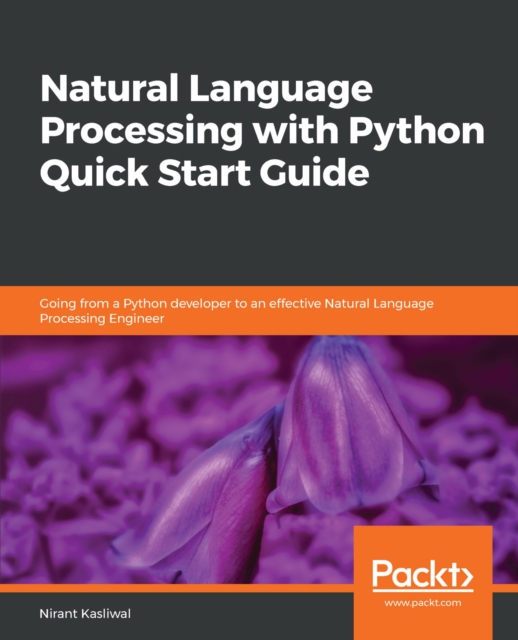
Natural Language Processing with Python Quick Start Guide
Build and deploy intelligent applications for natural language processing with Python by using industry standard tools and recently popular methods in deep learning Key Features * A no-math, code-driven programmer's guide to text processing and NLP * Get state of the art results with modern tooling across linguistics, text vectors and machine learning * Fundamentals of NLP methods from spaCy, gensim, scikit-learn and PyTorch Book Description NLP in Python is among the most sought after skills among data scientists. With code and relevant case studies, this book will show how you can use industry-grade tools to implement NLP programs capable of learning from relevant data. We will explore many modern methods ranging from spaCy to word vectors that have reinvented NLP. The book takes you from the basics of NLP to building text processing applications. We start with an introduction to the basic vocabulary along with a workflow for building NLP applications. We use industry-grade NLP tools for cleaning and pre-processing text, automatic question and answer generation using linguistics, text embedding, text classifier, and building a chatbot. With each project, you will learn a new concept of NLP. You will learn about entity recognition, part of speech tagging and dependency parsing for Q and A. We use text embedding for both clustering documents and making chatbots, and then build classifiers using scikit-learn. We conclude by deploying these models as REST APIs with Flask. By the end, you will be confident building NLP applications, and know exactly what to look for when approaching new challenges. What you will learn * Understand classical linguistics in using English grammar for automatically generating questions and answers from a free text corpus * Work with text embedding models for dense number representations of words, subwords and characters in the English language for exploring document clustering * Deep Learning in NLP using PyTorch with a code-driven introduction to PyTorch * Using an NLP project management Framework for estimating timelines and organizing your project into stages * Hack and build a simple chatbot application in 30 minutes * Deploy an NLP or machine learning application using Flask as RESTFUL APIs Who this book is for Programmers who wish to build systems that can interpret language. Exposure to Python programming is required. Familiarity with NLP or machine learning vocabulary will be helpful, but not mandatory.
eBook

Python for kids for dummies
Coding experts point to Python as one of the best languages to start with when you're learning coding. It's been a popular choice for schools and code camps who want to introduce coding to a younger audience. Python For Kids For Dummies helps teach the basics of coding and Python to kids who don't have the opportunity to take coding classes at school or in camp as well as those who simply prefer to learn on their own.
Book

Advanced deep learning with TensorFlow 2 and Keras : apply DL, GANs, VAEs, deep RL, unsupervised learning, object detection and segmentation, and more
A second edition of the bestselling guide to exploring and mastering deep learning with Keras, updated to include TensorFlow 2.x with new chapters on object detection, semantic segmentation, and unsupervised learning using mutual information.
eBook

Head first Python
Ever wished you could learn Python from a book? \"Head First Python\" is a complete learning experience for Python that helps you learn the language through a unique method that goes beyond syntax and how-to manuals, helping you understand how to be a great Python programmer. You'll quickly learn the language's fundamentals, then move onto persistence, exception handling, web development, SQLite, data wrangling, and Google App Engine. You'll also learn how to write mobile apps for Android, all thanks to the power that Python gives you.
Book

PySpark Cookbook
Combine the power of Apache Spark and Python to build effective big data applicationsAbout This Book• Perform effective data processing, machine learning, and analytics using PySpark• Overcome challenges in developing and deploying Spark solutions using Python• Explore recipes for efficiently combining Python and Apache Spark to process dataWho This Book Is ForThe PySpark Cookbook is for you if you are a Python developer looking for hands-on recipes for using the Apache Spark 2.x ecosystem in the best possible way. A thorough understanding of Python (and some familiarity with Spark) will help you get the best out of the book.What You Will Learn• Configure a local instance of PySpark in a virtual environment • Install and configure Jupyter in local and multi-node environments• Create DataFrames from JSON and a dictionary using pyspark.sql• Explore regression and clustering models available in the ML module• Use DataFrames to transform data used for modeling• Connect to PubNub and perform aggregations on streamsIn DetailApache Spark is an open source framework for efficient cluster computing with a strong interface for data parallelism and fault tolerance. The PySpark Cookbook presents effective and time-saving recipes for leveraging the power of Python and putting it to use in the Spark ecosystem.You'll start by learning the Apache Spark architecture and how to set up a Python environment for Spark. You'll then get familiar with the modules available in PySpark and start using them effortlessly. In addition to this, you'll discover how to abstract data with RDDs and DataFrames, and understand the streaming capabilities of PySpark. You'll then move on to using ML and MLlib in order to solve any problems related to the machine learning capabilities of PySpark and use GraphFrames to solve graph-processing problems. Finally, you will explore how to deploy your applications to the cloud using the spark-submit command.By the end of this book, you will be able to use the Python API for Apache Spark to solve any problems associated with building data-intensive applications.Style and approachThis book is a rich collection of recipes that will come in handy when you are working with PySparkAddressing your common and not-so-common pain points, this is a book that you must have on the shelf.
eBook

Serious Python : black-belt advice on deployment, scalability, testing, and more
\"Offers experienced coders advice and tips for improving knowledge of Python coding language. Includes interviews with Python experts and covers a wide range of common topics, from scaling and testing code to designing APIs\"-- Provided by publisher.
Book

Machine Learning with Scala Quick Start Guide
Supervised and unsupervised machine learning made easy in Scala with this quick-start guide. Key Features * Construct and deploy machine learning systems that learn from your data and give accurate predictions * Unleash the power of Spark ML along with popular machine learning algorithms to solve complex tasks in Scala. * Solve hands-on problems by combining popular neural network architectures such as LSTM and CNN using Scala with DeepLearning4j library Book Description Scala is a highly scalable integration of object-oriented nature and functional programming concepts that make it easy to build scalable and complex big data applications. This book is a handy guide for machine learning developers and data scientists who want to develop and train effective machine learning models in Scala. The book starts with an introduction to machine learning, while covering deep learning and machine learning basics. It then explains how to use Scala-based ML libraries to solve classification and regression problems using linear regression, generalized linear regression, logistic regression, support vector machine, and Naïve Bayes algorithms. It also covers tree-based ensemble techniques for solving both classification and regression problems. Moving ahead, it covers unsupervised learning techniques, such as dimensionality reduction, clustering, and recommender systems. Finally, it provides a brief overview of deep learning using a real-life example in Scala. What you will learn * Get acquainted with JVM-based machine learning libraries for Scala such as Spark ML and Deeplearning4j * Learn RDDs, DataFrame, and Spark SQL for analyzing structured and unstructured data * Understand supervised and unsupervised learning techniques with best practices and pitfalls * Learn classification and regression analysis with linear regression, logistic regression, Naïve Bayes, support vector machine, and tree-based ensemble techniques * Learn effective ways of clustering analysis with dimensionality reduction techniques * Learn recommender systems with collaborative filtering approach * Delve into deep learning and neural network architectures Who this book is for This book is for machine learning developers looking to train machine learning models in Scala without spending too much time and effort. Some fundamental knowledge of Scala programming and some basics of statistics and linear algebra is all you need to get started with this book.
eBook