
Catalogue Search | MBRL


Are you sure you want to remove the book from the shelf?

{{itemTitle}}
16
result(s) for
"Seasonal Farm Laborers Program."
Sort by:

Contracting freedom : race, empire, and U.S. guestworker programs
\"This book represents the first scholarly attempt to examine the broad geographical dimensions of the World War II U.S. contract farm labor programs together and in sweeping detail. It views these labor programs relationally and in tandem to reveal how they were co-constituted and mutually understood across time and multiple places, producing a liberal consensus during this period that lives on today. By examining debates among government officials, labor leaders, civil rights activists, and agribusiness employers, it explores how the contractual consent and freedom of 1940s guestworker programs legitimated and extended U.S. racial and imperial domination abroad in the post-World War II period. More broadly, Contracting Freedom pursues the argument that liberalism, as a normative political idea and practice in the modern world, cannot be divorced from empire. In comparing the labor programs across geographic regions, it demonstrates that a global shift in the ideology of liberalism nurtured race and empire both before and after World War II, as numerous states sought to expand control over laborers through anti-imperial and race-neutral measures\"-- Provided by publisher.
BOOK

The Invisible Workers of the U. S. -Mexico Bracero Program
As the first and largest guestworker program, the U.S.-Mexico Bracero Program (1942-1964) codified the unequal relations of labor migration between the two nations.This book interrogates the articulations of race and class in the making of the Bracero Program by introducing new syntheses of sociological theories and methods to center.
eBook
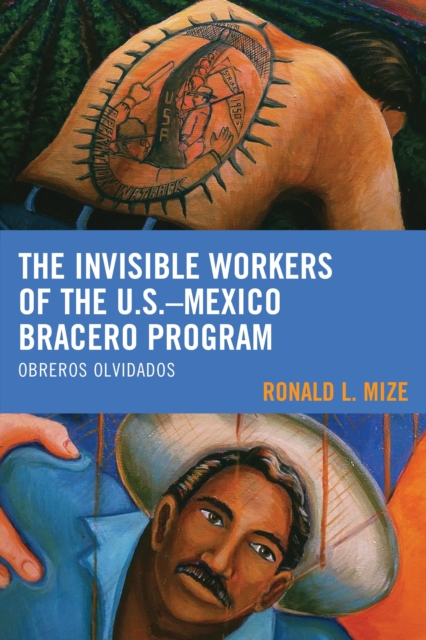
The invisible workers of the U.S.-Mexico Bracero program
As the first and largest guestworker program, the U.S. - Mexico Bracero Program (1942 - 1964) codified the unequal relations of labor migration between the two nations. This book interrogates the articulations of race and class in the making of the Bracero Program by introducing new syntheses of sociological theories and methods to center the experiences and recollections of former Braceros and their families.
eBook

Lessons learned from cross-sectoral collaboration to protect migrant farmworkers during COVID-19 in Spain
In Spain, the agricultural sector relies heavily on migrant workers, especially during seasonal seasons. However, these workers face significant challenges related to precarious working conditions and structural vulnerability, which have become more acute since the outbreak of the COVID-19 pandemic. This descriptive qualitative study was based on 87 personal interviews with health and social professionals from sectors such as NGOs, social services, trade unions, local institutions, and health services to promote compliance with these measures in four Spanish regions. It explored the difficulties faced by migrant agricultural workers in complying with prevention measures during the COVID-19 pandemic, the measures taken by organizations and public institutions and the health consequences of the pandemic on this group. After a reflexive thematic analysis, the results show how to mitigate the pandemic’s impact, both local authorities and NGOs implemented extraordinary measures to care for migrant farm workers. Responses to the pandemic included temporary housing, mass testing, and stricter labor regulations. Working conditions, constant mobility, precarious housing, and language barriers contributed to the difficulty of implementing preventive measures. Covid-19 intensified inequalities and highlighted the lack of preparedness of institutions to deal with this group. The conclusions suggest that intercultural competence in health professional training and the creation of inclusive approaches to health and social care are critical to addressing health disparities and ensuring the well-being of all migrant farm workers, regardless of their migration status or mobility.
Journal Article

Impact of a Community Gardening Project on Vegetable Intake, Food Security and Family Relationships: A Community-based Participatory Research Study
This community-based participatory research project used popular education techniques to support and educate Hispanic farmworker families in planting and maintaining organic gardens. Measures included a pre- post gardening survey, key informant interviews and observations made at community-based gardening meetings to assess food security, safety and family relationships. Thirty-eight families enrolled in the study during the pre-garden time period, and four more families enrolled in the study during the post-garden period, for a total of 42 families enrolled in the 2009 gardening season. Of the families enrolled during the pre-gardening time period there were 163 household members. The mean age of the interviewee was 44.0, ranging from 21 to 78 years of age. The median number of occupants in a household was 4.0 (range: 2–8), Frequency of adult vegetable intake of “Several time a day” increased from 18.2 to 84.8%, (
P
< 0.001) and frequency of children’s vegetable intake of “Several time a day” increased from 24.0 to 64.0%, (
P
= 0.003). Before the gardening season, the sum of the frequencies of “Sometimes” and “Frequently” worrying in the past month that food would run out before money was available to buy more was 31.2% and the sum of these frequencies dropped to 3.1% during the post garden period, (
P
= 0.006). The frequency of skipping meals due to lack of money was not statistically significantly different before and after the gardening season for either adults or children. Analysis of text responses and key informant interviews revealed that physical and mental health benefits were reported as well as economic and family health benefits from the gardening study, primarily because the families often worked in their gardens together. A community gardening program can reduce food insecurity, improve dietary intake and strengthen family relationships.
Journal Article

Impact of high malaria incidence in seasonal migrant and permanent adult male laborers in mechanized agricultural farms in Metema – Humera lowlands on malaria elimination program in Ethiopia
Background
Seasonal migrant and permanent laborers who are working in big mechanized agricultural farms in Metema – Humera lowlands are not included in Ethiopia Malaria Elimination Program. The aim of this research was to show the high confirmed and treated malaria cases in these laborers.
Methods
A retrospective analysis of the confirmed and treated malaria cases in all the districts of West, Central and North Gondar Zones, using Weekly Public Health Emergency Management (PHEM) reports, was conducted to show a complete picture of the malaria incidences in the areas.
Result
A total of 3,485,646 confirmed malaria cases were treated in Amhara region during 2013 to 2017. Of the total malaria cases in the Amhara region during these period, 1, 286, 848 cases or 37.2% were originated from West, Central and North Gondar Zones. But these 3 Zones contribute only 17% of Amhara region population. Of all the confirmed malaria cases reported in the 3 Zones, 41.7% (536,749/1286, 848) was reported from the three lowland districts (Metema, West Armachiho and Quara) of the West Gondar Zone during the same study period. But, the West Gondar Zone has only around 10% of the population in these three zones. The highest annual parasite incidence for malaria was found in West Armachiho district. Majority of above 14 years malaria cases in West Gondar zone were found from laborers.
Conclusion
Migrant and permanent laborers working in mechanized agricultural fields in Metema – Humera lowlands are highly exposed to malaria and immediate interventions are required.
Journal Article

Economic Hardship and Depression Among Women in Latino Farmworker Families
Farmworker family members risk poor mental health due to stressors including poverty, relocation, and documentation status. This paper explores the relationship between farm-work related stressors and depressive symptoms in women of Latino farmworker families. 248 mothers of young children completed fixed-response interviews in Spanish. Measures included the Center for Epidemiologic Studies-Depression Scale, Migrant Farmworker Stress Inventory, and USDA Household Food Security Survey Module. Bivariate analyses indicated greater depressive symptoms with more economic hardship, more farm work-related stressors, greater age, and being unmarried. In multivariable logistic regression, economic hardship remained the only factor associated with depressive symptoms. Greater economic hardship, but not general farm work-related stress, is a main factor associated with depression in women of Latino farmworker families. Maternal depression can have consequences for both mothers and families. Mental health services for women in farmworker families should be targeted to those with the greatest economic challenges.
Journal Article

Local Produce, Foreign Labor: Labor Mobility Programs and Global Trade Competitiveness in Canada
Temporary visa workers are increasingly taking on a heightened profile in Canada, entering the workforce each year in greater numbers than immigrant workers with labor mobility rights (Sharma 2006). This paper examines the incorporation of foreign workers in Canadian horticulture under the Seasonal Agricultural Workers Program (SAWP). I argue that foreign labor supplied under the SAWP secures a flexible workforce for employers and thus improves Canada's trade competitiveness in the global agrifood market. Using multiple research strategies, I track the evolution of Canadian horticulture in the global market and the transformation of labor in this industry. I outline the steady growth in the employment of temporary visa workers in the horticultural industry and show how they have become the preferred and, in some cases, core workforce for horticulture operations. The benefits of SAWP workers to employers include the provision of a workforce with limited rights relative to domestic workers and considerable administrative support in selecting, dispatching, and disciplining workers provided at no cost by labor supply countries. I conclude that the SAWP is a noteworthy example of the role of immigration policy in regulating the labor markets of high-income economies and thus ensuring the position of labor-receiving states within the global political economy.
Journal Article

Relentless Border Walls: Challenges of Providing Services and Supports to Migrant Agricultural Workers in British Columbia
Temporary migrant workers represent a large portion of the labour force of Canada's agricultural industry with over 50,000 entering the country each year. Despite well-documented barriers, there have not been standardized and proactive measures to prevent and quickly respond to positive COVID-19 cases among this group who have experienced some of the largest outbreaks outside of long-term care facilities. We conducted research in the Okanagan Valley, British Columbia between 2017-2020, with formal and informal support persons of migrant agricultural workers including members of government agencies, non-profits, and community groups. We found that migrant agricultural workers' access to support and services is constrained by a series of socio-political forces that we have termed \"Relentless Border Walls\". In this paper we define this concept and discuss three key factors that constitute it: onus on workers; paternalism and control; and system-enabled vulnerabilities. Ultimately, these concepts highlight how migrant agricultural workers are made uniquely susceptible to COVID-19 outbreaks, and suggest necessary social and political changes to better address the needs of this population.
Journal Article
Fear of Deportation is not Associated with Medical or Dental Care Use Among Mexican-Origin Farmworkers Served by a Federally-Qualified Health Center—Faith-Based Partnership
Migrant and seasonal farmworkers face many health risks with limited access to health care and promotion services. This study explored whether fear of deportation (as a barrier), and church attendance (as an enabling factor), were associated with medical and dental care use among Mexican-origin farmworkers. Interviews were conducted with 179 farmworkers who attended mobile services provided by a local federally-qualified health center (FQHC) in partnership with area churches, during the 2007 agricultural season. The majority of respondents (87 %) were afraid of being deported, and many (74 %) attended church. Although about half of participants reported poor/fair physical (49 %) and dental (58 %) health, only 37 % of farmworkers used medical care and 20 % used dental care during the previous year. Fear of deportation was not associated with use of medical or dental care; while church attendance was associated with use of dental care. Findings suggest that despite high prevalence of fear of deportation, support by FQHCs and churches may enable farmworkers to access health care services.
Journal Article