
Catalogue Search | MBRL


Are you sure you want to remove the book from the shelf?

{{itemTitle}}
263
result(s) for
"Second wave feminism"
Sort by:


No Permanent Waves
No Permanent Wavesboldly enters the ongoing debates over the utility of the \"wave\" metaphor for capturing the complex history of women's rights by offering fresh perspectives on the diverse movements that comprise U.S. feminism, past and present. Seventeen essays--both original and reprinted--address continuities, conflicts, and transformations among women's movements in the United States from the early nineteenth century through today.A respected group of contributors from diverse generations and backgrounds argue for new chronologies, more inclusive conceptualizations of feminist agendas and participants, and fuller engagements with contestations around particular issues and practices. Race, class, and sexuality are explored within histories of women's rights and feminism as well as the cultural and intellectual currents and social and political priorities that marked movements for women's advancement and liberation. These essays question whether the concept of waves surging and receding can fully capture the complexities of U.S. feminisms and suggest models for reimagining these histories from radio waves to hip-hop.
eBook

Radical feminism : feminist activism in movement
\"Mackay advances a radical and pioneering feminist manifesto for today's audience that exposes the real reasons why women are still oppressed and what feminist activism must do to counter it. Through [an] ... account of the global Reclaim the Night March and drawing on interviews with activists from across the generations, this book confronts the controversial issues facing men, women, and feminism in contemporary society to shatter the illusion that equality has been reached\"--Page 4 of cover.
Book

Cold War Progressives
In recognizing the relation between gender, race, and class oppression, American women of the postwar Progressive Party made the claim that peace required not merely the absence of violence, but also the presence of social and political equality. For progressive women, peace was the essential thread that connected the various aspects of their activist agendas. This study maps the routes taken by postwar popular front women activists into peace and freedom movements of the 1960s and 1970s. Historian Jacqueline Castledine tells the story of their decades-long effort to keep their intertwined social and political causes from unraveling and to maintain the connections among peace, feminism, and racial equality._x000B__x000B_Postwar progressive women and their allies often saw themselves as members of a popular front promoting the rights of workers, women, and African Americans under the banner of peace. However, the Cold War indelibly shaped the contours of their activism. Following the Progressive Party's demise in the 1950s, these activists reentered social and political movements in the early 1960s and met the inescapable reality that their agenda was a casualty of the left-liberal political division of the early Cold War era. Many Americans now viewed peace as a leftist concern associated with Soviet sympathizers and civil rights as the favored cause of liberals. Faced with the dilemma of working to reunite these movements or choosing between them, some progressive women chose to lead such New Left organizations as the Jeannette Rankin Brigade while others became leaders of liberal \"second wave\" feminist movements._x000B__x000B_Whether they committed to affiliating with groups that emphasized one issue over others or attempted to found groups with broad popular-front type agendas, Progressive women brought to their later work an understanding of how race, class, and gender intersect in women's organizing. These women's stories demonstrate that the ultimate result of Cold War-era McCarthyism was not the defeat of women's activism, but rather its reconfiguration._x000B_
eBook


This Book Is an Action
The Women's Liberation Movement held a foundational belief in the written word's power to incite social change. In this new collection, Jaime Harker and Cecilia Konchar Farr curate essays that reveal how second-wave feminists embraced this potential with a vengeance. The authors in This Book Is an Action investigate the dynamic print culture that emerged as the feminist movement reawakened in the late 1960s. The works created by women shined a light on taboo topics and offered inspiring accounts of personal transformation. Yet, as the essayists reveal, the texts represented something far greater: a distinct and influential American literary renaissance. On the one hand, feminists took control of the process by building a network of publishers and distributors owned and operated by women. On the other, women writers threw off convention to venture into radical and experimental forms, poetry, and genre storytelling, and in so doing created works that raised the consciousness of a generation. Examining feminist print culture from its structures and systems to defining texts by Margaret Atwood and Alice Walker, This Book Is an Action suggests untapped possibilities for the critical and aesthetic analysis of the diverse range of literary production during feminism's second wave.
eBook


Mediating the Female Terrorist: Patricia Hearst and the Containment of the Feminist Terrorist Threat in the United States in the 1970s
In January 1976, the trial of Patricia Campbell Hearst caused a Western media sensation. Representing the culmination of her spectacular kidnapping and conversion to the terrorist cause of the Symbionese Liberation Army (SLA), Hearst was on trial for her participation in the Hibernia National Bank robbery almost two years earlier. As of the commencement of the trial, the story of the heiress-come-female-terrorist had been captivating Western media audiences for two years. This article analyses the ways that mainstream media coverage of this event operated to contain both the threat of this particular female terrorist, and the threat of second-wave feminism more broadly. Within Western culture, there has historically been a concern with the need to regulate the mainstream media's coverage of terrorist events. In this line of thinking, the mainstream media are a precondition for, and a potential site of the contagion of, terrorism. However, as I demonstrate, ultimately, mainstream media coverage of terrorist events in which women are key protagonists operates to recuperate the threat of terrorism. In doing so, it reproduces and reasserts dominant patriarchal gender relations and thus works in the interests of dominant culture, rather than against them.
Journal Article

Breaking the Gender Code
A history of the activism that made public spaces in
American cities more accessible to women. From the closing
years of the nineteenth century, women received subtle-and not so
subtle-messages that they shouldn't be in public. Or, if they were,
that they were not safe. Breaking the Gender Code tells
the story of both this danger narrative and the resistance to
it.
Historian Georgina Hickey investigates challenges to the code of
urban gender segregation in the twentieth century, focusing on
organized advocacy to make the public spaces of American cities
accessible to women. She traces waves of activism from the
Progressive Era, with its calls for public restrooms, safe and
accessible transportation, and public accommodations, through and
beyond second-wave feminism, and its focus on the creation of
alternative, women-only spaces and extensive anti-violence efforts.
In doing so, Hickey explores how gender segregation intertwined
with other systems of social control, as well as how class, race,
and sexuality shaped activists' agendas and women's experiences of
urban space. Drawing connections between the vulnerability of women
in public spaces, real and presumed, and contemporary debates
surrounding rape culture, bathroom bills, and domestic violence,
Hickey unveils both the strikingly successful and the incomplete
initiatives of activists who worked to open up public space to
women.
eBook
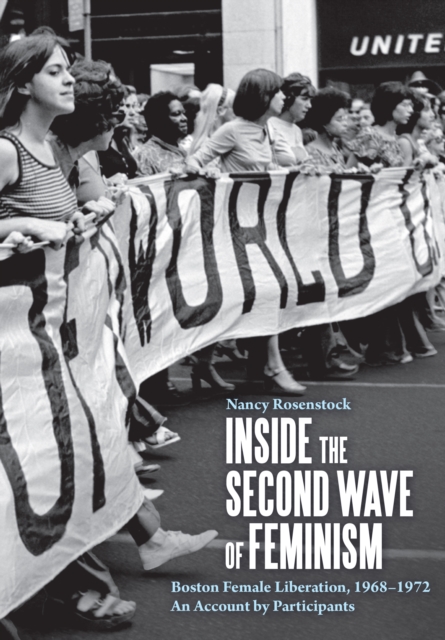
Inside the Second Wave of Feminism
A landmark account of a key radical feminist organization, offering lessons for todays womens liberation movement.Activist members of the radical feminist organization Boston Female Liberation provide an inside account of the groups history, strategy, and legacy in this compelling contribution to the historiography of Second Wave feminism.Boston Female Liberation member Nancy Rosenstock expertly weaves together the reflections of her fellow-activists, describing how they became feminists, recounting the breadth of their organizing work, and linking their achievements and experience to contemporary struggles against sexism.The book also includes ten radical feminist documents crucial to contextualizing the activity and thinking of the organization and its members.
eBook