
Catalogue Search | MBRL


Are you sure you want to remove the book from the shelf?

{{itemTitle}}
6
result(s) for
"Seder -- Liturgy -- Texts"
Sort by:
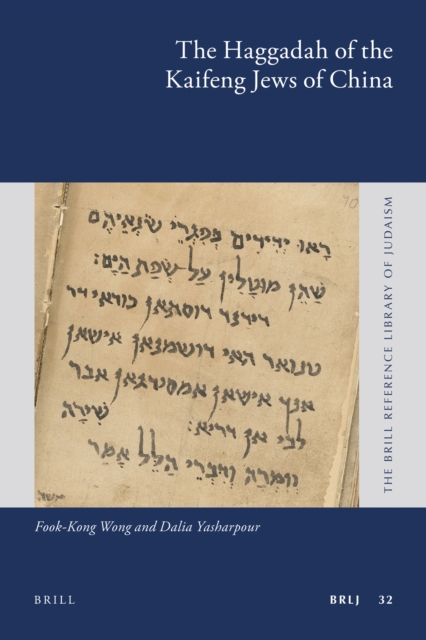
The Haggadah of the Kaifeng Jews of China
This comprehensive textual treatment of the Kaifeng Passover Rite is a significant contribution to the ongoing discussion as to the Community's origins in particular and to comparative Jewish liturgy in general.
eBook
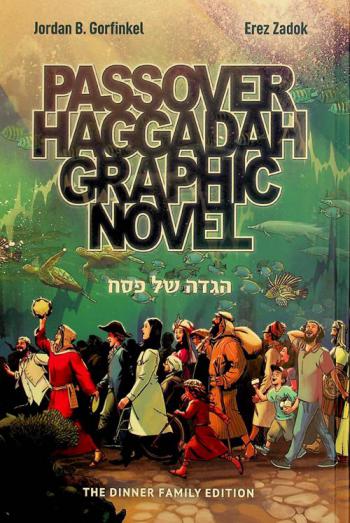
Passover Haggadah graphic novel New Milford = הגדה של פסח
Koren Publishers is proud to announce the publication of the world's first Passover Haggadah Graphic Novel, conceived and written by acclaimed Batman comics creator and Jewish cartoonist Jordan B. Gorf Gorfinkel, and illustrated in gorgeous color by Israeli artist Erez Zadok. The Passover Haggadah Graphic Novel integrates a brand-new, modern translation into sophisticated and super-fun sequential art that brings the epic story to life. The result of extensive historical and linguistic research, every gorgeous panel imbues the classic narrative with renewed relevance and excitement. The graphic novel pages are presented alongside the unabridged, traditional Seder service text, in Hebrew and transliteration, and accompanied by how to instructional cartoons depicting all of the rituals, as celebrated every year for the last 4000 years in Jewish homes around the world. This historic publication will appeal to family members and guests of multiple generations and diverse backgrounds. After all, aspirational stories of heroes, liberation and hope are universal. And there s no more universal medium for telling heroic stories, one that bridges all cultures, faiths and languages, than the sequential art form of the graphic novel itself a Jewish innovation!
Book

The JPS Commentary on the Haggadah
The Passover haggadah enjoys an unrivaled place in Jewish culture, both religious and secular. And of all the classic Jewish books, the haggadah is the one most alive today. Jews continue to rewrite, revise, and add to its text, recasting it so that it remains relevant to their lives.
In this new volume in the JPS Commentary collection, Joseph Tabory, one of the world's leading authorities on the history of the haggadah, traces the development of the seder and the haggadah through the ages.
The book features an extended introduction by Tabory, the classic Hebrew haggadah text side by side with its English translation, and Tabory's clear and insightful critical-historical commentary.
eBook

Two Early Witnesses to the Formation of the \Miqra Bikurim Midrash\ and Their Implications for the Evolution of the Haggadah Text
The midrashic elaboration of the exodus narrative encapsulated in Deuteronomy 26:5-8 is basic to the Passover Haggadah liturgy. Because m.Pesaḥ. 10:4 prescribes the expounding of that passage (doresh meʾarami ʿovedʾavi), it is generally assumed that the midrash found in standard, i.e., Babylonian, medieval European, and modern Haggadahs dates in large part to the tannaitic period, even though the corresponding Eretz-Israel version contains very little midrashic adornment. A manuscript fragment from the Cairo Genizah reveals that the standard text began with precious little midrashic text as well, and a second one provides an equally brief, but very different, alternative showing a process of augmentation that, in combination with the first version, would eventually lead to the fulsome standard midrash. The latter did not really evolve until post-talmudic (geonic) times. The unique style of the full midrashic composition will be examined to show that liturgical concerns, as well as midrashic ones, combined to produce the standard midrash. Appendix A provides a synoptic table of early Haggadah midrash-texts in comparison with the standard one. Readings in the fragments indicative of an early stage in the development of the Haggadah fragments treated herein are noted in Appendix B, where the texts are transcribed in full. A claim for a possibly tannaitic Haggadah midrash is examined in Appendix C.
Journal Article