
Catalogue Search | MBRL


Are you sure you want to remove the book from the shelf?

{{itemTitle}}
2,252
result(s) for
"Segregation in higher education"
Sort by:

Reparation and reconciliation : the rise and fall of integrated higher education
\"This is the first book to reveal the nineteenth-century struggle for racial integration on U.S. college campuses. As the Civil War ended, the need to heal the scars of slavery, expand the middle class, and reunite the nation engendered a dramatic interest in higher education by policy makers, voluntary associations, and African Americans more broadly. Formed in 1846 by Protestant abolitionists, the American Missionary Association united a network of colleges open to all, designed especially to educate African American and white students together, both male and female. Case studies at three colleges--Berea College, Oberlin College, and Howard University--reveal the strategies administrators used and the challenges they faced as higher education quickly developed as a competitive social field\"-- Provided by publisher.
Book

Reparation and Reconciliation
Reparation and Reconciliationis the first book to reveal the nineteenth-century struggle for racial integration on U.S. college campuses. As the Civil War ended, the need to heal the scars of slavery, expand the middle class, and reunite the nation engendered a dramatic interest in higher education by policy makers, voluntary associations, and African Americans more broadly. Formed in 1846 by Protestant abolitionists, the American Missionary Association united a network of colleges open to all, designed especially to educate African American and white students together, both male and female. The AMA and its affiliates envisioned integrated campuses as a training ground to produce a new leadership class for a racially integrated democracy. Case studies at three colleges--Berea College, Oberlin College, and Howard University--reveal the strategies administrators used and the challenges they faced as higher education quickly developed as a competitive social field.Through a detailed analysis of archival and press data, Christi M. Smith demonstrates that pressures between organizations--including charities and foundations--and the emergent field of competitive higher education led to the differentiation and exclusion of African Americans, Appalachian whites, and white women from coeducational higher education and illuminates the actors and the strategies that led to the persistent salience of race over other social boundaries.
eBook

A Black Educator in the Segregated South
Black college presidents in the era of segregation walked a tightrope. They were expected to educate black youth without sufficient state and federal funding. Yet in the African American community they were supposed to represent power and influence and to be outspoken advocates of civil rights, despite the continual risk of offending the white politicians on whom they were dependent for funding. The dilemmas they faced in balancing these conflicting demands have never been fully examined. Gerald Smith's study of the long-time president of Kentucky State College helps fill that void.
From 1929 to 1962, Rufus Ballard Atwood served as president of Kentucky State. As chief administrator of the state's foremost black institution, he worked closely with black educational organizations and was often chosen by whites to represent the African American community on various boards and commissions. These appointments gave him access to the state's political and educational power structure, and Atwood proved to be a skilled diplomat; but his influence was frequently at risk.
In his ground-breaking study, Smith examines Atwood's political relationships with state officials and his efforts to improve education for African Americans in Kentucky and the nation. He also appraises Atwood's contributions to Kentucky State and his relationship with faculty and students, and evaluates his contributions to the civil rights movement in Kentucky. Most important, Smith compares Atwood's style of leadership and the circumstances he confronted in Kentucky with those of black college presidents in other southern states.
A Black Educator in the Segregated Southoffers an important look at a complex role played out by a remarkable man in an era of change and conflict.
eBook
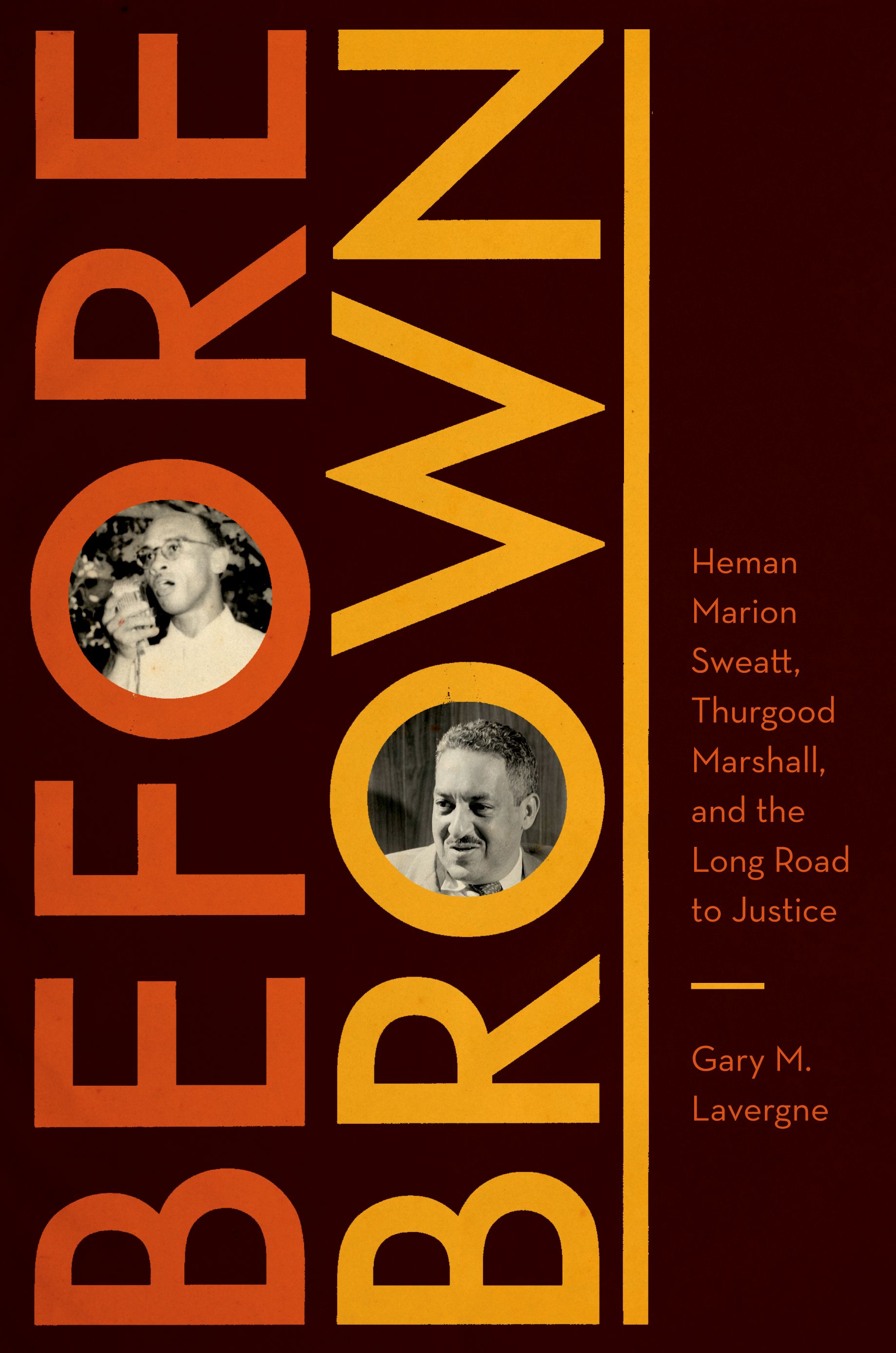
Before Brown
On February 26, 1946, an African American from Houston applied for admission to the University of Texas School of Law. Although he met all of the school's academic qualifications, Heman Marion Sweatt was denied admission because he was black. He challenged the university's decision in court, and the resulting case, Sweatt v. Painter, went to the U.S. Supreme Court, which ruled in Sweatt's favor. The Sweatt case paved the way for the landmark Brown v. Board of Education of Topeka rulings that finally opened the doors to higher education for all African Americans and desegregated public education in the United States. In this engrossing, well-researched book, Gary M. Lavergne tells the fascinating story of Heman Sweatt's struggle for justice and how it became a milestone for the civil rights movement. He reveals that Sweatt was a central player in a master plan conceived by the National Association for the Advancement of Colored People (NAACP) for ending racial segregation in the United States. Lavergne masterfully describes how the NAACP used the Sweatt case to practically invalidate the \"separate but equal\" doctrine that had undergirded segregated education for decades. He also shows how the Sweatt case advanced the career of Thurgood Marshall, whose advocacy of Sweatt taught him valuable lessons that he used to win the Brown v. Board of Education case in 1954 and ultimately led to his becoming the first black Associate Justice of the Supreme Court.
eBook

Fifty years of segregation : Black higher education in Kentucky, 1904-1954
Kentucky was the last state in the South to introduce racially segregated schools and one of the first to break down racial barriers in higher education.The passage of the infamous Day Law in 1904 forced Berea College to exclude 174 students because of their race.
eBook

Fifty Years of Segregation
Kentucky was the last state in the South to introduce racially segregated schools and one of the first to break down racial barriers in higher education. The passage of the infamous Day Law in 1904 forced Berea College to exclude 174 students because of their race. Throughout the 1930s and 1940s black faculty remained unable to attend in-state graduate and professional schools. Like black Americans everywhere who fought overseas during World War II, Kentucky's blacks were increasingly dissatisfied with their second-class educational opportunities. In 1948, they financed litigation to end segregation, and the following year Lyman Johnson sued the University of Kentucky for admission to its doctoral program in history. Civil racism indirectly defined the mission of black higher education through scarce fiscal appropriations from state government. It also promoted a dated 19th-century emphasis on agricultrual and vocational education for African Americans. John Hardin reveals how the history of segregated higher education was shaped by the state's inherent, though sometimes subtle, racism.
eBook
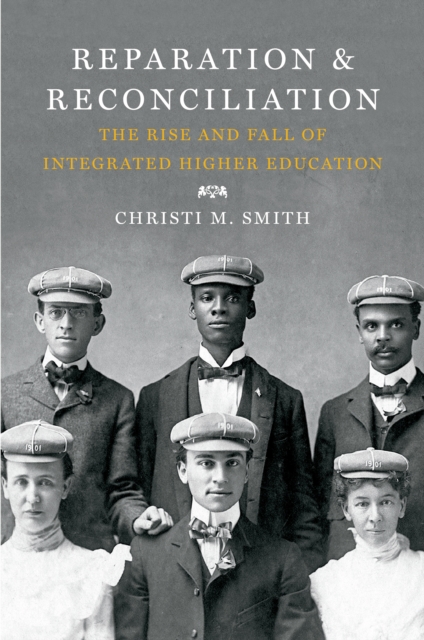
Reparation and reconciliation: the rise and fall of integrated higher education, 1865-1915
Examining the nineteenth-century struggle for racial integration on US college campuses, Christi M. Smith demonstrates that pressures between organisations and the emergent field of competitive higher education led to the differentiation and exclusion of African Americans, Appalachian whites and white women from coeducational higher education.
eBook

A black educator in the segregated south
Black college presidents in the era of segregation walked a tightrope.They were expected to educate black youth without sufficient state and federal funding.Yet in the African American community they were supposed to represent power and influence and to be outspoken advocates of civil rights, despite the continual risk of offending the white.
eBook

Opening the Doors
Opening the Doors is a wide-ranging account of the
University of Alabama’s 1956 and 1963 desegregation
attempts, as well as the little-known story of Tuscaloosa,
Alabama’s, own civil rights movement. Whereas E. Culpepper
Clark’s
The Schoolhouse Door remains the standard history of the
University of Alabama’s desegregation, in
Opening the Doors B. J. Hollars focuses on
Tuscaloosa’s purposeful divide between “town”
and “gown,” providing a new contextual framework for
this landmark period in civil rights history. The image of George
Wallace’s stand in the schoolhouse door has long burned in
American consciousness; however, just as interesting are the
circumstances that led him there in the first place, a process
that proved successful due to the concerted efforts of dedicated
student leaders, a progressive university president, a steadfast
administration, and secret negotiations between the U.S. Justice
Department, the White House, and Alabama’s stubborn
governor. In the months directly following Governor
Wallace’s infamous stand, Tuscaloosa became home to a
leader of a very different kind: twenty-eight-year-old African
American reverend T. Y. Rogers, an up-and-comer in the civil
rights movement, as well as the protégé of Martin
Luther King Jr. After taking a post at Tuscaloosa’s First
African Baptist Church, Rogers began laying the groundwork for
the city’s own civil rights movement. In the summer of
1964, the struggle for equality in Tuscaloosa resulted in the
integration of the city’s public facilities, a march on the
county courthouse, a bloody battle between police and protesters,
confrontations with the Grand Wizard of the Ku Klux Klan, a bus
boycott, and the near-accidental-lynching of movie star Jack
Palance. Relying heavily on new firsthand accounts and personal
interviews, newspapers, previously classified documents, and
archival research, Hollars’s in-depth reporting reveals the
courage and conviction of a town, its university, and the people
who call it home.
eBook

Horizontal and Vertical Segregation in Education by Gender in the Hungarian-Romanian-Ukrainian Border Region (Partium)
Although women have reached the state of equality in education, horizontal and vertical segregation still put them in a disadvantageous situation. According to horizontal segregation, women study at distinct areas which the labor market does not appreciate considerably, and according to vertical segregation, their presence on the highest levels of education (PhD training, university staff and researcher position) is lower, which is also the source of lower incomes. This study uses the data of the \"Regional University\" research in order to examine the various aspects of horizontal and vertical segregation present by gender in higher education. In addition, we will examine the social background of males and females at \"feminine\" and \"masculine\" faculties, and at university and college faculties. [PUBLICATION ABSTRACT]
Journal Article