
Catalogue Search | MBRL


Are you sure you want to remove the book from the shelf?

{{itemTitle}}
140
result(s) for
"Self-managed learning"
Sort by:
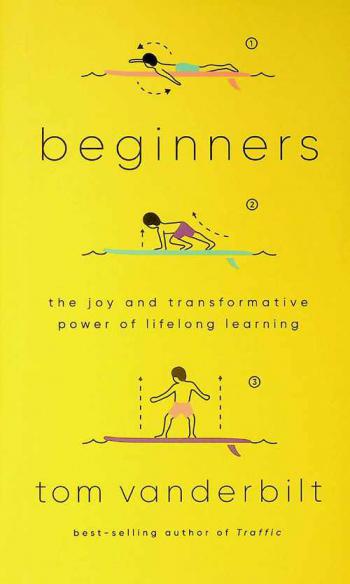
Beginners : the joy and transformative power of lifelong Learning
\"The best-selling author of Traffic and You May Also Like now gives us a thought-provoking, playful investigation into the transformative joys that come with starting something new, no matter your age\"-- Provided by publisher.

Get lost in the library?
Identifies ways to establish an information system to aid users to enhance the effectiveness of self-regulated learning and solve the problem of learning domain unawareness. Presents an overview of self-regulated learning theory. Realises the essential principles of self-regulated learning model in the library and develops a learning system that utilises the concept of combining mobile augmented reality, indoor navigation and data mining algorithms. Source: National Library of New Zealand Te Puna Matauranga o Aotearoa, licensed by the Department of Internal Affairs for re-use under the Creative Commons Attribution 3.0 New Zealand Licence.
Journal Article

Lean learning : how to achieve more by learning less
\"Navigate the chaos of information overload and supercharge your efficiency with Lean Learning, a groundbreaking guide that reveals a counterintuitive approach to success: winning by learning less. From an early age, we're taught that more is better. More money, more information, more skills. But times have changed. What was once valuable has now become a burden, and if information alone were the answer, we'd all be exactly where we want. In today's fast-moving world, the difference between success and failure is not in what you know but in what you do with what you know. Lean Learning equips you with the tools to do just that, propelling you towards your goals with greater efficiency, purpose, and results. Pat Flynn, a seasoned and serial entrepreneur and business mentor to millions, draws on his own experiences and of those who have successfully implemented his techniques. Lean Learning isn't just about absorbing information efficiently-it's about reshaping your approach to knowledge altogether. This book teaches you how to identify what's essential for your growth and eliminate all the distractions that tend to bog you down. Lean Learning stands out in a crowded productivity space by focusing not just on \"working smarter\" but on revolutionizing the way we absorb, process, and use information every single day. It's a perfect read for entrepreneurs, professionals, and lifelong learners who are ready to cut through the chaos and start making real progress. Backed by Flynn's extensive entrepreneurial success real-life case studies, Lean Learning offers a transformative approach to mastering any skill and achieving more with less. It is a perfect reading companion for fans of Great at Work, Digital Minimalism, and Building a Second Brain\"-- Provided by publisher.
BOOK

Embracing Ambiguity
Embracing Ambiguity fills a tremendous need in today's chaotic marketplace by providing a timely, impactful, and relevant self-directed training program designed to enhance the essential skills employees need to embrace today's ambiguity. By engaging in self-directed learning employees will increase their self-awareness, further their sense of the world around them, and reflect on the intersection of the two. Required reading for individuals from small-to-medium sized businesses, large corporations, non-profit organizations, and government offices, Embracing Ambiguity offers employers and employees alike a valuable resource to use as they chart a course forward in a post-pandemic marketplace.
eBook

Designing inclusive pathways with young adults : learning and development for a better world
This book is the second in a series entitled 'Learning and development for a better world' and it explores the potential for self-directed lifelong action learning (LAL) by focusing on the design of development pathways with and for young adults. The book considers the reasons why LAL pathways are needed and draws on innovative approaches used by the Global University for Lifelong Learning (including micro enterprise, peace-building, music, sport and the creative arts) with examples from nine countries. The aim is to offer a timely response to the pressing global problem of access to learning and development for marginalized young people during the vulnerable period from their mid-teens to mid-twenties.
Book
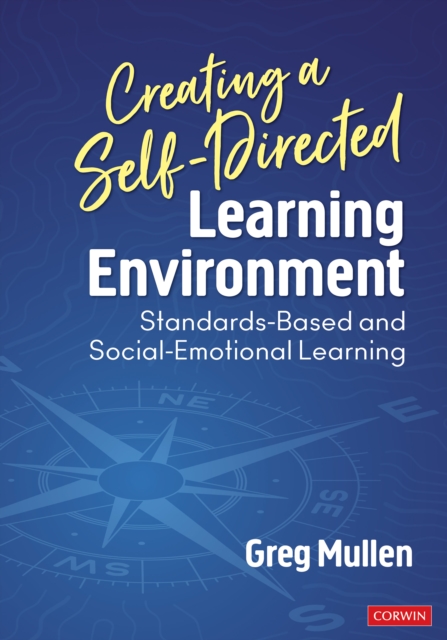
Creating a Self-Directed Learning Environment
Educate the whole child--improve the whole school. Implementing new teaching practices can feel like juggling. This book shows you how to balance standards-based learning, social-emotional learning, and cognitive development and build realistic plans for success. With a flexible, three-tiered, visual framework designed for schoolwide collaboration, it helps you build on your school's strengths and the potential of existing programs. It also offers: * An integrated philosophy focused on self-directed learning and the whole child * Attention to academic inclusion, behavior intervention, and classroom management * Research sourced from CASEL and state programs and initiatives * Numerous illustrations, tables, and graphics * Tools and supplemental resources for implementation.
eBook

Personal Knowledge Management
Individuals need to survive and grow in changing and sometimes turbulent organizational environments, while organizations and societies want individuals to have the knowledge, skills and abilities that will enable them to prosper and thrive. Personal Knowledge Management (PKM) is a means of coping with complex environmental changes and developments: it is a form of sophisticated career and life management. Personal Knowledge Management is an evolving concept that focuses on the importance of individual growth and learning as much as on the technology and management processes traditionally associated with organizational knowledge management. This book looks at the emergence of PKM from a multi-disciplinary perspective, and its contributors reflect the diverse fields of study that touch upon it. Relatively little research or major conceptual development has so far been focused on PKM, but already significant questions are being asked, such as 'is there an inherent conflict between personal and organizational knowledge management and how best do we harmonize individual and organizational goals?' This book will inform, stimulate and challenge every reader. By delving both deeply and broadly into its subject, the distinguished authors help all those concerned with 'knowledge work' and 'knowledge workers' to see how PKM supports and affects individuals, organizations and society as a whole; to better understand the concepts involved and to benefit from relevant research in this important area.
eBook

Conflict resolution: how to LEVEL
Purpose
To assist managers in applying a set of intuitively appealing actions that can be helpful in conflict resolution.
Design/methodology/approach
Utilizing a mindful strategy of listening, empathizing, visualizing, considering effects, and liaising with involved parties toward resolving conflicts in a mutually considerate way.
Findings
Leveling with colleagues, especially when in a supervisory position, will demonstrate respect for individual perspectives, and the will to reflect on both sides of a situation before coming to a decision.
Practical implications
Applying LEVEL may take more time than jumping to quick conclusions, but it will enhance employees’ reverence for their leader, as they find that decisions are well-considered, and respectfully communicated.
Originality/value
An intuitively sound way of leading mindfully and respectfully in increasingly complex work environments.
Journal Article

Approaches to education for sustainability leadership development in higher education: an international comparative study in the Asia Pacific region
Purpose
This study aims to focus on key approaches to education for sustainability (EfS) leadership development in the context of Malaysian and Japanese universities. The authors identify key indicators of effective EfS leadership development approaches using both descriptive and inferential analyses, identify and compare the preferred leadership learning methods of academics and examine the impact of marital status, country of residence and administrative position on the three EfS leadership development approaches.
Design/methodology/approach
The study is quantitative in approach and survey in design. Data were collected from 664 academics and analysed using the efficient partial least squares (PLSe2) methodology. To provide higher education researchers with more analytical insights, the authors re-estimated the models based on the maximum likelihood methodology and compared the results across the two methods.
Findings
The inferential results underscored the significance of four EfS leadership learning methods, namely, “Involvement in professional leadership groups or associations, including those concerned with EfS”, “Being involved in a formal mentoring/coaching program”, “Completing formal leadership programs provided by my institution” and “Participating in higher education leadership seminars”. Additionally, the authors noted a significant impact of country of residence on the three approaches to EfS leadership development. Furthermore, although marital status emerged as a predictor for self-managed learning and formal leadership development (with little practical relevance), administrative position did not exhibit any influence on the three approaches.
Practical implications
In addition to the theoretical and methodological implications drawn from the findings, the authors emphasize a number of practical implications, namely, exploring the applicability of the results to other East Asian countries, the adaptation of current higher education leadership development programmes focused on the key challenges faced by successful leaders in similar roles, and the consideration of a range of independent variables including marital status, administrative position and country of residence in the formulation of policies related to EfS leadership development.
Originality/value
This study represents an inaugural international comparative analysis that specifically examines EfS leadership learning methods. The investigation uses the research approach and conceptual framework used in the international Turnaround Leadership for Sustainability in Higher Education initiative and uses the PLSe2 methodology to inferentially pinpoint key learning methods and test the formulated hypotheses.
Journal Article

Antecedents and consequences of college students' satisfaction with online learning
We delved into the antecedents and consequences of college students' satisfaction with online learning. We proposed the antecedents would be interactions, teaching presence, self-management of learning, and academic self-efficacy, and that the consequence would be intention to continue
to use online learning. Participants were 236 college students in South Korea who completed an online survey. Our findings suggest that students' satisfaction with online learning was positively related to the interactions between students and instructor, teaching presence, self-management
of learning, and academic self-efficacy. We also found that student satisfaction with online learning positively predicted their intention to continue to use online learning. Thus, our findings in this study provide educators with ways to increase student satisfaction, and add to knowledge
about the relationship between students' satisfaction and their intention to take online courses.
Journal Article