
Catalogue Search | MBRL


Are you sure you want to remove the book from the shelf?

{{itemTitle}}
12
result(s) for
"Seljuks Civilization."
Sort by:

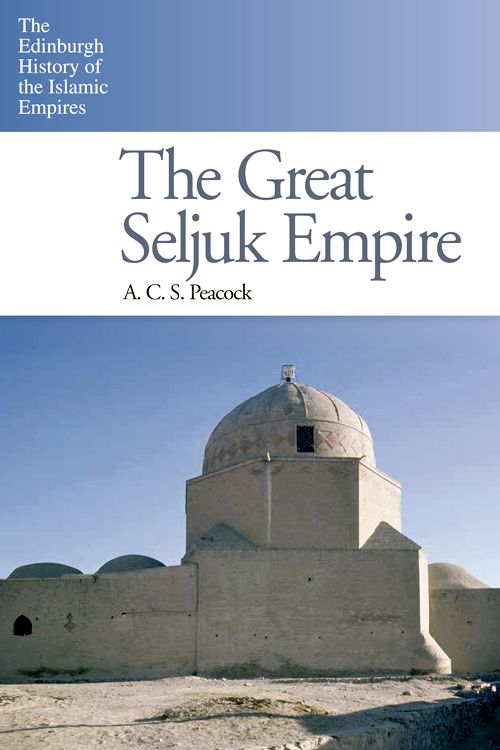
The Great Seljuk Empire
The first textbook introduction to the history of the Great Seljuk Islamic Empire to be published in English
The Great Seljuk Empire was the Turkish state which dominated the Middle East and Central Asia in the eleventh and twelfth centuries. This book surveys that period, which was one of exceptional importance, witnessing profound demographic, religious, political and social changes in the Islamic Middle East. The Turkish invasions played a role in provoking the Crusades, led to the collapse of Byzantine power in Anatolia and brought about the beginnings of Turkish settlement in what is now Turkey and Iran, permanently altering their ethnic and linguistic composition.
Key Features
The first book in a western language to offer an overview of this major Islamic empireProvides a narrative history and a thematic analysis of the empire's institutions and aspects of life in the Seljuk worldExamines the political, administrative, military, religious, economic and social organization of the Great Seljuk Empire using a wide variety of historical and literary sourcesDraws on the evidence of archaeology and material cultureIllustrated with images, maps, charts, family treesText boxes introduce key themes and institutions
eBook

The Seljuks of Anatolia : court and society in the medieval Middle East
\"Under Seljuk rule (c. 1081-1308) the formerly Christian Byzantine territories of Anatolia were transformed by the development of Muslim culture, society and politics, and it was then - well before the arrival of the Ottomans - that a Turkish population became firmly established in these lands. But these developments are little understood, and the Seljuk dynasty remains little studied. Yet the Seljuks of Anatolia were one of the most influential dynasties of the thirteenth-century Middle East, controlling some of the major trade routes of the period, playing a crucial role in linking East and West of the medieval world. This volume examines Seljuk culture and history by looking at developments both at court and in society at large and shed new light on Seljuk political culture and dynastic ideology, the engagement of politics with religion, and Christian-Muslim interaction. The Seljuks of Anatolia will be of great interest to researchers with interests in Byzantium as well as the material culture and society of the medieval Islamic world.\"--Page 4 of cover.
Book

The Seljuqs
The Seljuqs is a unique collaborative exploration of the Seljuqs' achievement and contributes to the growing interest in this pivotal dynasty.The various chapters in this volume cover a representative geographical spectrum, from Central Asia and Persia to Iraq, Syria and Anatolia, and address novel questions such as the ideological foundations and ritual expressions of Seljuq power, the mutual attitudes of the learned classes and the Seljuq state, the organization of space, and the relationship between nomads and the settled peoples.
eBook


Rum Seljuq Architecture, 1170-1220
This lavishly illustrated volume presents the major surviving monuments of the early period of the Rum Seljuqs, the first major Muslim dynasty to rule Anatolia. A much-needed overview of the political history of the dynasty provides the context for the study of the built environment which follows. The book addresses the most significant monuments from across the region: a palace, a minaret and a hospital are studied in detail, along with an overview of the decorative portals attached to a wide array of different building types. The case studies are used to demonstrate the key themes and processes of architectural synthesis and development that were under way at the time, and how they reflect the broader society.
eBook
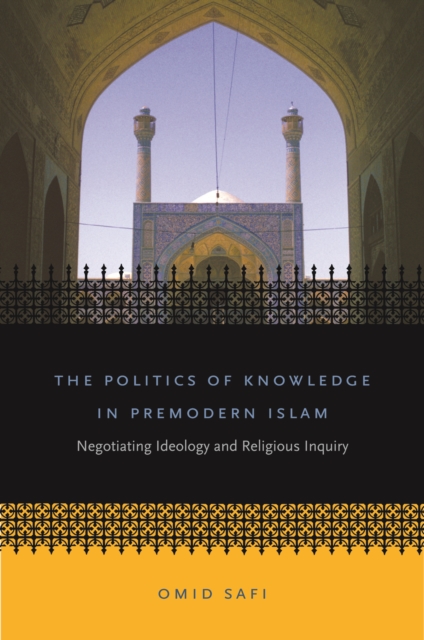
The politics of knowledge in premodern Islam : negotiating ideology and religious inquiry
The eleventh and twelfth centuries comprised a period of great significance in Islamic history. The Great Saljuqs, a Turkish-speaking tribe hailing from central Asia, ruled the eastern half of the Islamic world for a great portion of that time. In a far-reaching analysis that combines social, cultural, and political history, Omid Safi demonstrates how the Saljuqs tried to create a lasting political presence by joining forces with scholars and saints, among them a number of well-known Sufi Muslims, who functioned under state patronage. In order to legitimize their political power, Saljuq rulers presented themselves as champions of what they alleged was an orthodox and normative view of Islam. Their notion of religious orthodoxy was constructed by administrators in state-sponsored arenas such as madrasas and khanaqahs. Thus orthodoxy was linked to political loyalty, and disloyalty to the state was articulated in terms of religious heresy. Drawing on a vast reservoir of primary sources and eschewing anachronistic terms of analysis such as nationalism, Safi revises conventional views both of the Saljuqs as benevolent Muslim rulers and of the Sufis as timeless, ethereal mystics. He makes a significant contribution to understanding premodern Islam as well as illuminating the complex relationship between power and religious knowledge.
eBook
Anatolian Seljuk Hospitals and Divriği Example
The Anatolian Seljuk State in the period 1078-1308 was very rich in cultural life and building activities. Some of the remained architectural buildings include hospitals which are understood as healing centres of the Middle Age period. The architectural and acoustic characteristics of the hospitals revealed the specificity of design suitable for healing purposes with the emphasis Divriği hospital and on the makam’s produced sound events and dependency on the Turkish traditional concept of a healing. In this text the short introduction of the formation of Anatolian Seljuk State is given, and the overview and comparison of four hospitals that were part of the research. The results of the acoustic analysis conducted on the Divriği hospital is one representative sample of such architectural concept.
Journal Article
The Great Saljuqs: A History
This book provides a broad history of the Seljuq Turks from their origins and early conquests in the 10th century, through the rise of empire, until its dissolution at the end of the 12th. Where the history of the Seljuqs is usually studied in the context of medieval Persian, Arabic or Islamic history, this book considers the topic from the perspective of Turkish history.Examining the corpus of academic work on the period and how Turkish historiography has interpreted and understood the Seljuqs, the author demonstrates how the Great Seljuq Empire can be considered not only in a historical context, but as the instigator of Turko-Islamic civilization. Rejecting traditional Turkish scholarship, which places Iranian culture and Islam as the civilising elements in the Great Seljuq Empire, the author shows how the nature of nomadic pastoral empires have come under fresh scrutiny, reassessing Seljuq history and the framework within which it has been treated.This book provides a unique insight into the adoption to an urban environment of Turkic expectations that were forged on the Eurasian steppes, showing how the outcome put its stamp on the second millennium throughout the Middle East and Balkans. It will be an important addition to the literature on Medieval Islamic, Turkish and Middle Eastern history.
eBook