
Catalogue Search | MBRL


Are you sure you want to remove the book from the shelf?

{{itemTitle}}
46
result(s) for
"Semiconductor nuclear counters"
Sort by:
Silicon solid state devices and radiation detection
This book addresses the fundamental principles of interaction between radiation and matter, the principles of working and the operation of particle detectors based on silicon solid state devices. It covers a broad scope in the fields of application of radiation detectors based on silicon solid state devices from low to high energy physics experiments, including in outer space and in the medical environment. This book also covers state-of-the-art detection techniques in the use of radiation detectors based on silicon solid state devices and their readout electronics, including the latest developments on pixelated silicon radiation detector and their application.
The content and coverage of the book benefit from the extensive experience of the two authors who have made significant contributions as researchers as well as in teaching physics students in various universities.
eBook

Physics with trapped charged particles
This book is a collection of articles on Physics with Trapped Charged Particles by speakers at the Les Houches Winter School. The articles cover all types of physics with charged particles, and are aimed at introducing the basic issues at hand, as well as the latest developments in the field. It is appropriate for PhD students and early career researchers, or interested parties new to the area.
eBook

Direct thermal neutron detection by the 2D semiconductor 6LiInP2Se6
Highly efficient neutron detectors are critical in many sectors, including national security
1
,
2
, medicine
3
, crystallography
4
and astronomy
5
. The main neutron detection technologies currently used involve
3
He-gas-filled proportional counters
6
and light scintillators
7
for thermalized neutrons. Semiconductors could provide the next generation of neutron detectors because their advantages could make them competitive with or superior to existing detectors. In particular, solids with a high concentration of high-neutron-capture nuclides (such as
6
Li,
10
B) could be used to develop smaller detectors with high intrinsic efficiencies. However, no promising materials have been reported so far for the construction of direct-conversion semiconductor detectors. Here we report on the semiconductor LiInP
2
Se
6
and demonstrate its potential as a candidate material for the direct detection of thermal neutrons at room temperature. This compound has a good thermal-neutron-capture cross-section, a suitable bandgap (2.06 electronvolts) and a favourable electronic band structure for efficient electron charge transport. We used α particles from an
241
Am source as a proxy for the neutron-capture reaction and determined that the compact two-dimensional (2D) LiInP
2
Se
6
detectors resolved the full-energy peak with an energy resolution of 13.9 per cent. Direct neutron detection from a moderated Pu–Be source was achieved using
6
Li-enriched (95 per cent) LiInP
2
Se
6
detectors with full-peak resolution. We anticipate that these results will spark interest in this field and enable the replacement of
3
He counters by semiconductor-based neutron detectors.
The semiconductor
6
LiInP
2
Se
6
is used for the direct detection of thermal neutrons at room temperature, demonstrating good energy resolution.
Journal Article

Performance of the MALTA telescope
MALTA is part of the Depleted Monolithic Active Pixel sensors designed in Tower 180 nm CMOS imaging technology. A custom telescope with six MALTA planes has been developed for test beam campaigns at SPS, CERN, with the ability to host several devices under test. The telescope system has a dedicated custom readout, online monitoring integrated into DAQ with realtime hit map, time distribution and event hit multiplicity. It hosts a dedicated fully configurable trigger system enabling to trigger on coincidence between telescope planes and timing reference from a scintillator. The excellent time resolution performance allows for fast track reconstruction, due to the possibility to retain a low hit multiplicity per event which reduces the combinatorics. This paper reviews the architecture of the system and its performance during the 2021 and 2022 test beam campaign at the SPS North Area.
Journal Article

Micro-scale particle tracking using hybrid detectors
Positron Emission Particle Tracking (PEPT) techniques allow the tracking of a radioactive tracer particle moving within a system of flow, enabling non-invasive study of dynamic systems. On the micro-scale, PEPT performance is limited by the achievable activity in radiolabelling a suitable tracer particle, and the fixed geometry of conventional detector systems. To enable application of PEPT towards these scales advanced instrumentation is required, and a hybrid detection system has been developed combining scintillator and semiconductor devices. A bismuth germanate oxide (BGO) scintillator array consisting of 1024 detector elements derived from CTI/Siemens PET scanners (512 pixels of 6.75 x 6.25 x 30 mm 3 and 512 pixels of 4.1 x 4.0 x 30 mm 3 ) forms a field of view of 150 x 196 x 101 mm 3 . A pair of pixelated cadmium zinc telluride room temperature semiconductors (9680 pixels of 1.8 x 1.8 x 0.5 mm 3 ) form a high spatial resolution region of 62 x 42 x 20 mm 3 placed within the larger field of view. The design choice maximizes absolute efficiency by merit of the scintillators and enhances spatial resolution through the semiconductors. Energy and timing resolutions of the BGO elements were determined, and sensitivity profiles of the system modelled numerically, enabling the characterization of the system absolute efficiency and spatial resolution. The results suggest the applicability of PEPT in the study of microscale flows for the first time, including investigating flows in capillaries and micro-fluidic devices.
Journal Article
Neutron-Induced Radiation Effects in UMOS Transistor
Ground level electronics and avionics systems may suffer from radiation effects induced by neutrons. Neutrons can induce radiation effects in electronic devices via fusion-evaporation nuclear reactions, but few studies have been reported for technologies such as UMOSFET. In this work, estimates and experimental studies on neutron-induced radiation effects via nuclear reactions in a Si-based UMOSFET are presented. Methods for probability estimates of neutron-induced Single-Event Effects (SEEs) in Si-based power transistors and neutron beam energy measurement is presented. The energy spectrum of a UMOSFET subject to fast neutron irradiation was then compared to that of a high charge collection efficiency silicon particle detector.
Journal Article

Emerging New-Generation Semiconductor Single Crystals of Metal Halide Perovskites for Radiation Detection
Radiation detection uses semiconductor materials to convert high-energy photons into charge (direct detection) or low-energy photons (indirect detection), and it has a wide range of applications in nuclear physics, medical imaging, astronomical detection, homeland security, and other fields. Metal halide perovskites have the advantages of high frequency number, high carrier mobility, high defect tolerance, low defect density, adjustable band gap, and fast light response, and they have wide application prospects in the field of radiation detection. However, the research is still in its infancy stage, and it is far from meeting the requirements of industrial application. This paper focuses on the advantages of metal halide perovskite single-crystal materials in both semiconductors-based direct conversion detection and scintillator-based indirect detection as well as the latest progress in this promising field. This paper not only introduces the latest application of lead halide perovskite monocrystalline materials in high-energy electromagnetic radiation detection (X-ray and γ-rays), but it also introduces the latest development of α-particle/β-particle/neutron detection. Finally, this paper points out the challenges and future prospects of metal halide perovskite single-crystal materials in radiation detection.
Journal Article

Radiation detector materials: An overview
Due to events of the past two decades, there has been new and increased usage of radiation-detection technologies for applications in homeland security, nonproliferation, and national defense. As a result, there has been renewed realization of the materials limitations of these technologies and greater demand for the development of next-generation radiation-detection materials. This review describes the current state of radiation-detection material science, with particular emphasis on national security needs and the goal of identifying the challenges and opportunities that this area represents for the materials-science community. Radiation-detector materials physics is reviewed, which sets the stage for performance metrics that determine the relative merit of existing and new materials. Semiconductors and scintillators represent the two primary classes of radiation detector materials that are of interest. The state-of-the-art and limitations for each of these materials classes are presented, along with possible avenues of research. Novel materials that could overcome the need for single crystals will also be discussed. Finally, new methods of material discovery and development are put forward, the goal being to provide more predictive guidance and faster screening of candidate materials and thus, ultimately, the faster development of superior radiation-detection materials.
Journal Article
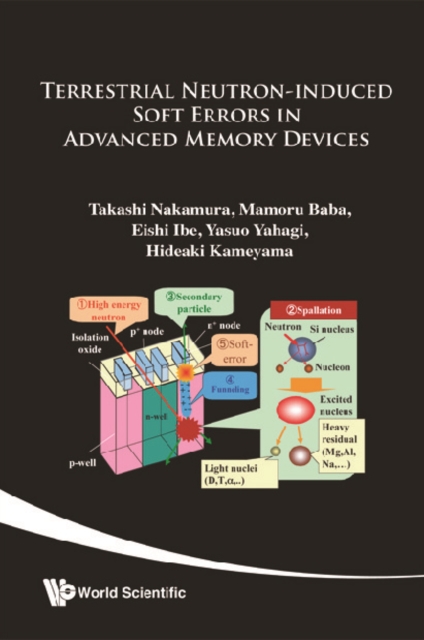
Terrestrial neutron-induced soft errors in advanced memory devices
Terrestrial neutron-induced soft errors in semiconductor memory devices are currently a major concern in reliability issues. Understanding the mechanism and quantifying soft-error rates are primarily crucial for the design and quality assurance of semiconductor memory devices.
eBook

Phosphors and Scintillators in Biomedical Imaging
Medical imaging instrumentation is mostly based on the use of luminescent materials coupled to optical sensors. These materials are employed in the form of granular screens, structured crystals, single transparent crystals, ceramics, etc. Storage phosphors are also incorporated in particular X-ray imaging systems. The physical properties of these materials should match the criteria required by the detective systems employed in morphological and functional biomedical imaging. The systems are analyzed based on theoretical frameworks emanating from the linear cascaded systems theory as well as the signal detection theory. Optical diffusion has been studied by different methodological approaches, such as experimental measurements and analytical modeling, including geometrical optics and Monte Carlo simulation. Analysis of detector imaging performance is based on image quality metrics, such as the luminescence emission efficiency (LE), the modulation transfer function (MTF), the noise power spectrum (NPS), and the detective quantum efficiency (DQE). Scintillators and phosphors may present total energy conversion on the order of 0.001–0.013 with corresponding DQE in the range of 0.1–0.6. Thus, the signal-to-noise ratio, which is crucial for medical diagnosis, shows clearly higher values than those of the energy conversion.
Journal Article