
Catalogue Search | MBRL


Are you sure you want to remove the book from the shelf?

{{itemTitle}}
7
result(s) for
"Semitische talen."
Sort by:

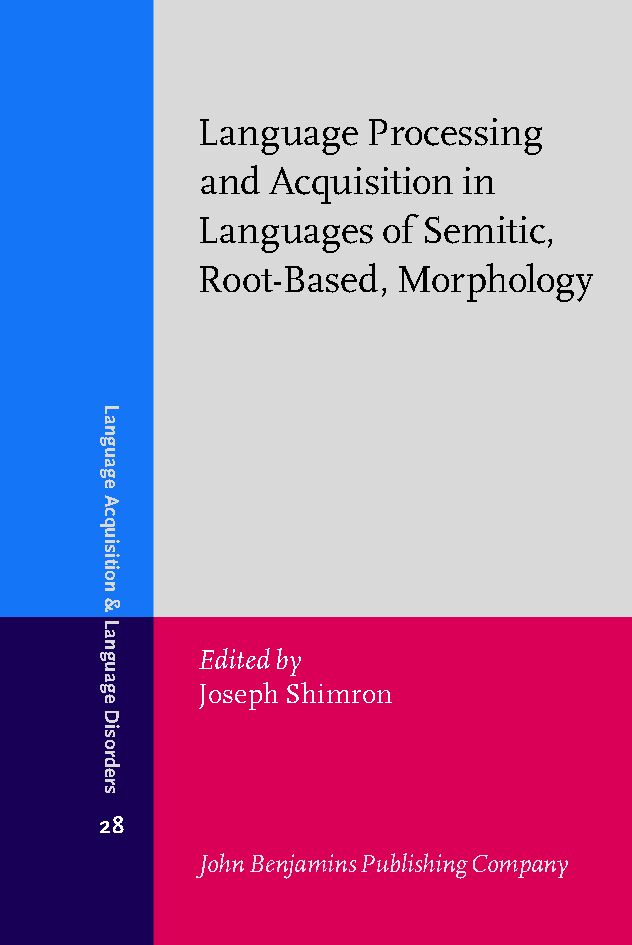
Language Processing and Acquisition in Languages of Semitic, Root-Based, Morphology
This book puts together contributions of linguists and psycholinguists whose main interest here is the representation of Semitic words in the mental lexicon of Semitic language speakers. The central topic of the book confronts two views about the morphology of Semitic words. The point of the argument is: Should we see Semitic words' morphology as \"root-based\" or \"word-based?\" The proponents of the root-based approach, present empirical evidence demonstrating that Semitic language speakers are sensitive to the root and the template as the two basic elements (bound morphemes) of Semitic words. Those supporting the word-based approach, present arguments to the effect that Semitic word formation is not based on the merging of roots and templates, but that Semitic words are comprised of word stems and affixes like we find in Indo-European languages. The variety of evidence and arguments for each claim should force the interested readers to reconsider their views on Semitic morphology.
eBook

Comparative Semitic linguistics : a manual
No detailed description available for \"Comparative Semitic Linguistics\".
eBook

The \broken\ plural problem in Arabic and comparative Semitic : allomorphy and analogy in non-concatenative morphology
The formal aspects of non-concatenative morphology have received considerable attention in recent years, but the diachronic dimensions of such systems have been little explored. The current work applies a modern methodological and theoretical framework to a classic problem in Arabic and Semitic historical linguistics: the highly allomorphic system of 'stem-internal' or 'broken' plurals. It shows that widely-accepted views regarding the historical development of this system are untenable and offers a new hypothesis.The first chapter lays out a methodology for comparative-historical research in morphology. The next two chapters present an analysis of Arabic morphology based on contemporary formal linguistic approaches, and applies this analysis to the noun plural system. Chapter Four shows that neither semantic shift nor ablaut-type sound change account adequately for the data. The fifth chapter offers a systematic comparison of the plural systems of Semitic languages, incorporating much new research on the languages of South Arabia and Ethiopia. Chapter Six proposes a new reconstruction.
eBook
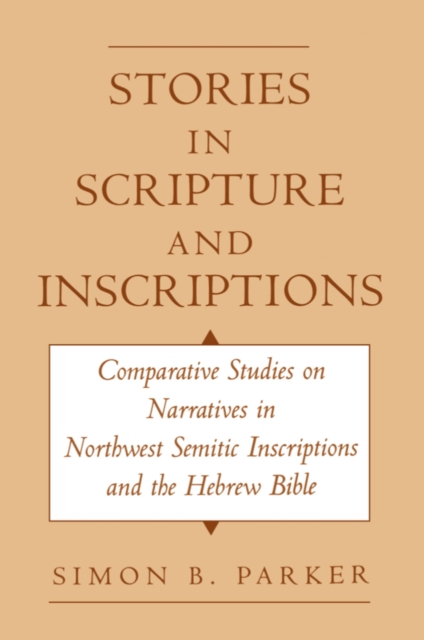
Stories in Scripture and Inscriptions
This book compares a variety of biblical narratives with the stories found in several Northwest Semitic inscriptions from the ancient kingdom of Judah and its contemporary Syro-Palestinian neighbors. In genre, language, and cultural context, these epigraphic stories are closer to biblical narratives than any other ancient Near Eastern narrative corpus. For the first time, Parker analyzes and appreciates these stories as narratives and sets them beside comparable biblical stories. He illuminates the narrative character and techniques of both epigraphic and biblical stories and in many cases reveals their original social context and purpose. In some cases, he is able to shed light on the question of the sources and composition of the larger work in which most of the biblical stories appear, the Deuteronomistic history. Against the claim that the genius of biblical prose narrative derives from the monotheism of the authors, he shows that the presence or absence of a divine role in each type of story is consistent throughout both biblical and epigraphic examples, and that, when present, the role of the deity is essentially the same both inside and outside the Bible, inside and outside Israel.
eBook
