
Catalogue Search | MBRL


Are you sure you want to remove the book from the shelf?

{{itemTitle}}
118
result(s) for
"Sensory integration dysfunction."
Sort by:

Everyday games for Sensory Processing Disorder : 100 playful activities to empower children with sensory differences
\"...Occupational therapist Barbara Sher has over 45 years experience helping children with sensory processing disorder, autism and Asperger's learn and thrive. In this new solutions-based guide, she's collected 100 sensory-rich games that make working with your child a joy. If you're looking for new strategies to manage your child's sensory processing disorder, this book is a perfect companion to classics such as The Out-of-Sync Child and Raising a Sensory Smart Child. [This book] advocates play as the most effective approach for children with sensory processing disorder, and illustrates the many ways that play can lead to significant breakthroughs, including: 100 fun and simple games for parents to play with their kids ; An easy-to-grasp overview of sensory processing disorder ; Inventive ideas for engaging kids, using materials easily found around the house ; Inclusive games geared toward varying degrees of development, with modifications for older children.\"--Amazon.com.
Book

HD-tDCS effects on social impairment in autism spectrum disorder with sensory processing abnormalities: a randomized controlled trial
This study examined the effects of high-definition transcranial direct current stimulation (HD-tDCS) on social impairment in children with autism spectrum disorder (ASD), focusing on those with and without sensory processing abnormalities. A randomized double-blind sham-controlled trial involved 72 children with ASD, divided into three groups based on sensory integration status. A post-hoc analysis of 51 children aged 4–8 years who received true HD-tDCS was conducted, categorizing them into hypo-tactile, hyper-tactile, and typical tactile sensitivity groups. Therapeutic efficacy was compared across these groups. (1) The randomized cntrolled Trial: The typical sensory integration group showed significant improvements in social awareness (
t
= 5.032,
p
< 0.000) and autistic mannerisms (
t
= 3.085,
p
= 0.004) compared to the sensory integration dysfunction group. (2)The result of the post-hoc analysis: The hypo-tactile and typical tactile sensitivity groups exhibited notable improvements in social awareness, cognition, communication, autistic mannerisms, and total SRS scores. In contrast, the hyper-tactile group only had a significant reduction in social communication (
t
= 2.385,
p
= 0.022) post-intervention. HD-tDCS effectively improved social impairment symptoms in children with ASD, particularly those with typical sensory integration and either typical or hypo-tactile responsiveness.
Journal Article

Autism, sensory & behavior : the way I see it
\"Dr. Temple Grandin draws on her own experience to deliver an essential resource for guiding and nurturing autistic children with sensory and behavior challenges. As always, she gets to the REAL issues of autism--the ones parents, teachers, and those on the spectrum face every day. Most autistic individuals deal with a variety of sensory differences, and in this book Dr. Grandin sheds light on the best ways for them to adapt and thrive. In these helpful pages, Dr. Grandin offers do's and don'ts, practical strategies, and try-it-now tips, all based on her insider perspective and extensive research\"--Page 4 of cover.
BOOK

An Exploratory Study Testing Autonomic Reactivity to Pain in Women with Sensory Over-Responsiveness
Background: Difficulty modulating sensory input related to multi-sensory integration dysfunction, specifically the sensory over-responsive (SOR) type, is associated with psychological distress and hyperalgesia in children and adults. Scares reports suggest atypical autonomic nervous system (ANS) reactivity to innocuous sensory stimuli in children with SOR. Thus, the ANS may contribute to sensory stimuli responses and psychological distress. This exploratory study aimed to characterize the ANS reactivity to single and dual pain stimulation, and in relation to psychological distress in adults with SOR. Methods: Healthy women with SOR (n = 9) vs. without SOR (n = 9) underwent two runs of single pain stimulation and a third run comprised of dual pain stimulation. Pain was self-rated, while heart rate variability was measured and analyzed in the time and frequency domains. In addition, questionnaires assessing anxiety and somatization were utilized. Results: While controls demonstrated a vagal tone withdrawal (root mean square of successive differences in R-R-intervals; (RMSSD)) p = 0.029 from base-line to the third run, this was absent in the SOR group. However, no group differences were found in pain ratings. Furthermore, groups differed in the correlations between R-R mean and the level of both anxiety (p = 0.006) and somatization (p < 0.001); while in the SOR group, higher levels of anxiety and somatization correlated with shorter R-R intervals, the opposite was found in the control group. Conclusions: This is the first study to demonstrate in women with SOR atypical vagal tone reactivity to challenging pain load. Vagal tone reactivity is related to both pain ratings and psychological distress.
Journal Article

Building social skills for autism, sensory processing disorders and learning disabilities : over 105 strategies, activities and sensory tools for children and adolescents
\"This new framework for developing a dynamic social skills program using the sensory system is a way to explore why kids react that way they do socially. With this framework in mind, professionals can build on children's self-awareness and social acumen\"--Page 4 of cover.
Book
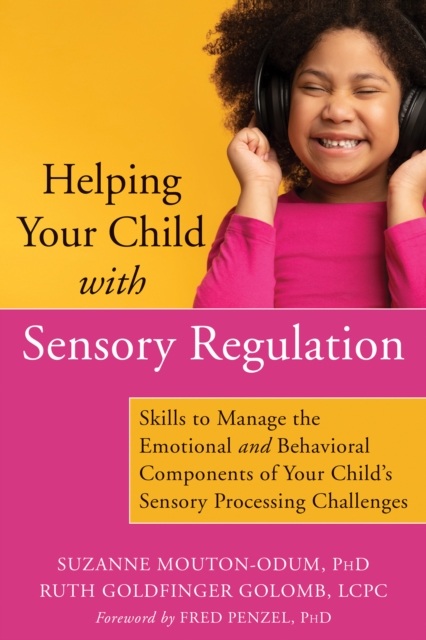
Helping Your Child with Sensory Regulation
This book addresses the often-overlooked connection between sensory sensitivity and the emotional and behavioral issues that can lead to a diagnosis of attention deficit/hyperactivity disorder (ADHD), autism spectrum disorder (ASD), and other disorders. Parents will not only gain a better understanding of their child's emotions and behaviors, but will also learn powerful sensory regulation skills to help their child--and family as a whole--find some much-needed balance.
eBook

Too much! : an overwhelming day
\"Sometimes everything is too much! Too loud, too bright, and all too overwhelming. Writing from her own experience with sensory processing disorder, Jolene Gutiérrez's compassionate picture book explores the struggles of a sensorily sensitive child and how they settle themselves. Joined by Angel Chang's beautiful illustrations, young readers will learn that it's OK if some days are too much\"-- Provided by publisher.
Book

How We Became Sensorimotor
An engrossing history of the century that transformed
our knowledge of the body's inner senses The years between
1833 and 1945 fundamentally transformed science's understanding of
the body's inner senses, revolutionizing fields like philosophy,
the social sciences, and cognitive science. In How We Became
Sensorimotor , Mark Paterson provides a systematic account of
this transformative period, while also demonstrating its
substantial implications for current explorations into
phenomenology, embodied consciousness, the extended mind, and
theories of the sensorimotor, the body, and embodiment.
Each chapter of How We Became Sensorimotor takes a
particular sense and historicizes its formation by means of recent
scientific studies, case studies, or coverage in the media. Ranging
among a diverse array of sensations, including balance, fatigue,
pain, the \"muscle sense,\" and what Maurice Merleau-Ponty termed
\"motricity,\" Paterson's analysis moves outward from the familiar
confines of the laboratory to those of the industrial world and
even to wild animals and their habitats. He uncovers important
stories, such as how forgotten pain-measurement schemes transformed
criminology, or how Penfield's outmoded concepts of the sensory and
motor homunculi of the brain still mar psychology textbooks.
Complete with original archival research featuring illustrations
and correspondence, How We Became Sensorimotor shows how
the shifting and sometimes contested historical background to our
understandings of the senses are being extended even today.
eBook

Rules and tools for parents of children with autism spectrum and related disorders : changing behavior one step at a time
This book gives parents the tools they need to develop their child's behavior intervention and skill development plans. A major focus is on helping parents answer the question: What can I do that will help my child be successful? Topics include behavior, communication, reward systems, social skills, and medication support.--Publisher.
Book
Sensory Integration and the Unity of Consciousness
In this volume, cognitive scientists and philosophers examine two closely related aspects of mind and mental functioning: the relationships among the various senses and the links that connect different conscious experiences to form unified wholes. The contributors address a range of questions concerning how information from one sense influences the processing of information from the other senses and how unified states of consciousness emerge from the bonds that tie conscious experiences together.Sensory Integration and the Unity of Consciousnessis the first book to address both of these topics, integrating scientific and philosophical concerns.A flood of recent work in both philosophy and perception science has challenged traditional conceptions of the sensory systems as operating in isolation. Contributors to the volume consider the ways in which perceptual contact with the world is or may be \"multisensory,\" discussing such subjects as the modeling of multisensory integration and philosophical aspects of sensory modalities. Recent years have seen a similar surge of interest in unity of consciousness. Contributors explore a range of questions on this topic, including the nature of that unity, the degree to which conscious experiences are unified, and the relationship between unified consciousness and the self.ContributorsTim Bayne, David J. Bennett, Berit Brogaard, Barry Dainton, Ophelia Deroy, Frederique de Vignemont, Marc Ernst, Richard Held, Christopher S. Hill, Geoffrey Lee, Kristan Marlow, Farid Masrour, Jennifer Matey, Casey O'Callaghan, Cesare V. Parise, Kevin Rice, Elizabeth Schechter, Pawan Sinha, Julia Trommershaeuser, Loes C. J. van Dam, Jonathan Vogel, James Van Cleve, Robert Van Gulick, Jonas Wulff
eBook