
Catalogue Search | MBRL


Are you sure you want to remove the book from the shelf?

{{itemTitle}}
14,005
result(s) for
"Sentences (Criminal procedure)"
Sort by:

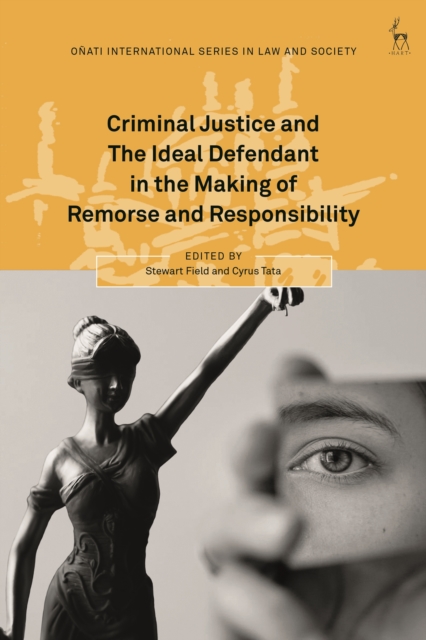
Criminal Justice and the Ideal Defendant in the Making of Remorse and Responsibility
This book investigates how defendants are assessed by criminal justice decisionmakers, such as judges, lawyers, probation officers, parole board members and those involved in restorative justice.What attitudes and emotions are defendants expected to show?How are these expectations communicated?.
eBook

Sentencing policy and social justice
Sentencing policy and social justice' argues that the promotion of social justice should become a key objective of sentencing policy, advancing the argument that the legitimacy of sentencing ultimately depends upon the strength of the relationship between social morality and penal ideology. It sheds light on how shared moral values can influence sentencing policy at a time when relationships of community appear increasingly fragmented, arguing that sentencing will be better placed to make a positive contribution to social justice if it becomes more sensitive to the commonly-accepted moral boundaries that underpin adherence to the 'rule of law'.
Book

Previous Convictions at Sentencing
This latest volume in the Penal Theory and Penal Ethics series addresses one of the oldest and most contested questions in the field of criminal sentencing: should an offender's previous convictions affect the sentence? This question provokes a series of others: Is it possible to justify a discount for first offenders within a retributive sentencing framework? How should previous convictions enter into the sentencing equation? At what point should prior misconduct cease to count for the purposes of fresh sentencing? Should similar previous convictions count more than convictions unrelated to the current offence? Statutory sentencing regimes around the world incorporate provisions which mandate harsher treatment of repeat offenders. Although there is an extensive literature on the definition and use of criminal history information, the emphasis here, as befits a volume in the series, is on the theoretical and normative aspects of considering previous convictions at sentencing. Several authors explore the theory underlying the practice of mitigating the punishments for first offenders, while others put forth arguments for enhancing sentences for recidivists. The practice of sentencing repeat offenders in two jurisdictions (England and Wales, and Sweden) is also examined in detail.
eBook

Essential Magistrates' Courts Law
This independent publication by experts in the field sets out information that goes beyond official or internal guidance and is based on practical experience of working in the courts. Its unique approach and readable style is invaluable for practitioners and students alike.
eBook


Exploring the Mandatory Life Sentence for Murder
Murder is often regarded as both the ‘ultimate’ and a unique crime, and whereas courts are normally given discretion in sentencing offenders, for murder the sentence is mandatory – indeterminate imprisonment. Since the crime and the punishment come as a ‘package deal’ this book looks at both the legal nature of the offence and at the current operation of the mandatory life sentence. Not only does the book adopt a critical approach, by assessing the strengths and weaknesses of the status quo, it also draws upon comparative material from both common and civil law jurisdictions in an attempt to provide a comprehensive exploration of these issues. The need for public confidence in the criminal justice system is particularly acute in the way it deals with the most serious homicides. In this book the authors report findings from the first systematic exploration of public attitudes to sentencing murder in this or any other common law jurisdiction. The picture of public opinion emerging from this recent large-scale nationwide qualitative and quantitative survey, funded by the Nuffield Foundation, is likely to surprise many, and will be of interest to all jurisdictions where the mandatory life sentence for murder has been questioned.
eBook


Reform Nation
How one law tells the story of America's modern criminal justice movement In late 2018, the First Step Act was signed into law by President Donald Trump just hours before a government shutdown. It was one of few major pieces of federal criminal justice reform since the 1970s to move toward reversing the incarceration frenzy that had characterized United States policy. While it did not amount to revolutionary reform, in Reform Nation, Colleen P. Eren investigates it as a symbol for the larger movement's trajectory. Its unlikely passage during a period of political polarization was testament to the power of a new constellation of advocates, stakeholders, and strange bedfellow alliances. These intriguing and complex dynamics are indicative of a longer, twenty-year shift in which the movement became nationalized and mainstreamed. Using in-depth interviews with major players in the national movement, formerly incarcerated activists, celebrities, and donors, this is the first book to turn the mirror back on the criminal justice reform movement itself—the frames used, the voices heard, the capital activated among elite participants, and the bitter controversies. This snapshot in time raises much larger questions about how our democratic processes inform criminal justice policy, and where we are going in the decades to come.
eBook