
Catalogue Search | MBRL


Are you sure you want to remove the book from the shelf?

{{itemTitle}}
39
result(s) for
"Separate actions"
Sort by:


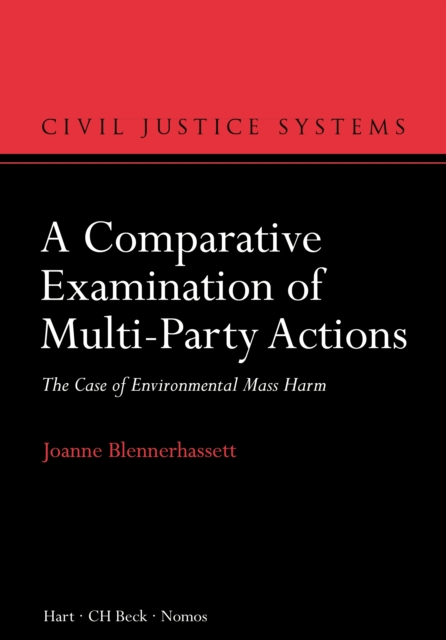
A Comparative Examination of Multi-Party Actions
This monograph addresses the phenomenon of mass harm and how it may be resolved through collective redress. It examines particularly how such redress may be achieved through mechanisms such as multi-party actions (MPAs). In order to do this an analytical framework is created against which to evaluate various multi-party procedures. This is illustrated through the experience of a selection of common law jurisdictions in dealing with mass harm, namely that of England and Wales, Canada, Australia and the United States, as well as that of EU collective redress. It examines multi-party action laws benchmarked against the objectives identified in the analytical framework. The phenomenon of environmental mass harm in particular is explored as a case study, as it illustrates some of the difficulties that may arise in mass harm litigation. Also, this work explores where the best solutions for mass harm redress may lie in the future—perhaps in collective actions or through alternatives such as regulation and alternative dispute resolution or a combination of these. Finally, the experience of mass harm litigation in Ireland is examined, as currently this jurisdiction does not have an effective mechanism for dealing with mass harm. Volume 4 in the series Civil Justice Systems
eBook
Administrative Severability Clauses
Severability clauses can help administrative agencies minimize the damage caused by judicial review and can make the regulatory environment more efficient, participatory, and predictable. Yet agencies rarely include these clauses in their rules because courts tend to treat administrative rules with severability clauses the same as those without. Courts have treated administrative severability clauses in this way largely because they have mistakenly analogized them to severability clauses contained in statutes. While Congress routinely includes severability clauses in statutes that are drafted in distinct iterations, by different committees with legislative staff who often lack the time and expertise to consider the clauses' potential ramifications, administrative agencies use these clauses with more care. This Article proposes a Chevron-style deference framework for administrative severability clauses. Under this framework, after a reviewing court has set aside a challenged regulatory provision, the court should defer to a promulgating agency's opinion on severability as expressed through a severability clause, unless the remainder of the rule itself would suffer from legal defects resulting from the court's invalidation of the challenged provisions. This framework would better promote the overarching goals of administrative law than do current judicial doctrine and agency practice.
Journal Article


Unite Here Faction Looks To Form Separate Group
WASHINGTON — The breakaway group of UNITE HERE, claiming to represent 150,000 members, is moving to form a separate entity after 15 local boards voted to disaffiliate from the parent union last Saturday, officials said Thursday.
Trade Publication Article